Alan Cafruny: The US cannot successfully invade Iran - INTERVIEW



The escalating confrontation between the United States and Iran is increasingly affecting not only the Middle East but also the global economy. Strikes on military and coastal facilities, attacks in the Persian Gulf, the threat of disruptions to shipping through the Strait of Hormuz, and growing domestic opposition to the conflict in the United States have raised the risk of a prolonged crisis with far-reaching and unpredictable consequences.
A key question is whether Washington can contain the confrontation within the framework of so-called controlled escalation and prevent it from developing into a full-scale war. The role of Israel, the resilience of Iran’s leadership, the capabilities of the Islamic Revolutionary Guard Corps, and the impact of the conflict on the US position in the Gulf are becoming increasingly important factors in assessing the trajectory of the crisis.
RECOMMENDED STORIES
In an interview with News.Az, Alan Cafruny, Henry Platt Bristol Professor of International Affairs at Hamilton College, discussed the prospects for the US-Iran confrontation, the situation surrounding the Strait of Hormuz, the limitations of Washington’s military strategy, and Israel’s role in the current crisis.
— How serious do you consider the current escalation between the US and Iran? Is this another limited exchange of strikes, or is the situation already approaching a full-blown military conflict?
— Iran’s ability to establish de facto sovereignty over the Strait of Hormuz has dramatically reshaped the balance of power in the Persian Gulf and proved disastrous for the Trump administration.
According to the International Energy Agency, the global oil market is currently “severely undersupplied,” with oil supplies being depleted at a record pace. Even if the conflict ends by early June, which is highly unlikely, the market will remain seriously undersupplied until at least the end of the third quarter.
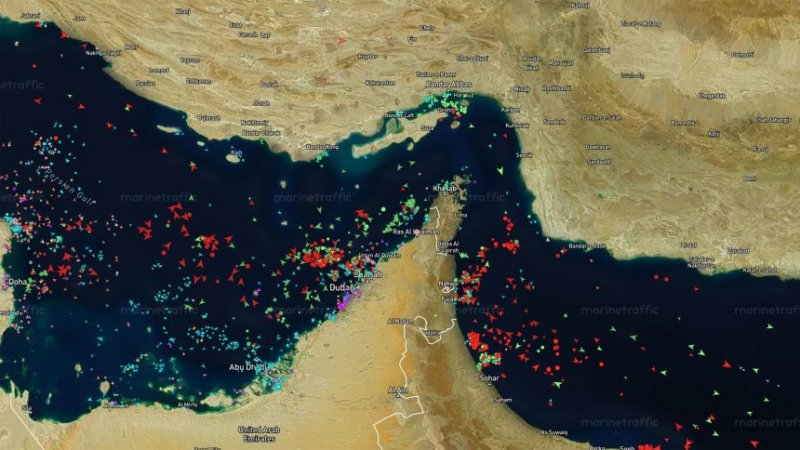
Neither a US invasion nor a long-term war of attrition is likely, in itself, to reopen the Strait and prevent further massive disruption to the global economy.
Although Iran is bearing enormous costs from the attritional war, its leadership appears to remain united. The Islamic Revolutionary Guard Corps has proved resilient in the face of US and Israeli airstrikes, while American and Israeli military forces remain vulnerable to Iranian missiles.
The US military does not have the capability to carry out a successful full-scale conventional invasion of Iran. Such an operation would require ground forces to advance deep into the country’s interior and would almost certainly result in mass casualties.
— Following reports of US strikes on Iranian coastal facilities and Iranian attacks in the Persian Gulf, the main question is whether Washington can keep the conflict within the bounds of “controlled escalation.”
— Notwithstanding Trump’s periodic threats of Armageddon, controlled escalation, or a war of attrition, is the only realistic option for the United States, and Trump appears to recognize this.
Yet such a scenario would also impose severe long-term costs on Washington. The consequences could be catastrophic not only for the global economy but also for the geopolitical standing of the United States in the Middle East.
Saudi Arabia and Qatar are gradually losing confidence in Washington’s porous security umbrella, Gulf Arab states are beginning to consider shifting their foreign policy alignment, the Abraham Accords are receding into memory, and domestic opposition to the war in the United States is accelerating.
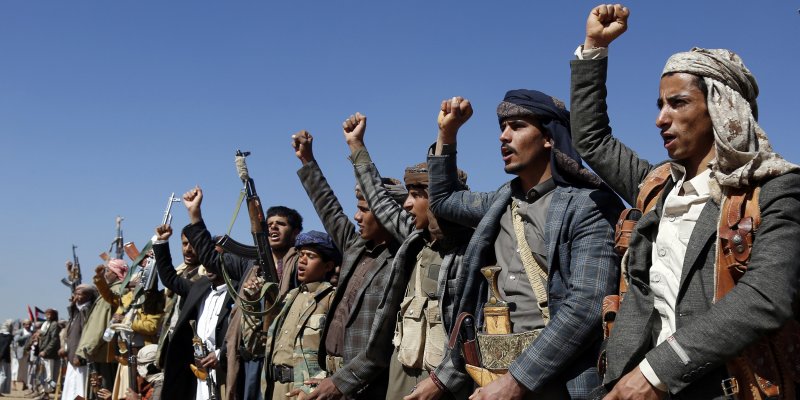
The Houthis in Yemen have launched missile strikes against Israel and threatened to blockade shipping linked to Israel. Iran has reportedly halted strikes on Israel while warning of a more serious response if Israel carries out further attacks on southern Lebanon.
— How likely is it that Iran will attempt to fully or partially block the Strait of Hormuz? And what would the US response be in such a case?
— Iran retains the ability to continue blocking access to the Strait of Hormuz while currently allowing friendly vessels to pass. Tehran insists that any agreement must recognize its full sovereignty over the Strait and, therefore, its right to impose transit fees. This is why Trump oscillates between threats of further escalation and appeals for a deal. However, neither option appears realistic.
Iran will insist on recognition of its sovereignty over the Strait of Hormuz, the repatriation of frozen assets, an end to the US blockade, the removal of sanctions, and the continuation of uranium enrichment, albeit possibly with certain modifications to the restrictions under the Joint Comprehensive Plan of Action.
— Could Trump launch a military operation against Iran without congressional approval, and where is the legal line between “limited strikes” and war?
— Public opposition in the United States to the war with Iran is deepening, alongside growing revulsion over Israel’s actions in Gaza and Lebanon. Whereas 50 percent of registered voters opposed the 12-day military campaign in June 2025, 64 percent now oppose the current war.
Divisions are also increasing within the Republican Party. This is reflected in the House of Representatives’ passage of a war powers resolution calling for the withdrawal of US forces or congressional approval for the continuation of military operations.
At this stage, however, the vote remains largely symbolic because Trump retains control of the Senate. Moreover, the War Powers Resolution itself remains an ambiguous instrument, as demonstrated by the numerous US military interventions and invasions carried out since its adoption in 1973.
— What role does Israel play in the current crisis? Could the Israel factor push the US to take a harder line on Iran?
— There can be little doubt that Netanyahu’s strikes on Lebanon, which crossed an Iranian red line, were calculated to provoke retaliation from Tehran and derail the ceasefire and peace talks. Trump clearly opposed these strikes, as evidenced by his harsh words that “everyone hates Israel.” At this point, he almost certainly opposes Israel’s expansive policies in southern Lebanon.
At the same time, Trump faces pressure from a powerful pro-Israel lobby that represents a major source of political and economic support, as well as from neoconservative hawks. It is also possible that Netanyahu has gone too far. This is reflected in both US and global public opinion. His actions may even be jeopardizing the so-called Greater Israel project, and under such circumstances, some of the forces that have supported him may also come to favor his removal.
By Samir Muradov


Similar news