Baku emerges as a hub for global dialogue: Azerbaijan’s strategic role takes center stage at WUF13


.png)
Editor’s note: Faig Mahmudov is a journalist based in Azerbaijan covering regional security, foreign policy, and geopolitical developments. The views expressed in this article are his own and do not necessarily reflect the official position or editorial stance of News.Az.
In today’s international system, a country’s standing is measured not only by its economic strength or political influence, but also by its ability to contribute to the global agenda, create platforms for international cooperation, and bring diverse stakeholders together around shared objectives. In recent years, Azerbaijan has steadily strengthened its position in this regard, evolving from a regional actor into a recognised venue for global dialogue and multilateral engagement.
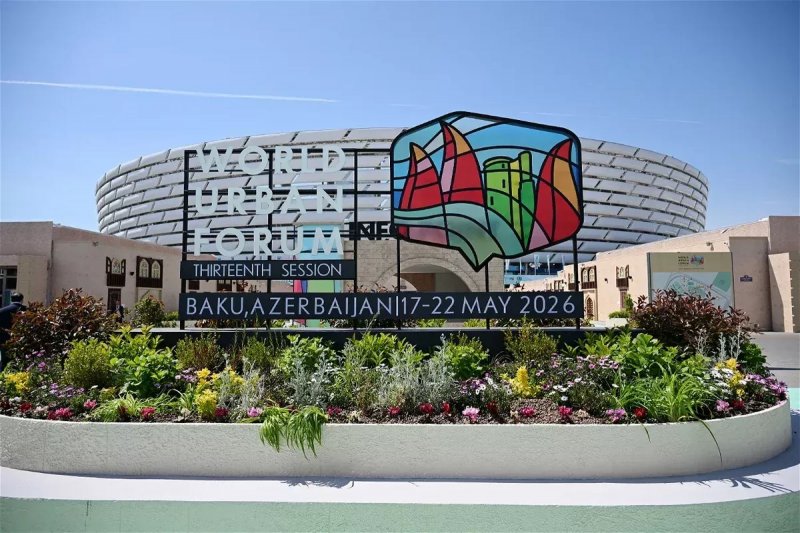
The Leaders’ Statements Session, held for the first time within the framework of the 13th session of the World Urban Forum (WUF13) in Baku, provided another clear demonstration of Azerbaijan’s growing diplomatic and political capacity. Initiated by President Ilham Aliyev, the format represented far more than a new addition to the forum’s programme. It introduced a new model of international engagement, elevating discussions on urban development to the level of strategic political dialogue.
The decision to organise a dedicated Leaders’ Statements Session marked one of the most significant innovations in the history of the World Urban Forum. Held on 18 May, the segment brought together 27 heads of state and government, senior officials, leaders of international organisations, and representatives of influential global institutions.
The scale and profile of participation underscored the growing political significance of urbanisation issues worldwide. The presence of leaders from different regions demonstrated that urban development is no longer viewed solely as a technical or infrastructure-related matter. Instead, it has become an integral component of broader discussions on economic growth, social inclusion, environmental sustainability, governance, and global development.
The discussions in Baku reflected this reality. Participants addressed a wide range of issues, including the future of cities, sustainable development, climate resilience, digital transformation, social cohesion, and the challenges facing rapidly urbanising societies. The forum highlighted how urban policy increasingly intersects with national development strategies and international cooperation frameworks.
While hosting major international events is in itself an important achievement, creating entirely new formats that attract world leaders requires a considerably higher level of political credibility, diplomatic capacity, and organisational excellence. The Leaders’ Statements Session demonstrated Azerbaijan’s growing ability not only to host international gatherings, but also to help shape their agenda and contribute innovative ideas to global discussions.
The initiative reinforced Azerbaijan’s role as an active contributor to international dialogue rather than merely a venue for meetings. By introducing a new platform for leaders to exchange perspectives on shared challenges, Azerbaijan showcased its capacity to facilitate meaningful conversations on issues of global importance. Such initiatives strengthen the country’s international profile and demonstrate its increasing influence within multilateral processes.
This development is consistent with Azerbaijan’s broader foreign policy trajectory. In recent years, the country has played an increasingly active role in promoting international cooperation through various platforms and initiatives. Its successful chairmanship of the Non-Aligned Movement, preparations to host COP29, participation in major global forums, and support for regional cooperation projects all reflect a consistent commitment to dialogue, partnership, and multilateral engagement. The Leaders’ Statements Session can therefore be seen as a natural continuation of this strategic approach.
At a time when geopolitical tensions are rising and confidence in international institutions is being tested, the need for neutral and constructive platforms for dialogue has become more important than ever. Azerbaijan has increasingly positioned itself as one such platform. Located at the crossroads of East and West, North and South, and pursuing a balanced foreign policy, the country offers an environment conducive to dialogue among states and organisations with diverse political and economic interests.
The Leaders’ Statements Session further reinforced this perception. Throughout the event, participants expressed appreciation for Azerbaijan’s hospitality, organisational capabilities, and the constructive atmosphere created for meaningful discussion. Many highlighted the professionalism of the arrangements, the security of the environment, and the openness of the dialogue. These assessments reflect the growing recognition of Azerbaijan as a trusted venue for international engagement.
As a result, Baku is increasingly viewed not only as a host city for international events, but also as a centre where ideas are exchanged, partnerships are formed, and strategic discussions take place. This transformation represents an important achievement in Azerbaijan’s broader effort to enhance its international standing and contribute to global governance processes.
Traditionally, the World Urban Forum has served as a platform for experts, urban planners, policymakers, and development practitioners to discuss issues related to urbanisation and sustainable cities. The introduction of the Leaders’ Statements Session significantly expanded the forum’s scope and political relevance.
By bringing heads of state and government directly into the conversation, the initiative elevated urban development issues to the highest levels of political decision-making. It highlighted the close connection between urbanisation and broader challenges such as economic competitiveness, social well-being, environmental sustainability, national resilience, and global security.
Consequently, WUF13 evolved beyond a professional and technical gathering into a broader international forum where political leaders, international organisations, and key decision-makers engaged in discussions about the future of cities and their role in shaping sustainable development worldwide.
In the contemporary international environment, successful countries are increasingly distinguished by their ability not only to participate in existing institutions, but also to create new mechanisms for cooperation. Azerbaijan’s recent initiatives illustrate this approach. The Leaders’ Statements Session provided an additional platform through which leaders from different regions could exchange experiences, discuss common challenges, and explore opportunities for future cooperation.
In this sense, the session represented more than a single event. It served as a diplomatic mechanism capable of fostering future partnerships, encouraging policy dialogue, and generating new ideas for international collaboration. Such initiatives demonstrate Azerbaijan’s commitment to strengthening multilateral cooperation while contributing constructively to efforts aimed at addressing global challenges.
The successful organisation of the Leaders’ Statements Session once again confirmed Azerbaijan’s reputation as a country capable of hosting major international events at the highest level and introducing innovative formats that enrich global dialogue. The fact that this initiative was launched for the first time in the history of the World Urban Forum in Baku is not coincidental. Rather, it reflects the growing confidence placed in Azerbaijan by the international community and acknowledges the country’s diplomatic credibility, organisational capacity, and active international engagement.
The platform created during WUF13 should therefore be viewed not only as one of the forum’s major achievements, but also as a symbol of Azerbaijan’s expanding role in international affairs. It demonstrated the country’s ability to bring together leaders, institutions, and stakeholders around shared priorities and to facilitate discussions on issues of global significance.
The message emerging from Baku is clear: Azerbaijan is no longer simply a participant in international initiatives. It is increasingly becoming a country that proposes new formats for cooperation, creates opportunities for constructive engagement, and contributes meaningfully to the advancement of global dialogue. The Leaders’ Statements Session at WUF13 stands as one of the clearest examples of this growing role and of Azerbaijan’s continuing emergence as an influential platform for international cooperation in an increasingly interconnected world.
(If you possess specialized knowledge and wish to contribute, please reach out to us at opinions@news.az).


Similar news