How Cyprus elections are unfolding amid growing protest mood


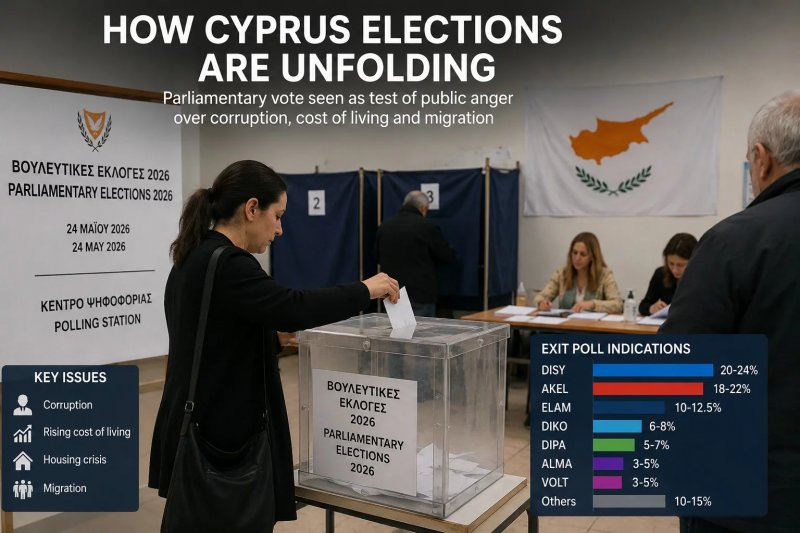
Parliamentary elections were held in Cyprus on May 24, 2026, with voters choosing 56 members of the House of Representatives. Formally, the Cypriot parliament has 80 seats, but 24 seats allocated to Turkish Cypriots have remained vacant since 1964, meaning that 56 lawmakers are elected in practice.
The vote took place against a backdrop of growing public frustration with traditional political parties. The campaign was shaped by concerns over corruption, the rising cost of living, expensive housing, high electricity bills, and migration. As a result, the election became not just a routine parliamentary contest, but a wider test of public trust in Cyprus’s established political system.
One of the main developments was the expected rise of the far-right ELAM party. Exit polls suggested that ELAM could win around 10–12.5% of the vote, compared with 6.8% in the 2021 parliamentary elections. If confirmed, this would mark a major advance for the party and could make it one of the strongest forces in parliament after the right-wing DISY and the left-wing AKEL.
RECOMMENDED STORIES
This result would reflect a growing demand among part of the electorate for tougher policies on migration and a more nationalist political agenda. ELAM also takes a hard line on the Cyprus settlement process and opposes major concessions in negotiations with the Turkish Cypriot side.
Another important factor is the possible entry into parliament of the new anti-corruption movement ALMA. The movement is associated with former Auditor General Odysseas Michaelides, who built his campaign around transparency, accountability, and the fight against corruption. Its potential success shows that many voters are not only worried about economic pressure, but are also deeply dissatisfied with what they see as a lack of accountability among the political elite.
The pro-European liberal party Volt Cyprus is also being closely watched. Its rise reflects a different kind of protest vote — less nationalist and more focused on institutional reform, European values, and political renewal.
For President Nikos Christodoulides, the election is particularly important. Cyprus is a presidential republic, so parliamentary elections do not directly change the government. However, the new balance of forces in parliament could make it harder for the president to pass legislation and build stable political support ahead of the 2028 presidential election. This is especially relevant because centrist parties that have supported Christodoulides — including DIKO, DIPA, and EDEK — were expected to perform less strongly.
In broader terms, Cyprus’s political system appears to be becoming more fragmented. In the past, politics was largely dominated by the main right-wing and left-wing parties, DISY and AKEL. Now, however, new movements, protest parties, and right-wing forces are gaining ground. This could make the next parliament less predictable and complicate the formation of stable alliances.
Overall, the elections in Cyprus were held in a calm atmosphere, but their political consequences may be significant. Traditional parties remain important, but they are losing part of their influence. The far-right ELAM is gaining strength, anti-corruption forces are entering the political scene, and the president’s centrist allies may be weakened. For Christodoulides, this is a warning sign: ahead of 2028, he may need to seek new political partnerships and respond more actively to public demands for change.


Similar news