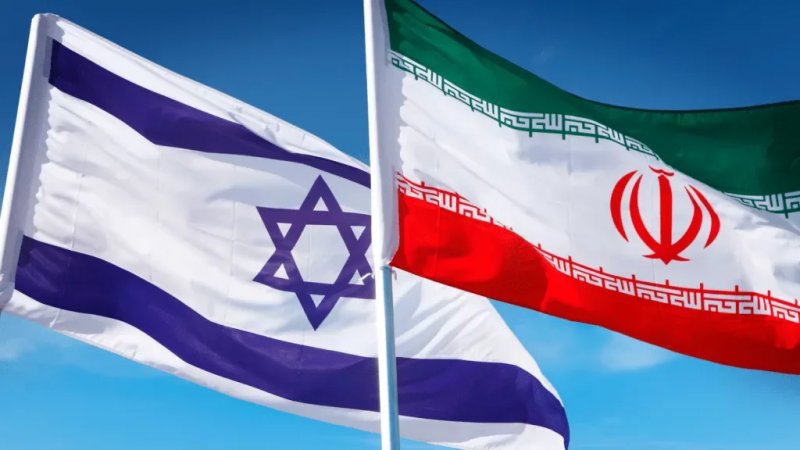
Iran war pushes Türkiye and Israel closer to confrontation


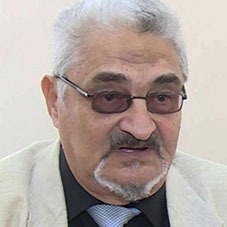
Editor’s note: Moses Becker is a special political commentator for News.Az. He holds a PhD in political science and specialises in inter-ethnic and inter-religious relations. The views expressed in this article are those of the author and do not necessarily reflect the position of News.Az.
Relations between Israel and Türkiye were for many years characterised by mutual respect and a deep historical connection. The Jewish people have never forgotten the benevolent treatment extended by the Ottoman Empire to Jewish exiles from Spain, whom Sultan Bayezid II invited to settle in the empire in 1492.
Throughout more than 500 years of Jewish life on Turkish soil, the descendants of Abraham did not face systematic restrictions on their rights. The millet system introduced by the Ottoman sultans granted a degree of autonomy to each religious community. During the Second World War, Turkish diplomats made every possible efforts to save Jews from Nazi murderers.
RECOMMENDED STORIES
In 1949, the Republic of Türkiye became the first Muslim-majority country to recognise the Jewish state. For many years, relations between the two countries continued to develop steadily. It is worth recalling that the armed forces of both states even conducted joint military exercises.
However, after Recep Tayyip Erdoğan became prime minister in 2003 and later assumed the presidency, relations began to deteriorate gradually. Initially, little appeared to change: trade continued to grow, tourism expanded, and the new Turkish leader even sought to mediate between Syria and Israel.
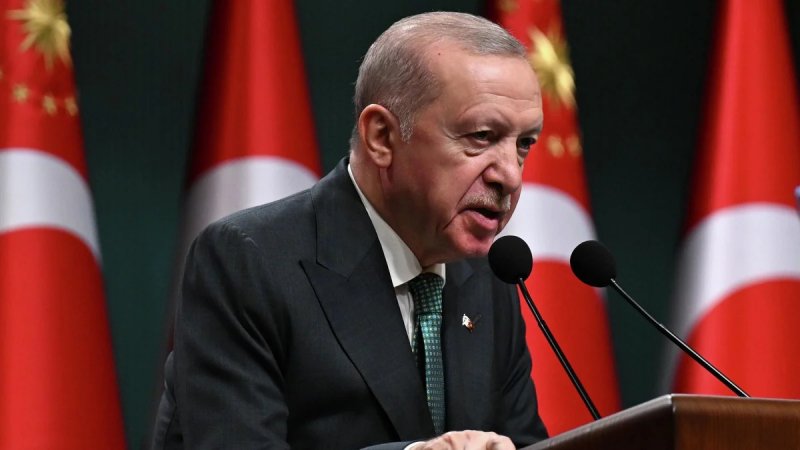
Yet as Türkiye’s economic and military capabilities grew, Erdoğan increasingly positioned himself as a defender of Muslims around the world. In a show of solidarity with the residents of the Gaza Strip, the Turkish non-governmental organisation Humanitarian Relief Foundation (İHH) organised the so-called Freedom Flotilla, which included the vessel Mavi Marmara.
During the night of 31 May 2010, the ship was boarded by Israeli commandos. Nine people were killed and more than 30 injured in the raid, leading to a sharp deterioration in relations between the two countries.
Erdoğan’s policy towards Israel subsequently contributed to the Jewish state’s growing rapprochement with Greece and Cyprus.
The events of 7 October 2023 marked a turning point in the Turkish-Israeli confrontation. By the autumn of that year, Erdoğan had significantly intensified his rhetoric, describing Israel’s actions in Gaza as an example of state terrorism. He publicly declared that Türkiye did not regard Hamas as a terrorist organisation, placing Ankara at odds with most Western countries.
In addition, Türkiye initially restricted and later effectively suspended trade with Israel. Tensions were further aggravated by growing disagreements between Ankara and Jerusalem over Türkiye’s efforts to expand its influence in Syria following the overthrow of Bashar al-Assad.
On 13 June 2025, when Israel launched large-scale strikes against Iran, the Turkish leadership suddenly realised that a new and powerful regional competitor had emerged, possessing clear military superiority in the air.
On 19 June 2025, amid continuing Israeli strikes against Iran, Erdoğan pledged to accelerate the strengthening of Türkiye’s defence capabilities. Ankara drew a clear conclusion from the 12-day war: even a limited campaign against Iran would immediately raise the stakes across the Middle East, disrupt energy markets, undermine security and create the conditions for another, potentially even more dangerous, round of escalation.
In the spring of 2026, this logic resurfaced under even more difficult circumstances. Following the launch of a new Israeli-American operation against Iran on 28 February 2026, Erdoğan condemned the strikes and called for diplomacy and an immediate ceasefire to prevent the entire region from being drawn into a broader conflict.
Türkiye views the strikes against Iran as a crisis that will not remain confined within the country's borders, particularly given the Kurdish factor. On 3 March, Turkish Foreign Minister Hakan Fidan confirmed that Ankara was maintaining contact with all parties in an effort to halt the war and restore diplomacy. He specifically highlighted the risks to energy supplies and the vulnerability of the Strait of Hormuz.
For Türkiye, the issue also has a particularly sensitive domestic dimension. The country remains a major importer of energy resources, meaning that any serious disruption to the regional energy architecture quickly translates into pressure on the state budget, inflation, production costs and social stability.
Beyond economic considerations, Ankara believes that the military destruction of Iran would not bring peace to the region. On the contrary, it would remove one of the key pillars of the Middle Eastern balance of power and open the way for a new chain of wars, proxy conflicts and internal fragmentation stretching from Iraq and Syria to the Caucasus and the Eastern Mediterranean.
This is Türkiye’s principal strategic concern. Ankara harbours no illusions about Tehran. The two countries have long competed for influence in Syria, Iraq, the South Caucasus and along regional transport routes. Türkiye is not defending Iran, which remains both a geopolitical and ideological rival. Nevertheless, it opposes Iran’s violent destruction because it regards such a scenario as even more damaging to the regional order as a whole.
On 12 March 2026, Fidan stated that Ankara opposed any plans aimed at provoking a civil war in Iran or inciting conflicts along ethnic or religious lines. He stressed that the ongoing war in the Middle East must end as soon as possible.
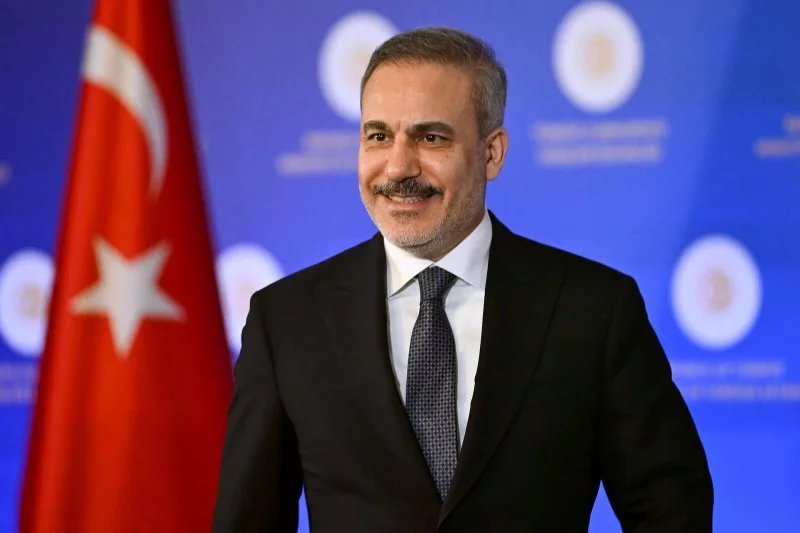
For Türkiye, a civil war in Iran would create a vast zone of instability on its doorstep, with the crisis inevitably spreading across the wider region.
Against this backdrop, Ankara is increasingly linking the Iranian issue to the broader trajectory of the Turkish-Israeli confrontation. Following the events of 7 October 2023, Israel ceased to be viewed in Turkish strategic thinking merely as a state with which Ankara disagreed over the Palestinian issue. It increasingly came to be seen as an obstacle to Erdoğan’s imperial ambitions.
The Syrian dimension is particularly sensitive. In 2025, Fidan openly stated that Ankara did not seek a direct confrontation with Israel in Syria. At the same time, he described Israeli strikes on Syrian facilities as a destabilising factor that hindered the new Syrian authorities’ efforts to provide security.
Turkish and Israeli sources later reported technical contacts aimed at preventing incidents in Syria. This alone demonstrates the high level of mutual suspicion and the growing risk not only of political confrontation but also of a direct military clash between the two countries in the Syrian theatre.
In Turkish strategic thinking, Iran’s defeat would not mark the end of the crisis. On the contrary, it is increasingly viewed as the possible beginning of the next phase in the struggle for regional dominance.
Ankara believes that Iran’s actions will push the Gulf states towards even closer cooperation with the United States and Israel, a trend that has become increasingly visible in recent years. Unprovoked Iranian missile and drone strikes against neighbouring countries have already contributed to closer cooperation between the United Arab Emirates and Israel. What guarantee is there that other Gulf states will not eventually follow the same path?
In recent years, Arab countries have watched the growth of Türkiye’s military capabilities with increasing concern, particularly given the country’s historical dominance in much of the region. Israel, by contrast, is unlikely to pose a comparable long-term threat to its neighbours because of its limited demographic resources.
On 8 June 2026, following a brief pause, the Iranian-Israeli conflict once again entered a period of escalation. It is difficult to predict how events will unfold, particularly given the severe economic crisis facing the Islamic Republic and the volatile situation in Iranian Kurdistan and Balochistan.
(If you possess specialized knowledge and wish to contribute, please reach out to us at opinions@news.az).


Similar news