Poland begins new search for WWII mass graves in Ukraine


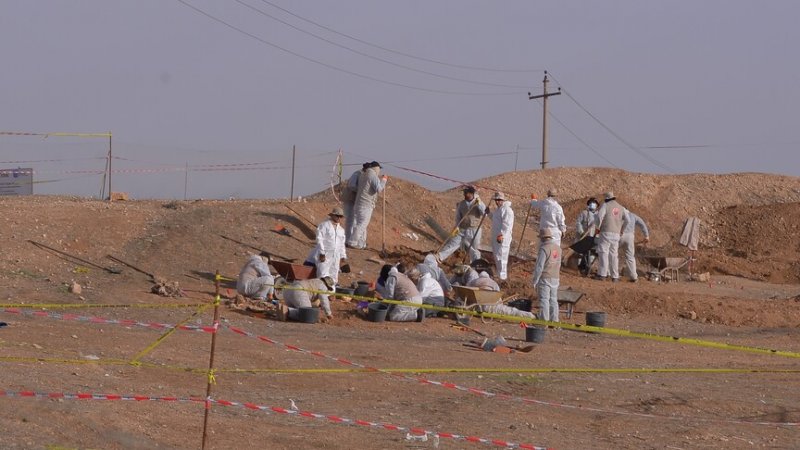
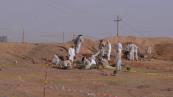
Polish investigators and archaeologists have launched a new round of excavations in western Ukraine to locate and identify the mass graves of Polish civilians killed during World War II.
The fieldwork, coordinated by Poland's Institute of National Remembrance alongside Ukrainian partners, is currently underway at Huta Pieniacka—a former Polish village in Ukraine's Lviv region where hundreds of Poles were killed in February 1944. This project is part of a broader, sensitive effort to locate victims of wartime massacres carried out by Ukrainian nationalist formations, including the Ukrainian Insurgent Army (UPA), between 1943 and 1945, News.Az reports, citing Anadolu Agency.
The timing of the excavation is highly significant, coming on the heels of recent diplomatic friction. Geopolitical tensions flared just last month after Ukrainian President Volodymyr Zelenskyy issued a decree granting an army special forces unit the honorary title “Heroes of the UPA,” sparking widespread outrage across the Polish political spectrum.
RECOMMENDED STORIES
Despite these political roadblocks, the joint excavations mark a humanitarian breakthrough. Kyiv recently lifted long-standing restrictions on searches and exhumations of Polish victims on Ukrainian territory, building on earlier joint research success at sites like Puzniki and Uhly.
The historical backdrop remains one of the most sensitive friction points between the two close security allies. Poland formally views the Volhynia massacres and related killings in Eastern Galicia—where historians estimate tens of thousands of Polish civilians died—as acts of genocide. Ukraine generally rejects that characterization, emphasizing the mutual suffering of both Poles and Ukrainians during the wartime conflict.
Nevertheless, Prime Minister Donald Tusk’s government has prioritized the progress of these exhumations, framing the effort to give families answers and proper burials as a humanitarian necessity rather than a political debate. Both Warsaw and Kyiv are actively working to separate these deep-seated historical grievances from the critical strategic partnership forged in response to the Russia-Ukraine war. The current excavation campaign is expected to continue throughout the summer, with additional searches planned across other former Polish settlements in the region.
By Aysel Mammadzada


Similar news