What is at stake in Cyprus’s crucial parliamentary vote?


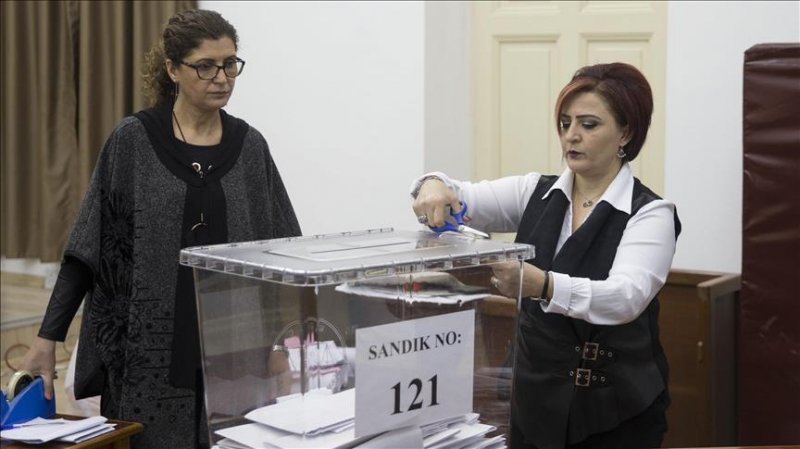
Cyprus is holding parliamentary elections on May 24, 2026, in a vote that is attracting attention across Europe and the wider Eastern Mediterranean region.
Although parliamentary elections in Cyprus do not directly determine who becomes president, they are among the most important political events in the country because they shape the balance of power within the legislature, influence government policymaking, and provide an indication of public sentiment on major national issues, News.az reports.
RECOMMENDED STORIES
The election comes at a time when Cyprus faces economic pressures, debates over migration and energy policy, ongoing efforts to address corruption concerns, and continuing uncertainty regarding the decades long division of the island. It also takes place against the backdrop of broader geopolitical developments affecting the European Union, Türkiye, the Eastern Mediterranean, and regional security architecture.
With traditional political parties facing growing competition from new political movements and independent voices, many observers view the election as a potential turning point in Cypriot politics.
What election is taking place in Cyprus?
Cypriot voters are electing members of the House of Representatives, the country's unicameral parliament. Parliamentary elections are held every five years and determine the composition of the legislature responsible for passing laws, approving government budgets, scrutinizing public policy, and overseeing state institutions.
Although Cyprus operates under a presidential system in which executive authority is exercised by the president and the cabinet, parliament remains one of the most influential institutions in the country's political system. Without parliamentary support, governments can face significant obstacles in implementing legislation, economic reforms, and strategic initiatives.
As a result, the parliamentary election is widely regarded as one of the most important indicators of the country's political direction.
How many seats are being contested?
The House of Representatives officially consists of 80 seats under the Cypriot constitution. However, 24 seats are allocated to the Turkish Cypriot community and have remained vacant since the intercommunal conflict that divided the island decades ago.
As a result, voters are electing 56 members who will represent the internationally recognized Republic of Cyprus and participate in parliamentary decision making.
These 56 seats may appear relatively few compared with larger European countries, but their distribution can significantly affect the country's political stability and legislative effectiveness.
Why are these elections receiving international attention?
The significance of the election extends far beyond domestic politics.
Cyprus occupies a strategically important location at the intersection of Europe, the Middle East, and North Africa. As a member of the European Union, the country participates in major decisions involving migration, sanctions, energy security, regional diplomacy, maritime policy, and relations with neighboring countries.
Political developments in Cyprus therefore have implications not only for the island itself but also for broader European and regional interests.
The election is also being closely watched because it represents the first major nationwide electoral test since President Nikos Christodoulides assumed office. The results will provide insight into whether voters continue to support the political forces associated with the current administration or whether they seek alternative political directions.
What are the main issues shaping the election campaign?
Several major issues dominate public debate.
Cost of living and economic pressures
Economic concerns remain at the center of voter priorities.
Although Cyprus has experienced economic recovery in recent years, many households continue to face rising living costs. Inflation, housing affordability, food prices, electricity bills, and general economic uncertainty have become key topics during the campaign.
Young people in particular have expressed concerns about property prices and access to affordable housing. Many families report difficulties balancing wages with increasing household expenses.
Political parties have proposed various measures ranging from tax relief and social support programs to wage increases and housing initiatives.
Corruption and political accountability
Public trust in political institutions remains an important issue.
Over recent years, controversy surrounding the citizenship by investment program, often referred to as the "golden passport" scheme, generated intense debate both domestically and internationally.
Many voters continue to demand stronger transparency measures, greater accountability among public officials, and reforms designed to strengthen confidence in government institutions.
Several political movements have built their campaigns around promises of political renewal and institutional reform.
Migration management
Migration has become one of the most politically sensitive issues in Cyprus.
Due to its geographical position, the country faces significant migration pressures. Political parties differ on how migration flows should be managed, how asylum procedures should function, and how integration policies should be implemented.
Supporters of stricter migration policies argue that public services and infrastructure face increasing pressure. Others emphasize humanitarian responsibilities and the importance of coordinated European solutions.
Energy policy
Energy security has become increasingly important for Cyprus.
The country continues to explore opportunities related to offshore natural gas resources while simultaneously seeking to reduce dependence on imported energy and meet environmental objectives.
Electricity prices remain a concern for households and businesses. Political parties have presented competing visions regarding renewable energy, infrastructure development, natural gas utilization, and long term energy strategy.
The Cyprus question
Although economic issues dominate the current campaign, the future of the divided island remains one of the most significant long term national questions.
Cyprus has been divided since 1974 between the Republic of Cyprus in the south and the Turkish Republic of Northern Cyprus, recognized only by Türkiye.
Different parties hold varying positions regarding negotiations, confidence building measures, federal settlement proposals, and future diplomatic engagement.
While voters may currently focus more heavily on economic concerns, developments related to reunification continue to influence the broader political environment.
Which political parties are competing?
Cyprus has traditionally been dominated by several major political forces.
The Democratic Rally has long represented the center right and remains one of the country's most influential political parties.
The Progressive Party of Working People represents the left and has historically maintained a strong electoral presence.
Other established parties include the Democratic Party, Democratic Front, and the Movement for Social Democracy.
However, one of the most notable aspects of the 2026 election is the growing presence of newer political movements seeking to challenge the traditional party structure.
New parties have positioned themselves as reform oriented alternatives promising transparency, modernization, and fresh approaches to governance.
At the same time, nationalist political forces are attempting to expand their influence by focusing on migration, identity, sovereignty, and security related concerns.
Why are newcomer parties gaining support?
The rise of new political movements reflects broader trends visible throughout Europe.
Many voters increasingly express frustration with established political parties. Concerns about corruption, economic inequality, government effectiveness, and political stagnation have encouraged portions of the electorate to consider alternatives.
Younger voters in particular often seek political movements that emphasize innovation, digital transformation, environmental policies, transparency, and institutional modernization.
Social media and digital campaigning have also made it easier for smaller political groups to reach voters and compete with larger organizations.
As a result, Cyprus may experience one of its most fragmented parliamentary landscapes in recent history.
How does Cyprus elect its parliament?
Cyprus uses an open list proportional representation system.
Under this arrangement, voters select a political party while also having the opportunity to express preferences for individual candidates within that party's electoral list.
Seats are distributed proportionally according to each party's share of the vote, provided that party surpasses the required electoral threshold.
This system generally produces broader representation than winner takes all electoral systems and allows smaller parties to gain parliamentary seats if they attract sufficient support.
The proportional nature of the system often encourages coalition building and political cooperation among multiple parties.
Could the election produce a fragmented parliament?
Many analysts believe this is one of the most likely outcomes.
Polling and campaign dynamics suggest that voter support is spread across numerous political parties rather than concentrated among only a few major organizations.
If multiple smaller parties enter parliament, the legislature could become considerably more fragmented.
A fragmented parliament can increase political diversity and representation, but it may also complicate decision making and make it more difficult to build stable legislative majorities.
The ability of parties to cooperate after the election could therefore become almost as important as the election results themselves.
Why does the election matter to the European Union?
Cyprus plays an important role within the European Union despite its relatively small size.
As a member state, Cyprus participates in decision making processes affecting migration policy, sanctions regimes, economic governance, energy cooperation, maritime security, and external relations.
The country's geographic position gives it particular importance in discussions involving the Eastern Mediterranean and the Middle East.
Changes in Cyprus's domestic political landscape can therefore influence broader European debates on strategic issues.
The election also occurs at a time when the European Union faces significant challenges related to competitiveness, security, energy diversification, migration management, and geopolitical tensions.
How could the vote affect EU and Türkiye relations?
Relations between the European Union and Türkiye remain closely linked to developments in Cyprus.
The Cyprus issue continues to influence diplomatic discussions between Brussels and Ankara. Political leaders in Nicosia play an important role in shaping the European Union's approach to matters involving Türkiye.
Different political parties may advocate varying strategies regarding engagement, negotiations, confidence building measures, and regional cooperation.
While no immediate transformation in policy is expected solely because of parliamentary elections, shifts in political influence could affect the tone and priorities of future discussions.
Why is energy becoming increasingly important?
Energy has become one of the defining strategic issues of the Eastern Mediterranean.
Discoveries of offshore natural gas reserves have generated interest in regional energy cooperation and infrastructure development. Cyprus hopes to strengthen its energy security while also benefiting economically from natural resource development.
At the same time, European efforts to diversify energy supplies have increased interest in potential Eastern Mediterranean energy projects.
Political decisions made by the next parliament could influence investment priorities, regulatory frameworks, environmental policies, and regional partnerships for years to come.
What role does regional security play?
Cyprus occupies a highly strategic geographical position.
Conflicts in the Middle East, migration routes across the Mediterranean, maritime disputes, and regional military developments all affect the country's security environment.
The island frequently serves as a logistical and humanitarian hub during regional crises. Consequently, national security, defense cooperation, border management, and international partnerships remain important political topics.
Parties differ regarding how Cyprus should balance security concerns with diplomatic engagement and regional cooperation.
What should observers watch on election day?
Several developments are expected to attract close attention:
-
The performance of traditional political parties.
-
Whether newcomer parties secure parliamentary representation.
-
The level of support for nationalist political movements.
-
Voter turnout and public engagement.
-
The degree of parliamentary fragmentation.
-
Potential implications for President Christodoulides and his political allies.
-
Shifts in support among younger voters.
-
Regional voting patterns across electoral districts.
Together, these factors will provide valuable insight into the future direction of Cypriot politics.
What could the election mean for Cyprus's future?
The 2026 parliamentary election represents far more than a routine democratic exercise.
It serves as a reflection of how Cypriot society views economic management, political accountability, migration policy, energy strategy, and national identity during a period of significant regional uncertainty.
The results will help determine the balance of power within parliament and influence legislative priorities for the next five years. They may also signal whether voters prefer continuity, reform, or a more fundamental reshaping of the political landscape.
For the European Union, Türkiye, and regional partners across the Eastern Mediterranean, the election offers an important indication of how one of the region's most strategically located states intends to navigate a rapidly changing geopolitical environment.
Whether traditional parties retain their dominance or new political forces emerge as major players, the outcome will shape Cyprus's domestic and international agenda well beyond election day.
By Faig Mahmudov


Similar news