What is behind the gunfire incident involving officers near the White House?


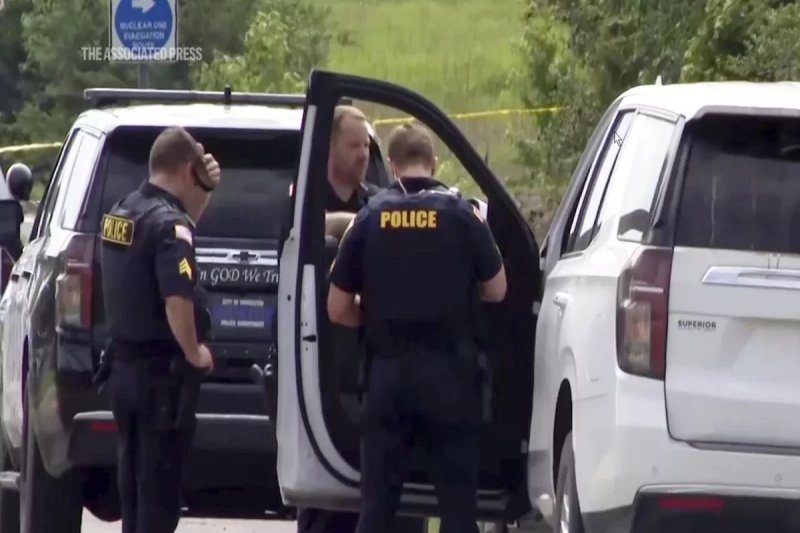
A dramatic exchange of gunfire outside the White House has once again placed the spotlight on security threats facing the U.S. presidential complex.
The shooting, which ended with the death of the suspect and left a bystander wounded, triggered a temporary lockdown of the White House and prompted a major federal investigation, News.az reports.
RECOMMENDED STORIES
While officials say the threat was quickly neutralized, the incident has raised broader questions about presidential security, mental health concerns, and a recent pattern of security scares in Washington.
What exactly happened?
According to the U.S. Secret Service, the incident unfolded shortly after 6 p.m. local time at a checkpoint near 17th Street and Pennsylvania Avenue, one of the security controlled access points close to the White House grounds.
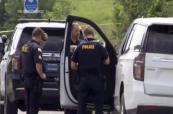
Authorities said a man approached the checkpoint, removed a handgun from a bag, and opened fire on Secret Service officers. Officers immediately returned fire, striking the suspect. He was transported to a hospital but later died from his injuries. A bystander was also hit by gunfire during the incident, although investigators have not yet determined whether that person was struck by shots fired by the suspect or during the officers' response. No Secret Service personnel were injured.
Who was the suspect?
Federal officials initially described the gunman as an emotionally disturbed person who had previously attracted the attention of law enforcement. Officials also revealed that a court issued stay away order had been imposed on him before the shooting.
Multiple media reports later identified the suspect as a 21 year old man from Maryland. According to those reports, he had previous encounters with the Secret Service and had allegedly attempted to access restricted White House areas in the past. Court records cited by media outlets indicate that he underwent psychiatric evaluation following earlier incidents near the presidential complex.
Investigators are now examining his background, communications, social media activity and recent movements in an effort to determine whether he acted alone and what motivated the attack.
Was President Donald Trump in danger?
President Donald Trump was inside the White House at the time of the shooting. However, officials emphasized that the suspect never breached the White House grounds or came close to protected areas inside the complex. The checkpoint where the incident occurred functions as an outer security layer designed specifically to intercept threats before they reach the White House itself.
As soon as shots were fired, Secret Service protocols were activated. The White House complex was temporarily locked down, reporters were moved to secure locations, and additional security personnel were deployed across the grounds. The lockdown was lifted after authorities determined there was no continuing threat.
How did witnesses describe the shooting?
Journalists working on the White House grounds reported hearing what sounded like a rapid burst of gunfire. Some described hearing numerous shots within seconds.
Members of the White House press corps were instructed to move into secure areas while armed officers secured the scene. Video recordings captured the sound of repeated gunfire and the immediate response by security personnel.
The incident created confusion in the first moments after the shooting, as witnesses attempted to determine whether the gunfire represented an isolated confrontation or a larger attack.
Why is the bystander injury important?
One of the central questions investigators are trying to answer concerns the wounded bystander.
Officials have confirmed that a civilian was struck during the incident but have not publicly identified the person or released detailed information regarding their condition. Investigators are conducting forensic analysis to determine exactly whose bullet caused the injury.
Such reviews are standard following officer involved shootings because they help establish a precise timeline of events and evaluate whether existing response procedures were effective.
Why is this incident attracting so much attention?
The shooting occurred amid an unusually active period for presidential security.
Less than a month earlier, another armed individual allegedly opened fire inside the hotel hosting the White House Correspondents' Association dinner in Washington. That incident forced President Trump and other senior officials to be moved from the venue while law enforcement officers responded.
The close timing of multiple security incidents has intensified public discussion about threats directed toward high profile government figures and locations.
Does this indicate a wider security problem?
Not necessarily, but it highlights several persistent challenges.
The White House is among the most protected locations in the world. It is guarded by multiple layers of security that include surveillance systems, intelligence monitoring, physical barriers, armed officers, tactical response teams and restricted access zones. Yet security agencies must continuously defend against unpredictable threats posed by lone actors who may act with little warning.
Many recent attacks and attempted attacks against public officials have involved individuals acting alone rather than organized groups. Such cases can be especially difficult for authorities because warning signs may be limited or emerge only shortly before an incident occurs.
What role could mental health have played?
Officials have repeatedly referred to the suspect as emotionally disturbed, making mental health an important aspect of the investigation. Reports indicate that the suspect had previous interactions with authorities and may have undergone psychiatric evaluation before the shooting.
However, investigators caution against drawing conclusions before the inquiry is completed. Mental health concerns alone do not explain motives, and authorities will examine a range of factors including personal circumstances, possible grievances and any evidence of intent.
How does White House security work?
Protecting the White House requires a combination of visible and invisible security measures. The Secret Service maintains armed checkpoints, patrol units, sniper teams, surveillance cameras, motion detection systems and rapid response forces around the complex.
In addition to physical security, intelligence agencies constantly monitor potential threats against the president and federal institutions. Individuals considered potential risks may be tracked, questioned or subjected to legal restrictions if authorities believe there is a credible threat.
The existence of a stay away order in this case suggests that law enforcement agencies were already aware of concerns involving the suspect before the shooting occurred.
What happens next?
Several federal agencies, including the Secret Service and the FBI, are participating in the investigation. Authorities will review surveillance footage, witness testimony, forensic evidence and ballistic findings to reconstruct the incident in detail.
Investigators are expected to focus on several key questions:
-
What motivated the suspect?
-
Why did he approach the White House checkpoint?
-
Did he intend to target law enforcement personnel, the White House, or specific government officials?
-
How did previous encounters with authorities influence the events?
-
How was the bystander injured?
-
Are any changes needed to existing security procedures?
The Secret Service will also conduct its standard internal review of the officers' response and use of force.
What does the incident ultimately reveal?
The shooting demonstrates both the continuing threat environment surrounding the White House and the effectiveness of the protective systems designed to defend it.
Although an armed individual managed to reach an outer checkpoint and open fire, security personnel responded within seconds and prevented the threat from progressing further. At the same time, the event underscores how quickly isolated acts of violence can disrupt even the most heavily secured government locations and why federal agencies remain on constant alert for potential threats.
The incident is likely to renew debate in the United States over public safety, mental health intervention, security screening procedures and the challenges faced by law enforcement agencies tasked with protecting national leaders. As investigators continue their work, more details about the suspect, his motives and the events leading up to the shooting are expected to emerge.
By Faig Mahmudov


Similar news