Ex-Tropical Cyclone Alfred brings decades-high rainfall to Australia VIDEO


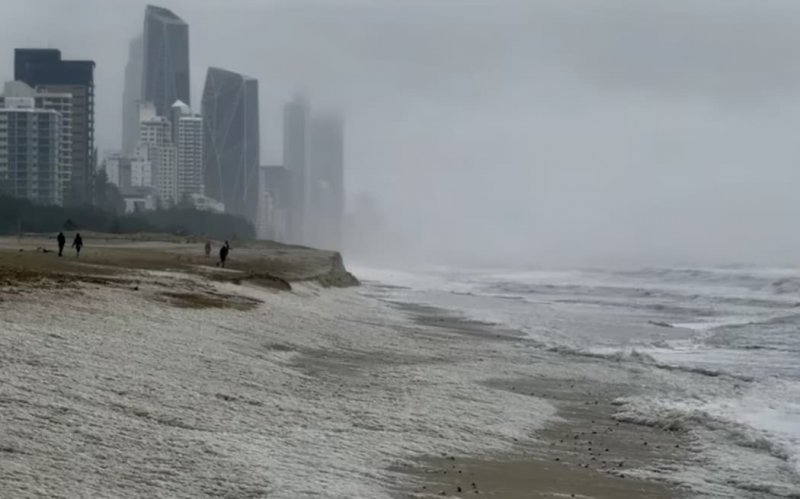
Ex-Tropical Cyclone Alfred has unleashed heavy rain, strong winds, and high surf along Australia's east coast for the past week, delivering some of the highest rainfall in decades to southern Queensland.
Alfred made landfall as ex-Tropical Cyclone at about 8pm on Saturday. It is now pushing inland through southern Queensland, having transformed from a closed low-pressure system with tightly rotating winds into a low-pressure trough, News.Az reports, citing Australian media.
Despite a last-minute weakening before it hit the coast, Alfred's slow movement still generated some of the region's most extreme weather in decades.
One of the first impacts to be felt was the waves, as Alfred's offshore ferocity pounded the coast with waves as high as "three or four-storey buildings".
It included a 12.3-metre wave on the Gold Coast, the highest recorded in 38 years of measurements.
While surfers made the most of the large swell in the lead-up to Alfred, the waves gouged millions of cubic metres of sand from about 500 kilometres of coastline between Coffs Harbour, in New South Wales, and Queensland's Sunshine Coast.
Ex-Cyclone Alfred has caused beach erosion so extreme, it has left escarpments up to 6 metres high in some dunes, including on iconic Gold Coast tourist stretches.
For most areas, it was Alfred's deluge after it made landfall that delivered the most significant impact.
Overnight on Sunday, rain and thunderstorms brought widespread falls of 200-400mm across Brisbane, the Gold Coast, the Scenic Rim, and even into the Lockyer Valley.
It included a huge total of 275.2mm in Brisbane's main gauge in the 24 hours to 9am Monday, making it the city's wettest day in half a century.
The last time the city had a higher daily rainfall total was in January 1974, the year of the devastating Brisbane River floods in the wake of Tropical Cyclone Wanda, when 314mm fell in 24 hours.


Similar news