AI as a weapon: A new threat to global security


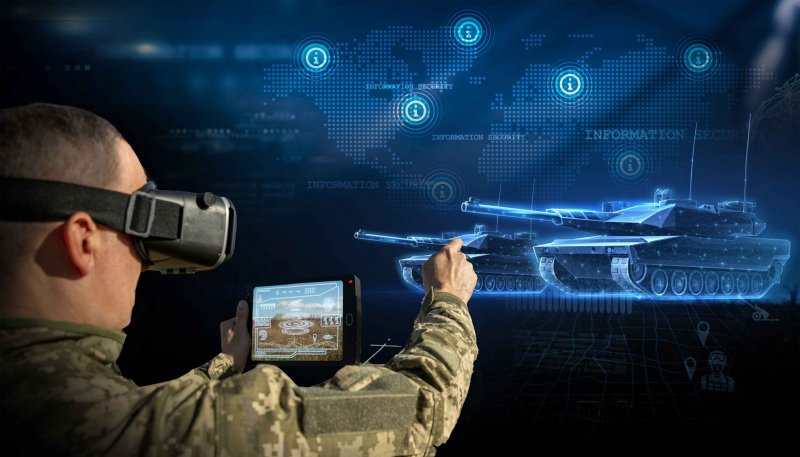
Artificial intelligence is no longer just an economic or technological force. It is rapidly emerging as a strategic instrument with direct implications for global security, News.Az reports.
Governments, militaries, and non-state actors are increasingly integrating AI into defense systems, intelligence analysis, cyber operations, and information warfare. As this transformation accelerates, AI is reshaping how power is projected, how conflicts are fought, and how threats emerge – often faster than legal, ethical, and diplomatic frameworks can adapt.
This shift has led security experts to warn that AI is becoming a new class of weapon, one that is scalable, asymmetric, and difficult to control.
From tool to weapon
Historically, military technologies evolved through visible hardware: tanks, aircraft, missiles, and nuclear weapons. AI is different. It is largely invisible, embedded in software, data pipelines, and algorithms. Yet its impact can be just as decisive.
AI enables machines to identify targets, predict behavior, optimize attacks, and make decisions at machine speed. When combined with weapons systems, cyber capabilities, or mass surveillance, AI moves from being a support tool to an active force multiplier. The danger lies not only in what AI can do today, but in how quickly its capabilities can spread and evolve.
Unlike nuclear or chemical weapons, AI does not require rare materials or large industrial infrastructure. Code can be copied, modified, and deployed across borders with minimal cost. This radically lowers the barrier to entry for advanced military capabilities.
Autonomous weapons and loss of human control
One of the most controversial security risks is the development of lethal autonomous weapons systems, often referred to as “killer robots.” These systems can select and engage targets without direct human intervention once activated.
Supporters argue that autonomy can reduce human error and protect soldiers. Critics warn that removing humans from the decision to use lethal force creates unacceptable ethical and strategic risks. Machine decision-making lacks moral judgment, contextual understanding, and accountability. Errors, misidentification, or adversarial manipulation could trigger unintended escalation.
The concern is not limited to advanced militaries. Autonomous drones and loitering munitions are becoming cheaper and more accessible. In unstable regions, such systems could be used by militias, terrorist groups, or criminal networks, dramatically increasing their destructive potential.
AI-driven cyber warfare
Cyber conflict is already a permanent feature of global security, and AI is amplifying its scale and sophistication. AI systems can automatically discover software vulnerabilities, generate adaptive malware, and launch highly targeted phishing campaigns. Defensive systems, in turn, rely on AI to detect anomalies and respond in real time.
This creates a constant arms race in cyberspace. Attacks can unfold at speeds far beyond human reaction time, increasing the risk of miscalculation. A cyber operation originally intended for espionage could escalate into infrastructure disruption, financial chaos, or even physical harm if critical systems are affected.
AI also blurs attribution. When attacks are automated, distributed, and constantly evolving, identifying the responsible actor becomes harder. This complicates deterrence and accountability, core pillars of traditional security strategy.
Information warfare and cognitive security
AI has transformed information into a battlefield. Generative models can produce realistic fake text, images, audio, and video at scale. Deepfakes can impersonate political leaders, military officials, or journalists, undermining trust in institutions and media.
This weaponization of information targets societies rather than armies. It aims to polarize populations, manipulate elections, incite unrest, or erode confidence in democratic processes. Unlike conventional attacks, the damage is psychological and social, making it harder to measure and respond to.
For global security, this creates a new vulnerability: cognitive infrastructure. When citizens can no longer distinguish truth from fabrication, decision-making at every level – from voters to policymakers – becomes compromised.
Surveillance, repression, and authoritarian advantage
AI-powered surveillance systems enable unprecedented monitoring of populations. Facial recognition, behavior prediction, and large-scale data analysis allow states to track individuals, suppress dissent, and enforce control with minimal manpower.
From a security perspective, this gives authoritarian regimes a new form of stability that does not rely on legitimacy but on predictive repression. Such systems can identify “potential threats” before any action occurs, fundamentally altering the relationship between state and citizen.
Internationally, the export of surveillance AI raises concerns about digital authoritarianism. States with advanced AI capabilities can supply tools that strengthen repression abroad, reshaping alliances and influence without deploying troops.
Strategic instability and escalation risks
AI introduces instability into traditional deterrence models. During the Cold War, nuclear deterrence relied on clear signaling, slow decision cycles, and mutual understanding of catastrophic consequences. AI accelerates decision-making and compresses response times.
In crisis situations, AI-driven early warning systems or automated responses may recommend action before human leaders have time to assess context. False positives, data poisoning, or system errors could trigger escalation unintentionally.
Moreover, if states believe adversaries are using AI to gain decisive advantage, they may feel pressure to strike first or deploy systems prematurely. This “use it or lose it” dynamic increases the risk of rapid escalation.
Arms control struggles in the AI era
Existing arms control frameworks were designed for physical weapons. AI does not fit easily into these models. It is dual-use by nature, meaning the same algorithms can be used for civilian or military purposes. Verification is difficult, and development often occurs in private companies rather than state-run programs.
International discussions, including those under the United Nations, have highlighted the need for norms and safeguards, particularly around autonomous weapons. However, progress is slow. Major powers fear that restrictions could limit their strategic advantage while rivals continue development.
This creates a classic security dilemma: everyone agrees the risks are high, but no one wants to be the first to slow down.
The role of private actors
Another defining feature of AI as a security threat is the role of the private sector. Technology companies develop the most advanced models, control critical infrastructure, and employ top talent. Their decisions on access, deployment, and safeguards have global implications.
Unlike traditional defense contractors, AI firms often operate globally and serve both civilian and military clients. This blurs the line between commercial innovation and national security. It also raises questions about accountability when privately developed systems are used in conflict or repression.
Why AI security is not a future problem
AI as a weapon is not a hypothetical scenario. Elements of it are already in use across cyber operations, drone warfare, surveillance, and information campaigns. What makes it uniquely dangerous is its speed of diffusion and its ability to amplify both state and non-state power.
Small actors can punch far above their weight. Misuse can spread faster than regulation. And failures can cascade across digital and physical domains simultaneously.
The bottom line
AI represents a fundamental shift in global security dynamics. It lowers barriers to advanced capabilities, accelerates conflict, and targets not only military forces but societies themselves. While AI also offers defensive and stabilizing tools, its unchecked militarization risks creating a world where conflicts are faster, less predictable, and harder to control.
Managing this threat will require new forms of international cooperation, transparency, and restraint. Without them, AI may become not just another weapon in the arsenal, but a destabilizing force that reshapes the very nature of global security.


Similar news