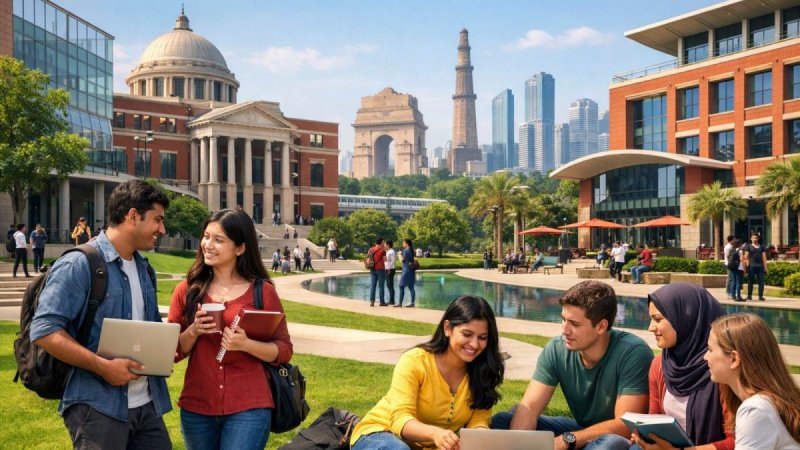
From prestigious institutions in the United States and the United Kingdom to universities in Canada, Australia, Germany, and Singapore, Indian students are increasingly visible on campuses around the world. Their growing presence reflects not only India’s strong academic culture but also the ambition of a new generation seeking global opportunities, News.Az reports.
Indian students are excelling in competitive admission processes, contributing to research and innovation, and building successful careers after graduation. Their journey into global universities is driven by a combination of academic preparation, determination, and a desire to participate in the international knowledge economy. As global education becomes more interconnected, Indian students continue to strengthen their influence in universities worldwide.
RECOMMENDED STORIES
One of the key reasons behind the success of Indian students abroad is the country’s deep-rooted emphasis on education. For many families in India, academic achievement is considered a primary pathway to social mobility and professional success.
Students are often encouraged to focus on subjects such as mathematics, science, and engineering from an early age. Competitive entrance examinations, demanding school curricula, and a strong culture of academic discipline prepare many Indian students to perform well in rigorous educational environments.
When applying to international universities, this background often gives them an advantage, particularly in technical fields such as engineering, computer science, and data science.
Universities worldwide recognize the strong analytical and problem-solving skills that many Indian students develop through their education system.
Admission to top universities around the world is highly competitive. Applicants must demonstrate academic excellence, strong test scores, and the potential to contribute to academic communities.
Indian students often perform exceptionally well in standardized tests such as English-language proficiency exams and graduate entrance tests. Their preparation and commitment to academic achievement allow many of them to meet the high admission standards set by leading universities.
Additionally, many students strengthen their applications through extracurricular activities, internships, research projects, and participation in academic competitions.
This combination of strong academic records and diverse achievements helps Indian applicants stand out in international admissions processes.
Science, technology, engineering, and mathematics (STEM) programs have become particularly popular among Indian students studying abroad. Universities in countries such as the United States, Canada, and Germany offer advanced research facilities, industry connections, and access to cutting-edge technological developments.
Indian students often pursue degrees in areas such as:
-
Computer science
-
Artificial intelligence
-
Electrical engineering
-
Mechanical engineering
-
Data science
-
Biotechnology
Their strong preparation in mathematics and analytical subjects makes them well suited for these demanding disciplines.
Many global universities actively recruit Indian students for STEM programs because of their academic strengths and potential contributions to research and innovation.
In the past, studying abroad was an opportunity available only to a limited number of Indian students. However, globalization, economic growth, and expanding educational partnerships have made international education more accessible.
Today, many universities offer scholarships, financial aid programs, and flexible study options that attract students from India. Governments in several countries also encourage international students by offering post-study work visas and pathways to professional employment.
Educational consultants, online resources, and international education fairs have also made it easier for Indian students to learn about opportunities abroad and navigate the application process.
As a result, the number of Indian students enrolling in foreign universities has increased significantly over the past two decades.
Studying abroad requires more than academic ability. Students must adapt to new cultural environments, different teaching styles, and unfamiliar social systems.
Indian students are often praised for their resilience and adaptability in international settings. Many come from multilingual backgrounds and have experience interacting with people from diverse cultural communities.
These experiences help them adjust more easily to multicultural university environments.
Additionally, Indian students frequently form supportive networks through student associations, cultural groups, and academic communities, which help them overcome challenges related to studying abroad.
Indian students are not only studying in global universities—they are also contributing to academic research and technological innovation.
Many graduate students from India participate in research projects that address global challenges, including climate change, healthcare technology, renewable energy, and artificial intelligence.
Their contributions are often reflected in academic publications, patents, and collaborative research initiatives.
Universities value these contributions because international students bring fresh perspectives and diverse ideas to research communities.
As a result, Indian students are becoming an important part of the global academic ecosystem.
For many Indian students, studying abroad is not only about education but also about building successful international careers. Graduates from global universities often gain access to internship opportunities, industry partnerships, and professional networks that help them secure high-quality jobs.
Many Indian graduates work in leading multinational companies, research institutions, and technology firms.
Fields such as software development, data science, finance, and engineering offer particularly strong career prospects.
Some graduates eventually return to India, bringing with them valuable international experience that contributes to the country’s growing technology and innovation sectors.
Others remain abroad and build influential careers in global industries.
In recent years, Indian students who studied abroad have increasingly become entrepreneurs and innovators.
Exposure to international education systems often encourages students to think creatively, identify global problems, and develop innovative solutions.
Many startups founded by Indian entrepreneurs in areas such as technology, healthcare, and financial services have gained international recognition.
These founders often combine their academic training with global networks and cross-cultural experience to build successful companies.
As a result, international education is helping produce a new generation of Indian leaders who influence industries worldwide.
Digital technology has also played an important role in helping Indian students access global education. Online learning platforms, virtual classrooms, and international academic collaborations allow students to interact with global faculty and peers even before traveling abroad.
Many universities now offer hybrid programs that combine online coursework with on-campus learning. This flexibility allows students from different economic backgrounds to participate in international education.
Technology has also made it easier for students to prepare for international exams, attend virtual university fairs, and connect with alumni networks.
These digital resources have helped accelerate the globalization of education for Indian students.
Despite their success, Indian students studying abroad also face challenges. Cultural differences, financial pressures, visa regulations, and homesickness can make the transition to international education difficult.
However, these challenges often strengthen students’ resilience and independence. Learning to navigate unfamiliar environments helps them develop valuable life skills that benefit their future careers.
Universities are increasingly recognizing these challenges and providing support services such as mentorship programs, counseling, and academic assistance for international students.
These initiatives help ensure that students from India and other countries can succeed in their academic journeys.
The influence of Indian students in global universities is likely to continue growing in the coming decades. India has one of the youngest populations in the world, and demand for higher education continues to increase.
At the same time, universities worldwide are seeking talented international students who can contribute to research, innovation, and cultural diversity on campus.
As global collaboration becomes more important in solving complex challenges, students who have international education experience will play a crucial role in shaping the future.
Indian students, with their strong academic preparation and global ambitions, are well positioned to become leaders in this evolving educational landscape.
Indian students are making a powerful impact on universities across the world. Their strong academic foundations, determination, and willingness to embrace global opportunities have allowed them to succeed in highly competitive educational environments.
From excelling in STEM disciplines to contributing to cutting-edge research and entrepreneurship, Indian students are playing an increasingly important role in international higher education.
As globalization continues to reshape education and the workforce, the achievements of Indian students in global universities demonstrate how talent, dedication, and ambition can open doors to opportunities far beyond national borders.