Central Asia balances fossil energy with green transformation


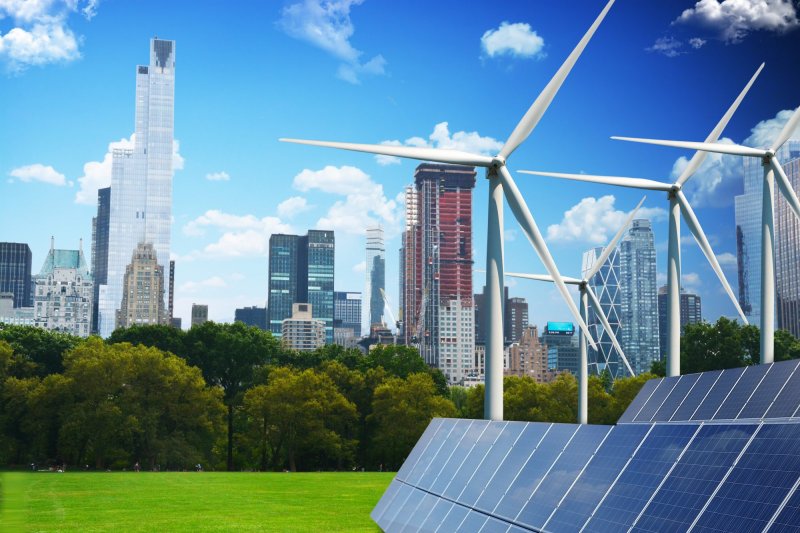
Energy has always occupied a central position in the political and economic life of Central Asia, News.Az reports.
Abundant reserves of oil natural gas coal and hydropower shaped national development paths after independence and continue to influence foreign policy choices today. What has changed is the strategic context in which energy decisions are made. Global climate pressure technological change and shifting demand patterns have pushed the region to rethink how energy security and sustainability can coexist.
Central Asian states are now pursuing a dual objective. They seek to protect energy security by monetizing existing resources while simultaneously preparing for a future defined by low carbon growth. This balancing act has become one of the most discussed and structurally important themes across the region.
Legacy of fossil fuel dependence
Following the dissolution of the Soviet Union Central Asian economies inherited energy systems designed for centralized planning rather than market efficiency. Oil and gas exports became vital sources of state revenue while domestic power systems relied on aging infrastructure. Over time fossil fuels became deeply embedded in national budgets employment and political stability.
Kazakhstan emerged as a major oil producer with strong export links to global markets. Turkmenistan built its economic model around natural gas production and pipeline diplomacy. Uzbekistan relied on a mixed system combining gas coal and hydropower to support domestic consumption and regional exports.
This dependence provided stability but also created vulnerabilities. Price volatility infrastructure aging and environmental costs highlighted the limits of a fossil centered model. These pressures laid the groundwork for policy reassessment.
Energy security in a changing global market
Energy security remains a core priority for Central Asian governments. It encompasses reliable supply affordable prices and predictable export revenues. Recent global disruptions have reinforced the importance of diversified routes markets and technologies.
Central Asian exporters have become more attentive to market access and transit risks. Diversification of buyers and routes is now framed as an energy security imperative rather than a purely commercial choice. At the same time domestic energy demand is rising due to population growth urbanization and industrial development.
Ensuring sufficient electricity and fuel supply has become politically sensitive. Power shortages winter outages and tariff reforms generate public debate and policy urgency. Governments increasingly link energy security with social stability and economic resilience.
Renewable potential and strategic opportunity
Central Asia possesses vast renewable energy potential that is now moving from theoretical assessment to practical investment. Solar radiation levels in Kazakhstan Uzbekistan and Turkmenistan rank among the highest in Eurasia. Wind corridors across the steppes and deserts offer large scale generation opportunities. Mountainous areas in Kyrgyzstan and Tajikistan provide hydropower capacity with regional export potential.
This renewable endowment is reshaping national energy strategies. Governments view green energy not only as a climate obligation but as an economic opportunity to attract investment technology and long term competitiveness.
Uzbekistan has announced ambitious plans to expand solar and wind generation with international partners. Kazakhstan promotes renewable auctions and grid modernization as part of its energy transition agenda. Hydropower remains central to development strategies in upstream states.
Foreign investment and technology transfer
The energy transition in Central Asia relies heavily on foreign investment and expertise. International companies development banks and strategic partners are actively involved in renewable projects grid upgrades and energy efficiency initiatives.
China European actors and Middle Eastern investors all play visible roles. Their engagement reflects broader geopolitical competition but also genuine market interest. For Central Asian states diversified investment sources reduce dependency and improve bargaining power.
Technology transfer is particularly important. Modern grids storage solutions and digital management systems are essential for integrating renewables. Governments emphasize capacity building and local workforce development to maximize long term benefits.
Balancing exports and domestic transition
A key challenge lies in balancing continued fossil fuel exports with domestic decarbonization goals. Oil and gas revenues finance public spending infrastructure and social programs. Abrupt reduction would create fiscal and political stress.
As a result Central Asian strategies emphasize gradual transition. Fossil fuels are framed as a bridge supporting development while renewable capacity scales up. Gas in particular is often positioned as a transitional fuel supporting grid stability and export income.
This pragmatic approach reflects regional realities. It acknowledges climate imperatives while prioritizing economic stability and national sovereignty in policy design.
Regional power trade and integration
Energy security in Central Asia is increasingly viewed through a regional lens. Cross border electricity trade offers efficiency gains seasonal balancing and revenue opportunities. Hydropower rich states can export surplus electricity during peak seasons while importing fuel based power when needed.
Reviving and modernizing regional power networks has become a policy priority. Cooperation reduces duplication of capacity and enhances resilience to climate variability. It also supports broader regional integration goals.
Energy diplomacy thus complements trade and security cooperation. Shared infrastructure fosters interdependence and trust among neighboring states.
Climate pressure and policy reform
Climate change adds urgency to energy reform. Rising temperatures water stress and extreme weather events directly affect energy production and consumption. Hydropower output depends on glacier melt and river flows while heatwaves increase electricity demand.
Central Asian governments increasingly incorporate climate risk into energy planning. National strategies reference emissions reduction adaptation and resilience. Participation in international climate frameworks reinforces domestic reform momentum.
Public discourse around environmental protection is also growing. Air quality water use and land degradation are now part of energy policy debates. This societal dimension strengthens the case for transition.
Social dimensions of the transition
Energy transition is not only a technical or economic issue. It has significant social implications. Employment in fossil fuel sectors regional inequality and energy affordability are sensitive topics.
Governments emphasize just transition principles that protect workers and communities. Training programs diversification initiatives and targeted subsidies aim to manage social impact. Success in this area will influence public acceptance of reform.
Affordable energy remains a political priority. Tariff adjustments are often accompanied by compensation mechanisms to protect vulnerable households.
Geopolitics of green energy
The shift toward green energy also carries geopolitical implications. Control over clean technology supply chains financing standards and regulatory norms shapes future influence. Central Asia seeks to position itself as a reliable partner in global decarbonization efforts.
By exporting clean electricity developing green hydrogen potential and participating in climate diplomacy the region enhances its strategic relevance. Energy transition thus becomes a tool of soft power and international engagement.
This perspective aligns with broader multivector foreign policies. Energy choices reinforce diplomatic balance and long term autonomy.
A structural transformation underway
Energy security and green transition together define a structural transformation in Central Asia. The region is moving from a resource extraction model toward a more diversified and sustainable energy system. This transition is gradual complex and deeply political.
Success depends on policy coherence investment governance and regional cooperation. While challenges remain the direction is clear. Energy strategy is no longer about supply alone but about resilience sustainability and global integration.
Central Asia stands at a pivotal moment. How it manages the intersection of energy security and green transition will shape economic trajectories geopolitical roles and social stability for decades to come.
By Faig Mahmudov


Similar news