How global economic shocks and market volatility redefine financial stability and everyday life


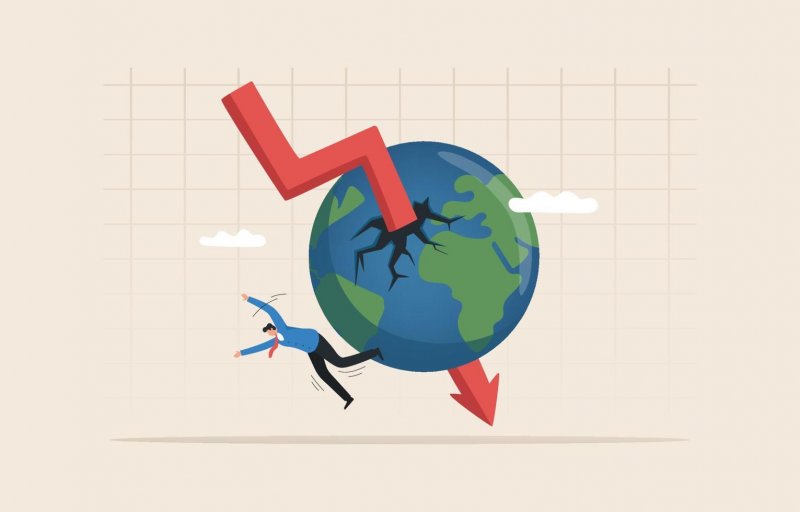
Global economic shocks and market volatility rank consistently among the most searched themes within any given week, News.Az reports.
Inflation surprises, interest rate decisions, currency swings, energy price spikes, and sudden market sell-offs regularly dominate headlines and public attention. What makes this topic evergreen is not the occurrence of a single crisis, but the reality that the global economy is now operating in a near-constant state of uncertainty, where shocks are frequent and recovery periods are often short-lived.
At the structural level, the global economy has become more interconnected and more exposed to disruption. Supply chains span continents, financial markets react in real time, and policy decisions taken in one major economy can instantly affect conditions elsewhere. This interconnectedness magnifies both growth opportunities and vulnerabilities. When stability is disrupted, the consequences ripple quickly across borders, sectors, and households.
One of the most visible sources of market volatility is monetary policy. Interest rate decisions by central banks, particularly in major economies, have outsized influence on global financial conditions. Actions taken by institutions such as the Federal Reserve often trigger immediate reactions in equity markets, bond yields, and foreign exchange rates worldwide. Investors, businesses, and consumers closely monitor these signals, aware that tighter or looser financial conditions can reshape borrowing costs, investment plans, and employment prospects.
Inflation has re-emerged as a central driver of economic anxiety. After years of relatively stable prices, many economies have experienced sharp increases in the cost of living. Food, energy, housing, and transportation costs have placed pressure on household budgets, altering consumption patterns and political priorities. Inflation shocks tend to generate strong search interest because they affect daily life directly, from grocery bills to mortgage payments.
Energy markets play a particularly important role in transmitting economic shocks. Fluctuations in oil and gas prices can act as both a symptom and a cause of broader instability. Supply disruptions, geopolitical tensions, or production decisions can push prices sharply higher or lower within days. These movements affect not only energy producers and consumers but also inflation, trade balances, and government revenues, especially in energy-dependent economies.
Currency volatility is another defining feature of modern economic shocks. Exchange rates respond rapidly to interest rate changes, capital flows, and shifts in investor sentiment. For emerging markets, sudden currency depreciation can increase debt burdens and import costs, forcing difficult policy choices. For advanced economies, sharp currency movements can influence trade competitiveness and financial stability. As a result, currency swings often become focal points of weekly economic attention.
Financial markets themselves amplify volatility through sentiment and expectations. In an era dominated by algorithmic trading and instant information flows, markets can move sharply on anticipation rather than confirmed outcomes. A hint of policy change, a weak economic indicator, or a geopolitical headline can trigger large-scale buying or selling. This sensitivity makes markets prone to short-term turbulence, even when underlying economic fundamentals change more gradually.
Global institutions attempt to manage and mitigate these shocks, but their influence has limits. Organizations such as the International Monetary Fund provide financial support, policy guidance, and crisis management frameworks, particularly for vulnerable economies. However, the scale and frequency of recent shocks have strained existing tools and raised questions about the adequacy of global economic governance in a rapidly changing environment.
Another source of volatility lies in debt dynamics. Many governments, companies, and households entered recent years with elevated debt levels. Rising interest rates increase the cost of servicing this debt, exposing financial fragilities that were manageable under looser conditions. Concerns about sovereign debt sustainability, corporate defaults, or banking sector stress can quickly spread across markets, reinforcing cycles of fear and risk aversion.
Trade disruptions also contribute to economic instability. Shifts toward protectionism, sanctions regimes, and strategic trade controls have altered long-standing commercial relationships. While some of these measures are driven by national security or industrial policy considerations, they often carry economic costs. Reduced trade flows, higher input prices, and fragmented markets can weaken growth and increase uncertainty, making trade policy another recurring trigger of market volatility.
For businesses, navigating economic shocks requires constant adjustment. Companies must manage fluctuating input costs, changing consumer demand, and uncertain financing conditions. Long-term planning becomes more difficult when macroeconomic signals are mixed or rapidly changing. As a result, investment decisions may be delayed, hiring plans revised, and risk management elevated to a central strategic function.
Households experience economic volatility in deeply personal ways. Job security, purchasing power, and access to credit are directly affected by macroeconomic conditions. Even when economies avoid recession, persistent uncertainty can undermine consumer confidence, leading people to save more and spend less. This behavior, in turn, can slow economic activity, creating feedback loops that prolong periods of weak growth.
Governments face a delicate balancing act in responding to economic shocks. Fiscal support can cushion downturns but may worsen debt levels. Tightening policy can stabilize prices but risks slowing growth. In many cases, policymakers must choose between imperfect options, aware that public tolerance for economic pain is limited. These choices often become politically contentious, further amplifying public interest and scrutiny.
Technology and digital finance have added new dimensions to market volatility. Rapid information dissemination, online trading platforms, and alternative financial assets can accelerate market movements. While these innovations increase access and efficiency, they can also intensify herd behavior and speculative swings, making markets more reactive to short-term signals.
Looking ahead, the persistence of global economic shocks suggests that volatility is becoming a structural feature rather than a temporary phase. Climate-related risks, demographic shifts, technological transformation, and geopolitical competition all have economic implications that can manifest suddenly and unpredictably. Managing these risks will require stronger coordination, more resilient institutions, and realistic expectations about the limits of policy control.
Ultimately, the intense weekly search interest in economic shocks and market volatility reflects a shared concern about stability and security. In a world where financial conditions can change rapidly, understanding the forces driving these shifts is essential. Economic shocks are no longer distant or abstract events; they shape decisions made by governments, businesses, and households every day. Recognizing this reality is a crucial step toward building resilience in an era defined by constant economic change.


Similar news