NASA rover spots possible iron-nickel meteorite on Mars


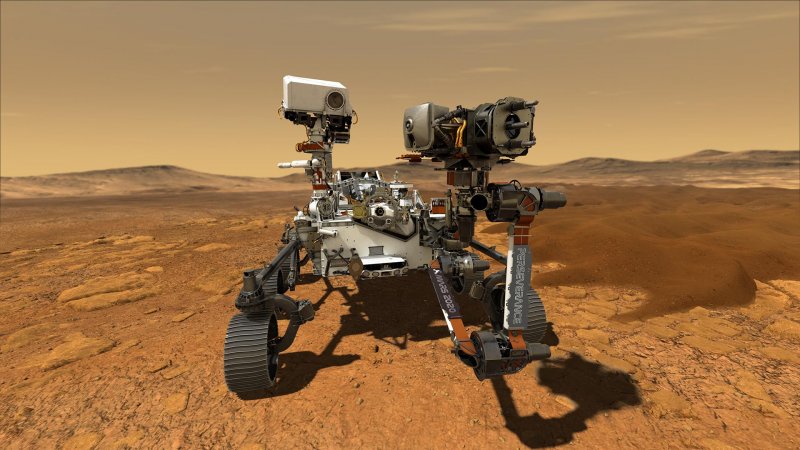
NASA’s Perseverance rover has discovered an unusual rock on Mars that mission scientists believe may be an iron-nickel meteorite.
The rock, dubbed Phippsaksla, stands out due to its distinctive shape and elevated position above the otherwise flat and fractured terrain.
Measuring more than 2.5 feet across, the exotic formation caught researchers’ attention as Perseverance conducted investigations outside Jezero Crater, the ancient river-carved basin the rover has been exploring since its arrival in 2021.
Perseverance captured detailed images of Phippsaksla on September 2 and September 19, but news of the discovery surfaced much later. A prolonged U.S. federal government shutdown disrupted routine NASA communications, delaying public release of mission updates. The agency finally shared information about the detection — along with other rover activities — on November 13.
If confirmed as a meteorite, Phippsaksla would be the first such discovery for Perseverance. The Curiosity rover has cataloged several metal-rich meteorites during its exploration of Gale Crater roughly 2,000 miles away, and earlier rovers, Opportunity and Spirit, found these foreign rocks as well. Their absence along Perseverance’s route has puzzled mission scientists.
"It has been somewhat unexpected that Perseverance had not seen iron-nickel meteorites within Jezero crater," said Candice Bedford, a Purdue University research scientist, in a delayed Oct. 1 mission update, "particularly given its similar age to Gale crater and number of smaller impact craters suggesting that meteorites did fall on the crater floor, delta, and crater rim throughout time."
Initial readings from Perseverance’s SuperCam, an instrument that fires a laser to analyze a rock’s composition, revealed high levels of iron and nickel, a combination commonly found in meteorites that originate deep inside large asteroids. The chemistry suggests the rock formed elsewhere before landing on Mars.
Meteorites are common in the solar system, but harder to spot on Earth. Scientists estimate that about 48.5 tons of this debris reach the planet each day, most of it burning up in the atmosphere or falling into oceans. Only about 60,000 meteorites have been identified on Earth to date.
Most known meteorites come from asteroids, though a small number originate from the moon or Mars. At least 175 Martian meteorites have been found on Earth — all igneous rocks that once crystallized from magma.
On Mars itself, iron-nickel meteorites tend to survive well in the thin atmosphere and harsh environment. Since 2005, The Meteoritical Society, an international organization that tracks such finds, has formally recognized 15 Martian meteorites spotted by rovers. Curiosity’s 2023 discovery of a foot-wide rock nicknamed Cacao, also believed to be metal-rich, is not yet among them.


Similar news