"We feel very confident that we can handle a ‘normal flood,’ but no one really knows what a 41-, 42-foot river looks like south of Mount Vernon," Darrin Morrison, a commissioner for Dike District 3 in Skagit County, said during a public meeting Wednesday night.
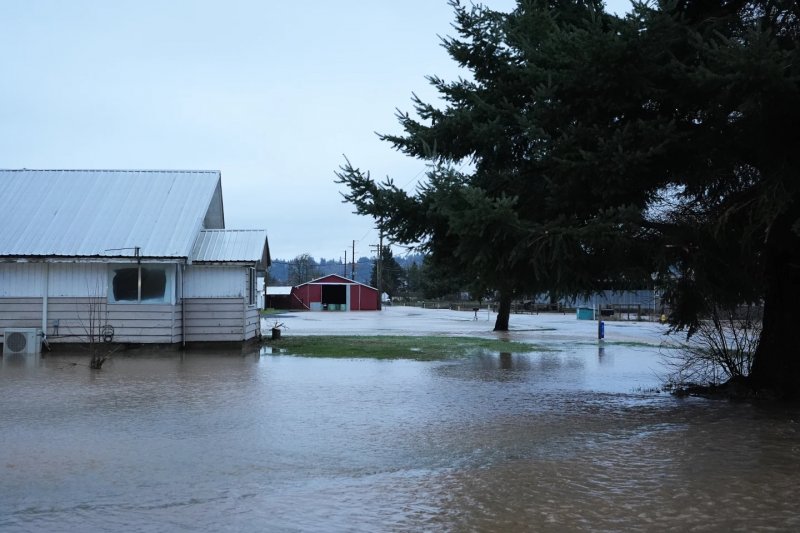
There has been more than 10 inches of rain in parts of Washington and northwest Oregon in recent days, and conditions are expected to continue into early Thursday before finally weakening.
"While the rain will diminish tonight into early Friday, ongoing major river flooding and the threat of landslides will continue across portions of western Washington state and northwest Oregon for several days," the National Weather Service said in an update early Thursday.
Authorities have not confirmed the number of people ordered to evacuate, but estimates range from 75,000 to 100,000. Parts of Mount Vernon, a city of about 35,000 people north of Seattle, long plagued by flooding, are in the evacuation zone.
Areas also under evacuation orders are parts of the town of Sedro-Wooley, Orting, Ebey Island, land around the Puyallup River and Sumner.
A flood wall was installed in Mount Vernon in 2018 to protect low-lying downtown areas, and it protected the city during heavy rains and high river levels in 2021. But locals now fear the wall could be breached.
Ellen Gamson, executive director of the Mount Vernon Downtown Association, told The Associated Press that "it could potentially be catastrophic."
The Lummi Nation, which includes several Native American tribes in Western Washington based west of Bellingham, declared a state of emergency.
"Continued tidal influence, rainfall, or additional flooding may result in the Reservation becoming temporarily isolated until conditions improve," Vice-Chairman Terrence Adams wrote in a Wednesday press release.