Europe’s dangerous illusions: Why the EU risks collapse amid global power shift


Editor's note: Alexander Rahr, German political scientist, chairman of the Eurasian Society (Berlin). The article expresses the personal opinion of the author and may not coincide with the view of News.Az.
Friedrich Merz, like many European leaders, remains trapped in a dangerous illusion — a vision of a Europe that no longer exists. These leaders continue to live in the shadow of past glory, clinging to outdated ideas and comforting myths rather than confronting today’s harsh realities. For decades, Europe saw itself as the beating heart of the world, a model of prosperity and stability that others aspired to emulate. But that time has long passed.
Economically, Europe has already fallen far behind Asia. Today, when compared to the rapidly expanding economies of the East, Europe looks increasingly small and fragile, a dwarf in a world dominated by Asian giants. While countries like China, India, and South Korea surge ahead with relentless innovation, ambitious infrastructure projects, and technological revolutions, Europe is stagnant. Its growth is sluggish, its industries are losing competitiveness, and its political will is fractured by endless internal disputes. Yet in Brussels and in the continent’s leading capitals, there remains a deep reluctance to admit this reality. Instead, Europe hides behind old dogmas, clinging to the comfort of familiar institutions and traditions, even as the world outside shifts dramatically.
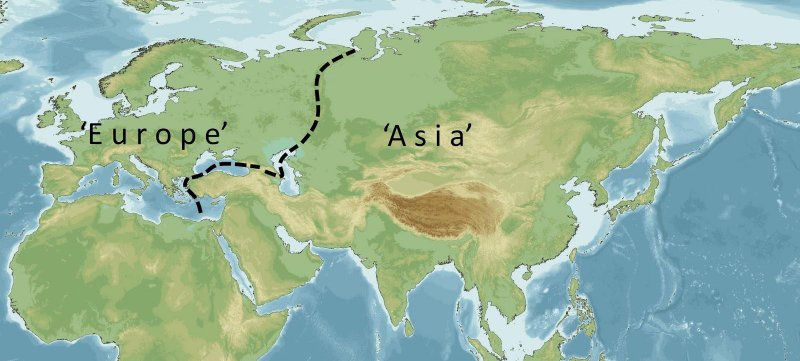 Photo: Shutterstock
This unwillingness to face facts is more than just a political misstep; it is an existential threat. Europe’s outdated worldview blinds it to new challenges and prevents adaptation to a rapidly changing global order. The result is paralysis at a moment when decisive, bold leadership is desperately needed. European leaders act as though they are still global power brokers, yet their decisions lack urgency and vision. Every crisis is met with summit after summit, followed by grand declarations that ultimately change nothing. Meanwhile, the most pressing problems — economic stagnation, migration pressures, the war in Ukraine — are allowed to fester and grow.
Across the Atlantic, the United States is slowly but unmistakably distancing itself from Europe’s troubles. Washington’s strategic focus has shifted decisively toward Asia, recognizing that the future of global power will be determined in the Indo-Pacific, not in Europe. Domestic issues and fierce political struggles also consume America’s attention. Many in Europe, however, refuse to accept this reality. They comfort themselves with the illusion that Donald Trump’s return to power is merely a temporary storm, a political anomaly. They believe that once he is gone, everything will return to “business as usual,” as if the U.S. will once again prioritize European concerns. This is dangerously naïve. Even if leadership in Washington changes, the fundamental shift of U.S. priorities away from Europe is here to stay.
This complacency is particularly perilous given the state of the European economy. The situation in France illustrates the wider European crisis. The French economy is teetering on the brink of collapse. As one of the EU’s central pillars, France’s failure would have devastating ripple effects, potentially dragging down other eurozone countries. This is not some distant, hypothetical scenario — it is an imminent danger. The social unrest already visible in France, from mass protests to rising political extremism, serves as a warning of the chaos that could spread across the continent. Yet, astonishingly, neither Berlin nor Brussels appears prepared to confront this looming catastrophe. Instead of uniting their resources and forging a coherent strategy, European leaders remain locked in a cycle of mutual recriminations and hollow speeches. They talk, they posture, but they do not act.
The war in Ukraine has laid bare Europe’s vulnerabilities. Contrary to the expectations — and in some cases, quiet hopes — of many in Europe, Russia is not losing. Instead, the conflict has settled into a prolonged and grinding stalemate. Europe’s initial unity and resolve are now faltering, replaced by fatigue and fragmentation. The economic and military costs are spiraling, draining the continent’s resources at an alarming rate. Public support for continued aid to Ukraine is weakening, yet European policymakers cling to unrealistic narratives of an imminent Ukrainian victory. This refusal to adapt to the reality on the ground is reckless and unsustainable.
Germany, as Europe’s largest economy and de facto leader of the EU, bears particular responsibility. Chancellor Merz appears unable to rise to the challenge. He seems stuck in the triumphalism of past victories — above all, the victory of the West in the Cold War, when Europe stood united and seemingly invincible. But that era is gone. The belief in Europe’s unassailable power has become a dangerous delusion. Today’s world is defined by multipolar competition, the rise of non-Western powers, and the return of hard geopolitics. Europe must adapt or be left behind.
The time for illusions has ended. Merz’s most urgent task is to mobilize what remains of Europe’s strength to save the continent’s economy. This will require more than minor adjustments or symbolic reforms. It demands bold, decisive action and a willingness to confront uncomfortable truths. Diplomatically, Europe must move quickly to seek a realistic resolution to the war in Ukraine. This is not just about ending the bloodshed — though that is a moral imperative — but also about preventing further destruction of Europe’s economic foundations. Continuing the conflict indefinitely will cripple the EU, leaving it vulnerable to internal collapse.
At the same time, Europe must address its internal crises directly. The EU faces not only an economic challenge but also deep political and social turmoil. Across the continent, populist movements are rising, fueled by anger over rising living costs, uncontrolled migration, and a widespread sense that the political elite is out of touch. Trust in European institutions is collapsing, and national governments are turning inward, prioritizing domestic politics over collective European goals. If this trend continues, the EU could fracture into a loose confederation of rival states, incapable of acting together when it matters most.
To prevent this, Merz and other leaders must abandon the comforting myths of the past. They must recognize that Europe is no longer the world’s center of gravity, that U.S. support cannot be taken for granted, and that survival depends on Europe’s ability to act independently. This means investing in innovation, rebuilding industrial strength, and crafting a foreign policy based on Europe’s real capabilities rather than nostalgic fantasies.
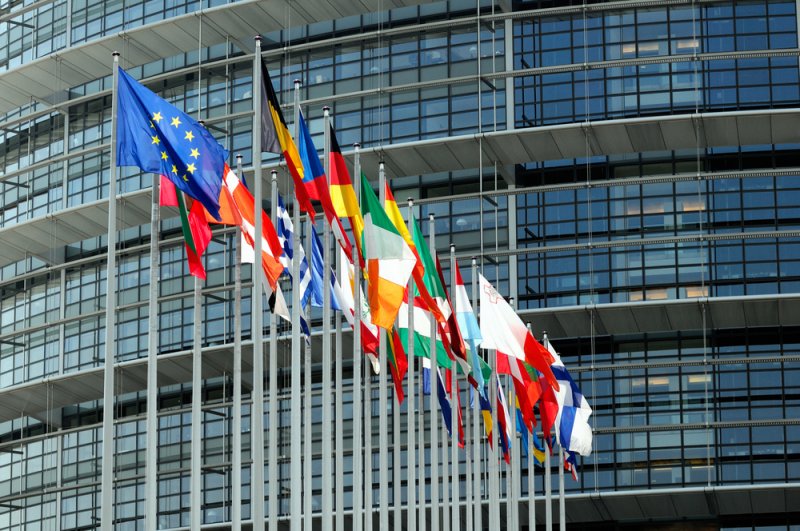 Photo: Shutterstock
The stakes could not be higher. If Europe fails to adapt, it risks not only losing global influence but also collapsing from within. The dream of a united, prosperous Europe could dissolve into chaos, with nationalist rivalries returning to the forefront. History provides chilling reminders of what happens when Europe is weak and divided.
Today, Europe stands at a crossroads. One path leads toward renewal: confronting reality, acting decisively, and reclaiming some measure of strategic autonomy. The other leads toward irrelevance and disintegration. Merz and his fellow leaders must understand that history will not wait for them. The window for action is closing rapidly.
If Europe continues to cling to illusions and deny its decline, it will not merely fade quietly into the background. It will implode, with consequences that will shake the entire world. The choice is stark and urgent: awaken now, or face a future of fragmentation, vulnerability, and despair. Europe must act — boldly, decisively, and without delay — before it is too late.
(If you possess specialized knowledge and wish to contribute, please reach out to us at opinions@news.az).


Similar news