Absheron project may reshape Azerbaijan’s gas export strategy



Editor’s note: Zaur Nurmamedov is a journalist and a graduate of the Faculty of Political Science at the Academy of Public Administration under the President of the Republic of Azerbaijan (1993–1999). He previously served as first deputy editor-in-chief of the Vesti.Az news portal (2009–2023). The views expressed in this article are his own and do not necessarily reflect the position of News.Az.
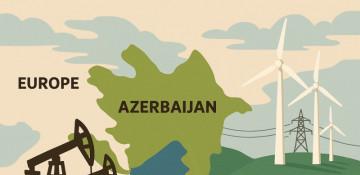
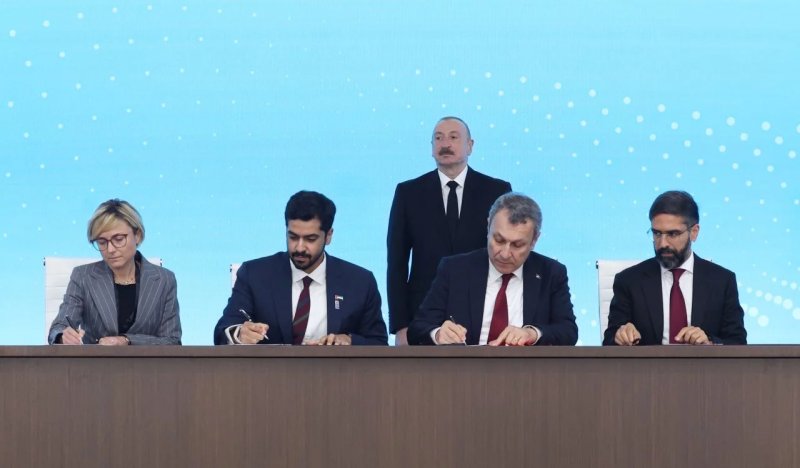
SOCAR, TotalEnergies, XRG and BOTAŞ signed an agreement in Baku on 1 June on long-term gas supplies from the Absheron gas-condensate field to Türkiye. The deal, concluded on the sidelines of the Baku Energy Forum, covers the supply of a total of 33 billion cubic metres of natural gas from Azerbaijan to Türkiye over 15 years, starting in 2029.
Annual production at the Absheron field is planned at more than 4 billion cubic metres per year. Around half of this output — approximately 2 billion cubic metres annually — will be supplied to the Turkish market. The final investment decision on full-scale development of the project is expected in 2026, with production scheduled to begin in 2029 and reach 5–6 billion cubic metres per year at full capacity.
RECOMMENDED STORIES
The new gas supply agreement with Türkiye is expected to become a key driver in accelerating the transition of the Absheron project to full-scale development. The existence of a long-term supply contract opens the way for a final investment decision as early as the first half of 2026. For Azerbaijan, this is critically important: without a guaranteed buyer over a 15-year horizon, no international consortium would undertake large-scale capital investment in offshore development. The agreement with BOTAŞ is effectively the key that unlocks financing for the second phase of the Absheron project.
This will allow the Azerbaijani government to shift part of its revenue base from oil towards gas — a more stable and longer-term source of income amid the global energy transition. In this sense, Absheron is becoming the country’s second major gas project after Shah Deniz.
Initial estimates put the field’s reserves at 350 billion cubic metres of gas and 100 million tonnes of condensate. Full-scale production is scheduled to begin on 1 September 2029. At peak levels, output is expected to reach 12.7 million cubic metres of gas per day — around 4.5 billion cubic metres per year — along with approximately 35,000 barrels of condensate per day. The project’s life cycle is estimated at around 30 years, with production potentially continuing until around 2076, depending on economic viability.
Azerbaijan’s draft state budget for 2026 indicates that from 2029, oil and gas production is expected to increase, with the full-scale development of Absheron becoming a key driver of this growth. According to forecasts, the launch of the second phase will raise gas production to 37 billion cubic metres in 2029 — an increase of 2.5 billion cubic metres, or 7.2%, compared with 2028.
In other words, Absheron represents Baku’s strategic insurance policy for a period in which traditional oil fields, primarily the Azeri–Chirag–Gunashli block, are expected to continue their natural decline. Azerbaijani natural gas is likely to become even more valuable in global markets, which are currently facing volatility following disruptions in the Middle East and concerns over energy transport routes, including the Strait of Hormuz.
Against this backdrop, the Absheron agreement strengthens Azerbaijan’s geopolitical position and expands the geography of its natural gas supplies to Europe.
Absheron is not simply Azerbaijan’s next gas project. It is Baku’s response to three challenges at once: the depletion of oil reserves, growing European demand for non-Russian gas, and Azerbaijan’s strategic positioning as an indispensable energy partner for the West amid instability in the Middle East.
Compared with the world’s largest exporters, Azerbaijan remains a medium-scale supplier, accounting for an estimated 4–6% of EU gas imports. However, what matters is not only volume, but also the reliability of contracts, transport infrastructure and geopolitical resilience.
Azerbaijani gas supplies via the Southern Gas Corridor currently reach 12 countries, including Italy, Greece, Bulgaria, Romania, Hungary, Serbia, Slovenia, Croatia, North Macedonia and Slovakia. In addition, the Trans-Balkan route is being actively developed for deliveries to gas-deficit markets in Central and Eastern Europe.
As Azerbaijani President Ilham Aliyev stated at the opening of the Baku Energy Forum, the country has invested heavily in major infrastructure projects, including the Baku–Tbilisi–Ceyhan oil pipeline, which for the first time connected the Caspian Sea with the Mediterranean.
“The Baku–Supsa oil pipeline connects the Caspian Sea with the Black Sea. The Trans-Anatolian and Trans-Adriatic gas pipelines — TANAP and TAP — together with the South Caucasus Pipeline, form part of the Southern Gas Corridor, one of the most ambitious energy infrastructure projects of our time, an integrated pipeline system stretching 3,500 kilometres. Part of it passes through mountainous terrain, and part runs along the seabed. Today, it ensures energy security for a growing number of countries. We initiated this project and are grateful to our partner countries and companies that have supported us,” he said.
These remarks underline Azerbaijan’s significant contribution to global energy security. For Azerbaijan, natural gas has become an important element of national security infrastructure, enabling a more independent foreign policy and deeper integration into European energy markets.
The new agreement also strengthens Türkiye’s role. Securing Absheron gas supplies provides long-term assurances that Türkiye will remain a key transit hub while also meeting part of its domestic demand, without direct competition with European buyers for the same volumes.

This decision supports Türkiye’s vision of becoming a central player in the energy sector and is designed to contribute to the energy security of the country, the wider region and Europe. The closure of the Strait of Hormuz on 28 February significantly reshaped global energy flows, placing Türkiye at the centre of Europe’s gas architecture. The Southern Gas Corridor remains the only major overland route supplying non-Russian natural gas to the European Union.
In principle, a volume of 2.25 billion cubic metres per year will be exported to Türkiye via the Baku–Tbilisi–Erzurum pipeline, while the remaining volumes could potentially be delivered to Europe through the Southern Gas Corridor. In other words, the agreement with BOTAŞ covers only half of the gas produced at the Absheron field, with the second half potentially oriented towards European markets. At a time when European gas prices have risen by around 30% following the closure of the Strait of Hormuz, every additional cubic metre of natural gas carries significant value for the EU.
(If you possess specialized knowledge and wish to contribute, please reach out to us at opinions@news.az).


Similar news