Gaza war sparks global crisis: Türkiye and Israel on collision course


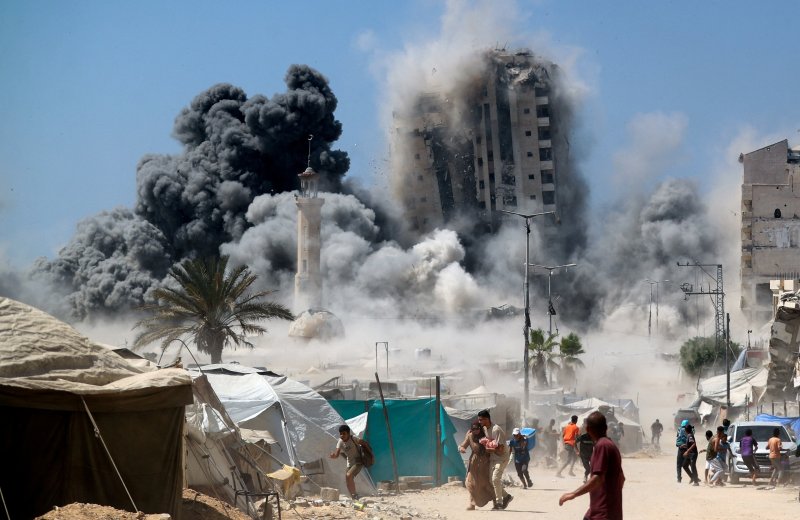
The war in Gaza has become a pivotal moment in modern history — a conflict that is no longer confined to a small strip of land on the Mediterranean but is now threatening to reshape alliances, destabilize entire regions, and even redraw the global balance of power. What began as an Israeli military operation to eradicate Hamas is quickly spiraling into a geopolitical crisis of unprecedented proportions. If left unchecked, it could ignite a far larger conflagration involving not only the Middle East but also Europe, the United States, and beyond.
The most disturbing signal of Israel’s long-term intentions came not from a military commander but from a top government official. Israel’s Finance Minister Bezalel Smotrich openly described Gaza as a potential “goldmine” for real estate. Speaking at a property conference in Tel Aviv, he confirmed that he has been in direct talks with the United States about how Gaza should be divided after the war. This extraordinary admission reveals a strategy that goes far beyond defeating Hamas. It suggests that influential figures within the Israeli government are already envisioning Gaza’s future integration into Israel, turning a humanitarian catastrophe into an opportunity for expansion and profit.
Such statements reflect a broader mindset that has fueled the ongoing conflict. Prime Minister Benjamin Netanyahu announced on September 16 the launch of what he called a “powerful operation” in Gaza. The Israeli Defense Forces (IDF) claim that their goal is to completely neutralize Hamas, with estimates that around 3,000 militants remain entrenched in Gaza City. The IDF has characterized the urban battlefield as “the largest human shield in history.” According to official briefings, more than 450,000 residents have fled Gaza City through two designated evacuation corridors, though Israeli officials allege that Hamas fighters are obstructing the departure of civilians. Before the war began, the city’s population was approximately one million.
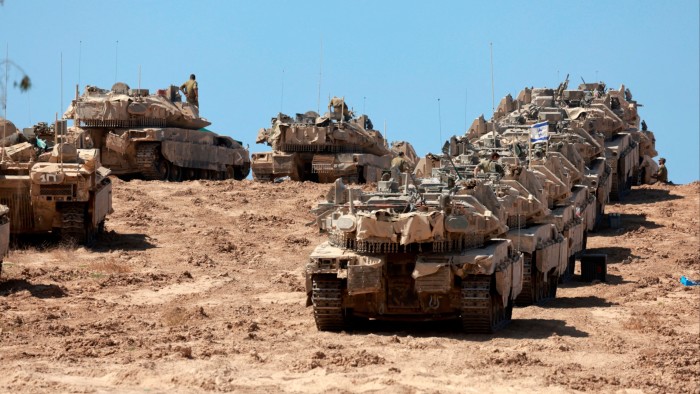 Photo: AFP
Israel’s military campaign is now reaching its most destructive phase. Massive bombardments have reduced entire neighborhoods to rubble, creating a humanitarian crisis on a scale not seen in decades. Yet the violence on the ground is only part of the story. Beyond the battlefield, a seismic shift is taking place in the international arena, one that signals the erosion of Israel’s traditional diplomatic support.
For decades, Israel relied on an unspoken guarantee: unwavering backing from the West. No matter how controversial its actions, Tel Aviv could count on political, military, and economic support from the United States and key European capitals. That reality is now collapsing before our eyes. The images of devastation in Gaza, coupled with the soaring civilian death toll, have made it politically impossible for Western governments to remain silent. Even countries that historically positioned themselves as Israel’s staunch allies are beginning to distance themselves.
This transformation is most visible in Europe. In the past, opposition to Israeli policies was largely confined to Arab nations, Türkiye, and a handful of states in the Global South. Today, leading European powers are openly challenging Israel in ways that would have been unthinkable even a few years ago. The governments of the United Kingdom and France — two pillars of Western diplomacy — recently announced their readiness to recognize Palestine as a state.
According to The Times, London may take this historic step as early as the end of the week. British Prime Minister Keir Starmer had issued a clear warning back in July: if Israel failed to take meaningful steps to prevent a humanitarian catastrophe, the UK would reconsider its stance. French President Emmanuel Macron echoed this sentiment, while Canada and Australia have also signaled a shift in their positions. Earlier in 2024, Spain, Ireland, Norway, and Slovenia declared their readiness to recognize Palestinian statehood. At present, over 150 countries worldwide have either formally recognized Palestine or voiced strong support for its sovereignty.
This represents not just a diplomatic challenge for Israel but a profound moral reckoning for Europe. Pro-Palestinian sentiment is spreading rapidly across the continent. What was once a cause championed primarily by migrant communities and Muslim populations is now embraced by broad segments of European societies. Governments fear that continued support for Israel in the face of mounting atrocities could trigger massive unrest at home, fueling protests, political instability, and a loss of public trust.
Economic consequences are also looming. The European Commission has drafted a proposal to impose restrictions on trade with Israel. Although some EU members — including Germany, Italy, Hungary, the Czech Republic, Bulgaria, and Austria — oppose the move, the momentum is clearly shifting toward punitive measures. Such sanctions would mark a historic break with the past, signaling that Europe is willing to challenge Israel not only diplomatically but economically as well.
Across the Atlantic, the United States faces a deeply uncomfortable dilemma. President Donald Trump has publicly voiced opposition to Britain’s recognition of Palestine, but his statements have been notably restrained. A full-throated defense of Netanyahu could backfire, discrediting Washington’s image globally at a time when public opinion is shifting. By appearing too closely aligned with Israel’s actions, the U.S. risks becoming complicit in what many now view as an unfolding humanitarian disaster. Some analysts suggest that Israel’s increasingly aggressive military conduct may, ironically, be a reaction to this very pressure — a sign of a government lashing out as it feels its international legitimacy slipping away.
However, the war in Gaza is no longer solely about Israel and Hamas. A far more dangerous confrontation is emerging: the possibility of a direct clash between Israel and Türkiye, two regional powers with a long and complicated history. President Recep Tayyip Erdoğan has dramatically escalated his rhetoric, accusing Israel of committing genocide and personally labeling Netanyahu a “butcher.” In passionate speeches, Erdoğan has framed the conflict as part of a centuries-long struggle for survival, declaring that Türkiye is not an outsider or guest in the region but a nation with deep historic roots that will remain “until the end of time.”
For years, Ankara and Tel Aviv maintained a fragile balance, avoiding direct provocations despite deep mistrust. Now, that balance has collapsed entirely. Recent reports from Middle East Eye reveal that Israel has delivered advanced Barak MX air defense systems to Cyprus. This development followed provocative calls in Israeli media urging Greece and the Greek Administration of Southern Cyprus to take aggressive action against the Turkish Republic of Northern Cyprus (TRNC). In response, Türkiye’s Ministry of Defense issued a stark warning, pledging to take all necessary measures to ensure the security and stability of the TRNC. “Türkiye, as always, supports the TRNC. The Turkish Cypriots are under Türkiye’s protection,” the ministry declared.
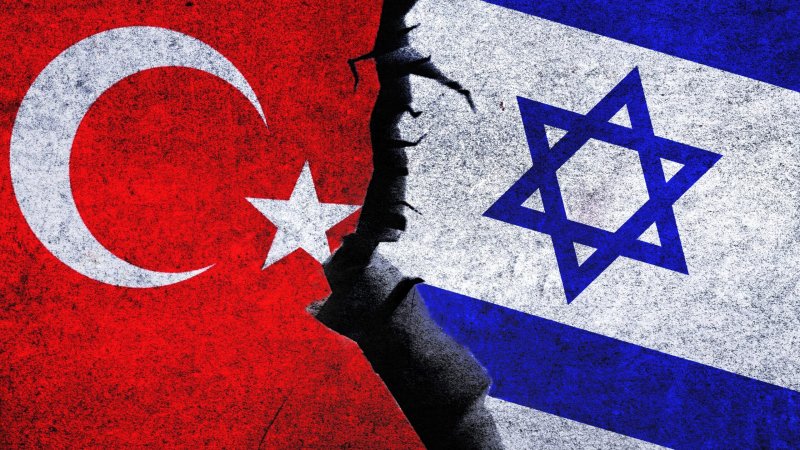 Photo: Shutterstock
This escalation risks opening an entirely new front. What began as a conflict in Gaza could trigger a parallel confrontation between Türkiye and Greece — both NATO members — in the Eastern Mediterranean. Such a scenario would dramatically increase the stakes, potentially drawing in European powers and the United States while destabilizing a region critical to global energy security and trade routes.
The world is witnessing a dangerous domino effect. The Gaza war has become a catalyst for a broader realignment of power, one that could permanently alter the geopolitical landscape. Israel now finds itself fighting not only on the ground in Gaza but also on the diplomatic and economic fronts, facing challenges it has never encountered before. Its once-unchallenged narrative is being questioned, its alliances are weakening, and its actions are fueling a wave of resistance that stretches from the streets of London and Paris to the halls of the United Nations.
The most alarming reality is that there is currently no clear path to de-escalation. Each new development — whether a military offensive, a diplomatic statement, or an economic sanction — seems to push the world closer to a tipping point. What began as a campaign to defeat Hamas has grown into a crisis that threatens to engulf multiple countries and even entire regions.
The question now is not just whether the war in Gaza will end, but whether anyone has the power or the will to stop the chain reaction it has set in motion. If global leaders fail to act decisively, the world may soon face a catastrophe far greater than the one we are witnessing today.
By Tural Heybatov


Similar news