Havel Prize for Vardanyan would damage Europe’s reputation


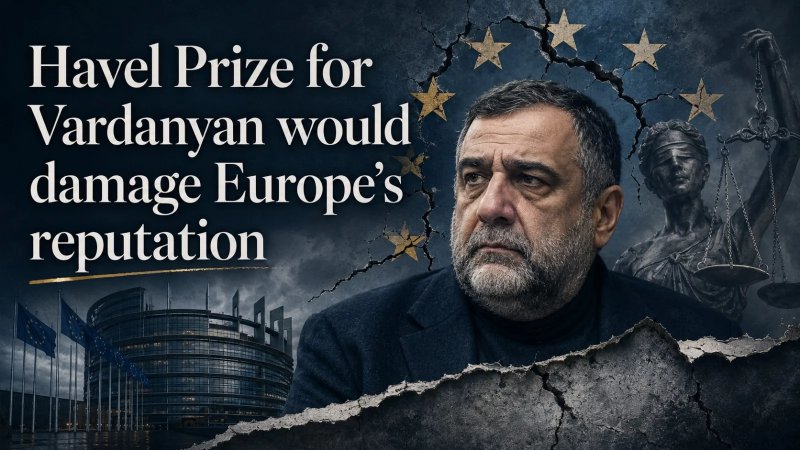
The attempt to portray Ruben Vardanyan, who is currently serving a sentence in a Baku prison, as a candidate for the 2026 Václav Havel Human Rights Prize goes beyond a symbolic gesture. It is a political test — not only for those promoting him as a “humanitarian”, but also for European institutions that claim to uphold human rights, transparency, and the rule of law.
This is not the first effort to rebrand Vardanyan on the international stage. Two years ago, the former “state minister” of the separatist regime in Karabakh was also put forward for the Nobel Prize. That initiative failed to reach the nomination stage, largely due to serious objections, including from Ukraine. The reason was clear: many did not view Vardanyan as a human rights figure. Instead, they saw him as a controversial businessman with a long record of political, financial, and geopolitical baggage.
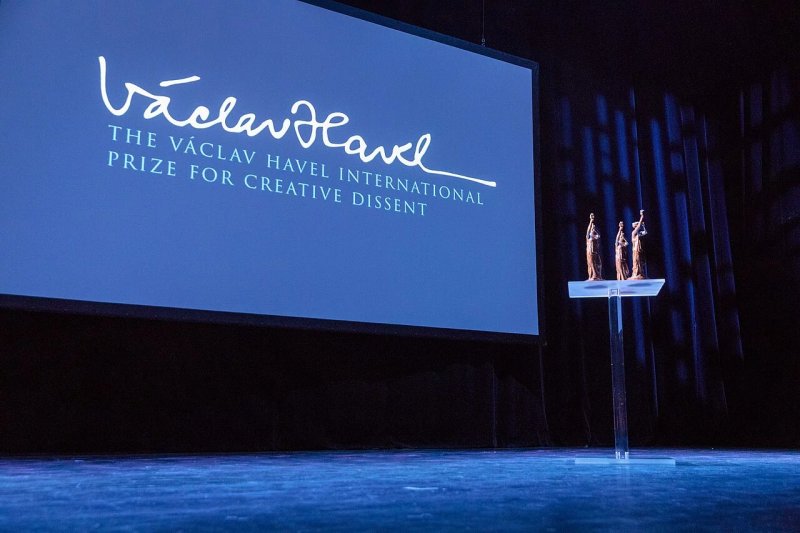
Now, his supporters are trying again — this time through the Václav Havel Human Rights Prize, awarded by the Parliamentary Assembly of the Council of Europe in cooperation with the Václav Havel Library and the Charter 77 Foundation. The prize was created to honour outstanding civil society efforts in defence of human rights in Europe and beyond. Its name carries significant moral weight. Václav Havel was not simply a political leader; he was a symbol of resistance to authoritarianism, corruption, and political cynicism.
RECOMMENDED STORIES
That is precisely why the Vardanyan case appears so problematic.
The appeal in support of Vardanyan was submitted by several former laureates of the Aurora Prize — an initiative established by Vardanyan himself. Among them are Burundian human rights activist Marguerite Barankitse, American physician and humanitarian Tom Catena, Congolese human rights activist Julienne Lusenge, and Iraqi writer Mirza Dinnayi. Their argument is that Vardanyan contributed to global humanitarian causes through Aurora and defended the rights of Karabakh Armenians.
But this argument avoids the central issue. Humanitarian branding cannot erase political responsibility. Nor can philanthropic projects automatically transform a controversial figure into a human rights icon. The fact that the signatories are themselves connected to a prize founded by Vardanyan only raises further questions about the nature of this campaign and the network behind it.
The timing and direction of this initiative are also telling. Vardanyan’s family and supporters appear to be seeking to use a prize linked to PACE to internationalise his case and apply additional pressure on Azerbaijan. Given the strained relations between Azerbaijan and the Parliamentary Assembly of the Council of Europe, this platform may appear attractive to those seeking his release.
Yet Europe must ask itself a simple question: is the Václav Havel Prize intended to honour genuine defenders of human rights, or can it be used as an instrument in a political lobbying campaign?
Vardanyan is not merely a former separatist official arrested by Azerbaijan. He is a figure whose background extends far beyond Karabakh. His name has been linked to major international investigations, offshore structures, Russian elite networks, and political projects serving Moscow’s interests in the South Caucasus.
In 2019, the Organized Crime and Corruption Reporting Project published a major investigation into what became known as the “Troika Laundromat.” The investigation focused on a network of offshore companies linked to Troika Dialog, the investment bank formerly associated with Vardanyan. According to the findings, billions of dollars allegedly moved through this network between 2006 and 2013. The scheme reportedly enabled funds to be transferred out of Russia through offshore structures and complex financial channels.
The investigation was based on tens of thousands of leaked financial documents from Lithuania’s Ūkio Bankas, which was closed in 2013. Journalists found that the network included dozens of interconnected offshore companies. Some of these firms were formally headed by rank-and-file individuals, including seasonal workers from Armenia, whose personal data and signatures were allegedly used in suspicious financial documentation. One such case involved a man from Vanadzor whose name appeared on documents linked to transactions worth tens of millions of dollars.
These revelations did not destroy Vardanyan’s public standing, but they permanently attached his name to one of the most serious post-Soviet offshore scandals. In March 2019, members of the European Parliament even appealed to then-European Commission President Jean-Claude Juncker, calling for sanctions against Vardanyan and others connected to the Troika Dialog offshore ecosystem. The letter was signed by MEPs from several European countries, including Lithuania, Poland, Sweden, Germany, and the United Kingdom.
This is the background Europe is now being asked to ignore.
There is also a geopolitical dimension. In September 2022, Vardanyan renounced his Russian citizenship and entered the political scene in Karabakh. This was presented by his supporters as a patriotic step. But in the region, many viewed it differently — as a political mission aimed at preserving Russian influence in the South Caucasus at a moment when peace talks between Armenia and Azerbaijan were gaining momentum.
Vardanyan arrived in Karabakh when the separatist leadership was under growing pressure and when negotiations with Baku were becoming increasingly unavoidable. Instead of supporting de-escalation, he adopted a hardline stance. His rhetoric encouraged resistance and confrontation. At one point, he declared that Armenians had to stand up for “Artsakh” or be seen as standing against the Armenian people. Such statements did not contribute to peace; they deepened the crisis.
The international community largely avoided criticising his role. European institutions, in particular, tended to focus on his detention rather than the political consequences of his actions. Some resolutions and statements presented him almost exclusively as a detainee whose rights needed to be protected. But protecting legal rights is one thing; elevating such a figure into a human rights symbol is quite another.
Ukraine’s position is especially significant. Kyiv has viewed Vardanyan not solely through the lens of Karabakh, but within the broader context of Russia’s war and the networks supporting Moscow’s power structures. In 2022, the Ukrainian government imposed sanctions on him. In 2023, he was added to the Myrotvorets database, where he was described as a person whose actions were considered a threat to Ukraine’s national security and the international order.
British Conservative MP Bob Blackman also publicly linked Vardanyan to issues connected with Russia’s military intervention in Ukraine, stating that companies associated with him were involved in processes supporting Russian expansion in Ukraine and Karabakh. Meanwhile, publications in the United States have described Vardanyan as a wealthy and politically connected figure, also pointing to possible links involving Iran through Russian soft-power structures.
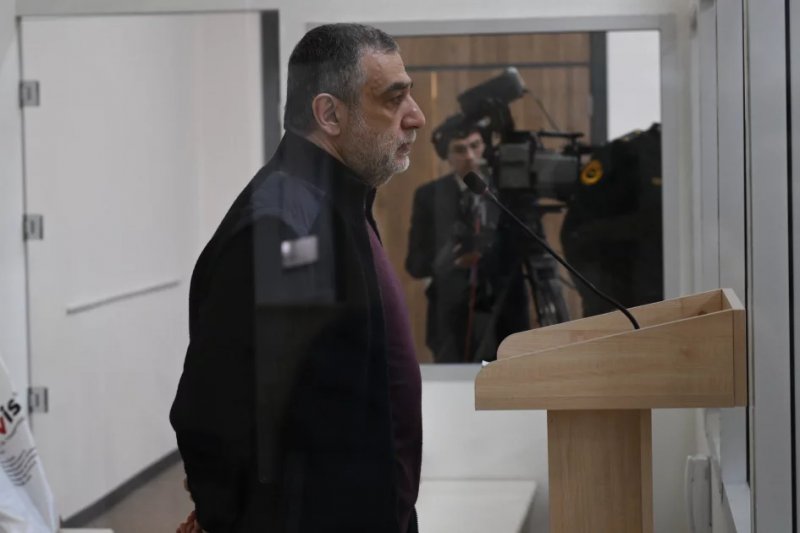
These facts should matter in Europe. They should matter especially when the award in question bears the name of Václav Havel — a man whose legacy is inseparable from the struggle against Soviet domination and authoritarian political systems.
If a person linked to Russian elite networks, offshore scandals, separatist politics, and sanctions-related controversies can be seriously promoted for the Havel Prize, then Europe risks undermining the moral authority of the award itself. The issue is not whether Vardanyan’s legal rights must be respected. Of course, every detainee has rights. The issue is whether he should be elevated as a symbol of human rights.
There is a fundamental difference between defending due process and rewriting someone’s political biography.
Vardanyan’s supporters are attempting to present him as a humanitarian philanthropist punished for his beliefs. But this narrative is incomplete and highly selective. It omits the Troika Laundromat allegations. It omits Ukraine’s sanctions. It omits his political mission in Karabakh. It omits his role in promoting separatist rhetoric at a critical moment for regional peace. It omits the concerns of those who see him not as a defender of rights, but as a representative of a system built on money, influence, and geopolitical leverage.
European institutions now face a choice. They can examine the full record, including its uncomfortable aspects, or they can allow a lobbying campaign to transform a controversial figure into a victim-hero. If they choose the latter, the damage will not be limited to Azerbaijan’s relations with PACE. It will also affect Europe’s credibility in the eyes of Ukraine and others who have paid a heavy price for Russian aggression and the networks that sustain it.
The Václav Havel Prize should remain a tribute to those who genuinely defend human dignity, civil courage, and freedom. It should not become a tool for reputational laundering.
That is why the possible nomination of Ruben Vardanyan is not just about one man. It is about whether Europe is still able to distinguish between human rights advocacy and political influence operations disguised as humanitarianism.
By Tural Heybatov


Similar news