Munich and the rise of Azerbaijan’s influence


Editor’s note: Alexander Rahr is a German political scientist and chairman of the Eurasian Society in Berlin. The views expressed in this article are those of the author and do not necessarily reflect the position of News.Az.
The Munich Security Conference this year will address a wide range of global crises, foremost among them the growing fracture in transatlantic relations. This is a moment when global elites will attempt to determine the direction of the emerging world order — and who will shape it in the years ahead. It is encouraging that the West is beginning to recognize that the world is becoming increasingly polycentric. The participation of President Ilham Aliyev signals that a country like Azerbaijan is no longer viewed as a peripheral actor, but as a key element in a new geopolitical configuration.
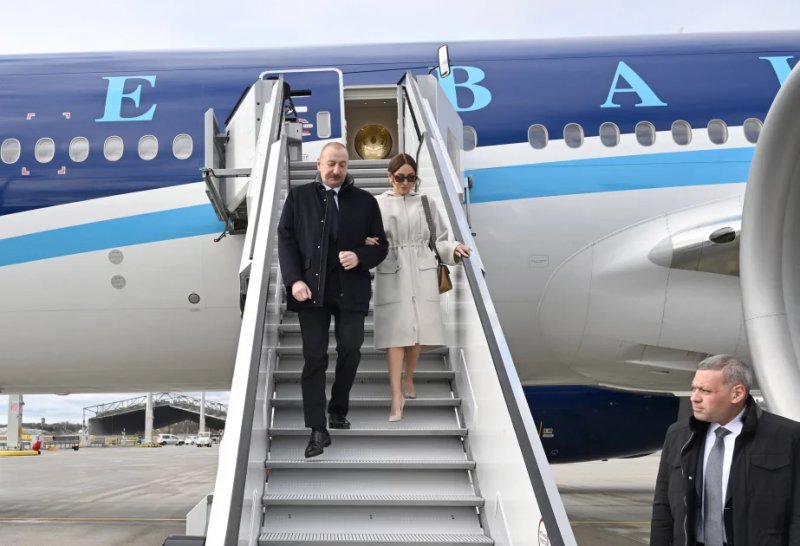 Azerbaijani President Ilham Aliyev arrives in Germany to take part in the Munich Security Conference. Photo: AZERTAC
Around 70 heads of state and government are gathering in Munich. Beyond formal discussions, they will engage in behind-the-scenes conversations that may well shape pivotal decisions affecting our shared future. Closed-door consultations will focus on the future of the European Union, the global posture of the United States, the war in Ukraine, the Middle East, global energy resilience, and the transformation of economic and military blocs — all interconnected elements of a broader systemic shift. The world is experiencing a period of profound turbulence, and it is precisely on platforms like Munich that the contours of a new balance of power may begin to take shape.
For Azerbaijan, this year’s conference carries particular significance. European countries are approaching energy security with increasing seriousness. Political declarations of the past are giving way to economic realities: Europe requires stable and predictable energy suppliers following its decision to reduce cooperation with Russia in this sphere. At the same time, Europe is wary of excessive dependence on U.S. energy supplies. Azerbaijan has demonstrated in practice that it can serve as a reliable partner. The expansion of gas exports, the strengthening of the Southern Gas Corridor, and the development of infrastructure are no longer abstract projects but tangible contributions by Baku to Europe’s resilience.
This is why Munich 2026 presents an opportunity for Azerbaijan to consolidate and expand its position in Europe. The most substantive meetings traditionally take place on the sidelines of the conference. President Ilham Aliyev’s talks with German and other European leaders could inject new momentum into both energy and political cooperation. As Europe seeks to diversify its energy sources, Azerbaijan’s strategic importance as a dependable partner objectively increases.
 Photo: VCG
Contacts with U.S. representatives are also likely. The American delegation traditionally plays a prominent role in Munich, and this year attention will be focused on the U.S. Secretary of State, who is expected to be one of the central figures of the forum. Amid global competition and a reassessment of strategic approaches, dialogue between Baku and Washington acquires additional weight — particularly given Washington’s substantial efforts to help resolve the Azerbaijani-Armenian conflict. It is important for Azerbaijan to be part of the broader Eurasian conversation on security, energy, and new transport routes — issues in which all major actors have an interest.
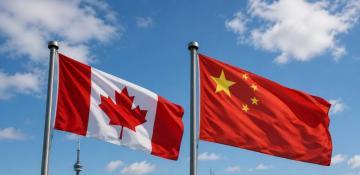
The question today is no longer whether Baku participates in the global discussion. The real question is what role it will play in shaping the emerging world order, as the strategic significance of the South Caucasus continues to rise. The era in which decisions were made by a narrow circle of powers is gradually fading. A more complex, multipolar system is emerging — one in which regional centers of influence have the opportunity to shape strategic processes. In recent years, Azerbaijan has demonstrated its ability to pursue an independent, pragmatic, and strategically balanced foreign policy toward major global powers such as Russia, China, Türkiye, and the European Union.
The Munich Security Conference is no longer merely a forum for discussing wars and crises. It has become a venue for discreet negotiations over the redistribution of influence, the formation of new alliances, and the creation of emerging energy and transport axes. As Europe searches for stability, China strengthens its position in Asia, the United States reconsiders its strategy in Eurasia, and the war in Ukraine may reach a turning point in 2026, Azerbaijan is objectively becoming part of these broader strategic calculations.
(If you possess specialized knowledge and wish to contribute, please reach out to us at opinions@news.az).


Similar news