Global leaders rally behind Ilham Aliyev after Iran’s drone attack on Azerbaijan


.png)
Editor’s note: Faig Mahmudov is a journalist based in Azerbaijan who covers regional security, foreign policy, and geopolitical developments. The views expressed in this article are his own and do not necessarily reflect the official position or editorial stance of News.Az.
Iran's drone attack on civilian infrastructure in the Nakhchivan Autonomous Republic of Azerbaijan has significantly escalated the security environment in the region. The incident is viewed not only as a direct challenge to Azerbaijan but also as a development with serious implications for the broader security architecture of the South Caucasus and the Middle East.
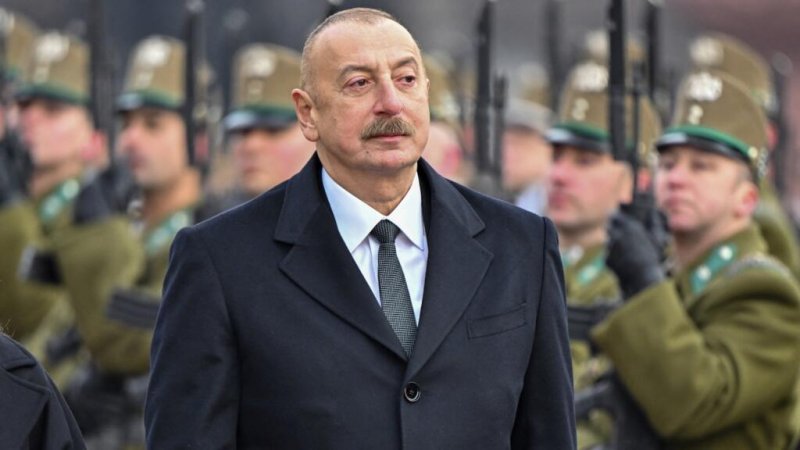
Immediately after the attack, a number of world leaders and heads of international organizations called President Ilham Aliyev to express solidarity and support. This wave of diplomatic communication can be interpreted as a clear indication of Azerbaijan’s growing political weight in the international system and its expanding role in maintaining regional stability.
According to experts, the prompt phone calls from international leaders to the Azerbaijani president highlight several important factors. First, these calls demonstrate strong international recognition of Azerbaijan’s sovereignty and territorial integrity. Second, they confirm that Azerbaijan is increasingly perceived as a key actor in safeguarding regional stability. In international politics, such diplomatic outreach during crises is not merely a gesture of courtesy. It also carries a strong political message and signals the positions of states regarding unfolding geopolitical developments.
The fact that leaders from various countries contacted President Aliyev and condemned the attack shows that the emerging security risks in the region are being taken seriously by the international community. Many states openly emphasized that attacks on civilian infrastructure constitute a serious violation of international law and expressed their support for Azerbaijan’s security. These statements also illustrate that Azerbaijan has successfully built a broad network of diplomatic support through its balanced and pragmatic foreign policy in recent years.
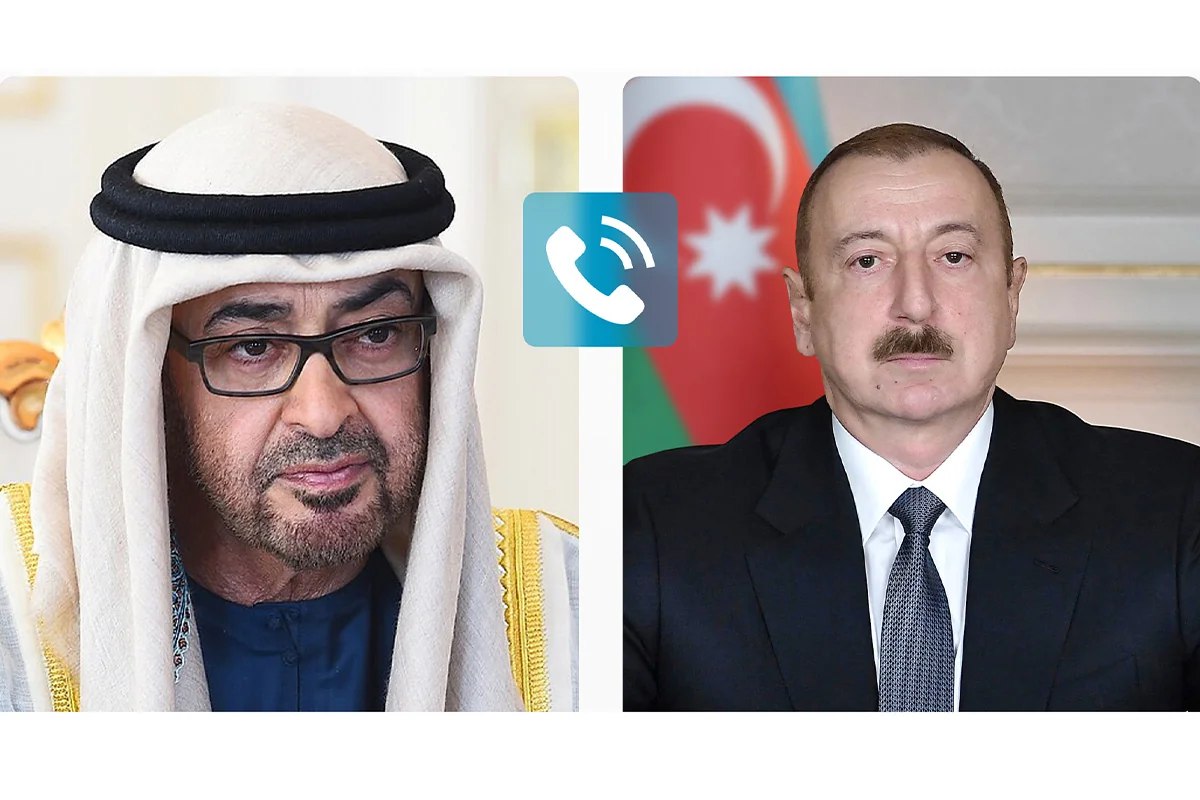
One of the most notable aspects of this international response is the position demonstrated by the United Arab Emirates. The UAE is considered one of the most influential political and economic actors in the Middle East, and its relations with Azerbaijan have significantly deepened in recent years. The decision of the Emirati leadership to call President Aliyev and express support following the attack once again highlighted the strength of the strategic partnership between the two countries.
Source: APA
The UAE attaches particular importance to maintaining stability in the Middle East and surrounding regions. Therefore, the emergence of new tensions and security risks is viewed with concern in Abu Dhabi. In this context, the UAE’s clear support for Azerbaijan should be understood not only as a diplomatic gesture but also as a reflection of the growing strategic alignment between the two states.
Cooperation between Azerbaijan and the UAE extends far beyond political dialogue. The two countries have developed strong partnerships in the fields of energy, logistics, investment, and security. As a result, the UAE’s open support for Azerbaijan during a security crisis can also be interpreted as a practical manifestation of these strategic ties. Experts emphasize that the support of a regional power such as the UAE carries considerable diplomatic and political weight.
Another significant element of the situation involves Pakistan. Following the Iranian drone attack, the leaders of Azerbaijan and Pakistan also held a phone conversation. Relations between Azerbaijan and Pakistan are often described not only as a diplomatic partnership but as a brotherly alliance. The foundations of these ties rest on strong political solidarity and extensive military cooperation.
Pakistan was one of the few countries that did not recognize Armenia as a state during the years of the Karabakh conflict, a stance closely tied to its strategic partnership with Azerbaijan. For decades, the Pakistani leadership openly condemned Armenia’s actions against Azerbaijan and consistently supported Baku’s position in international forums. Islamabad repeatedly stated that establishing diplomatic relations with Armenia would only be possible if it aligned with Azerbaijan’s position. This history clearly illustrates the depth of trust and solidarity between the two countries.

Source: APA
Military cooperation between Azerbaijan and Pakistan also plays a key role in their bilateral relations. The participation of Pakistani Prime Minister Shehbaz Sharif and senior military officials in military parades held in Baku has become a symbolic demonstration of this strategic partnership. Such events serve as powerful signals of solidarity and defense cooperation between the two states.
Pakistan’s status as a nuclear power also adds a significant dimension to the regional security balance. The political importance of a nuclear-armed state expressing support for Azerbaijan should not be underestimated. This support sends a strong message that Azerbaijan is not isolated and that threats to its security are closely monitored by influential international partners.
Recent developments have shown that Iran’s military actions are not limited to Azerbaijan. Tehran has also carried out missile strikes in the direction of Pakistan in recent periods, further increasing regional security tensions. Pakistan responded to these attacks firmly and decisively, demonstrating its readiness to defend its national security interests. This development once again illustrated that Iran’s leadership often reacts only to strong and resolute responses.
A similar approach was demonstrated by Azerbaijan following the drone attack on Nakhchivan. Azerbaijan’s firm political and military stance played an important role in forcing Iran to reconsider its posture. Reports that certain Iranian military units were pulled back from positions near the border are widely viewed as a direct consequence of Azerbaijan’s decisive response. This development underscores the importance of clear and resolute policies when dealing with regional security challenges.
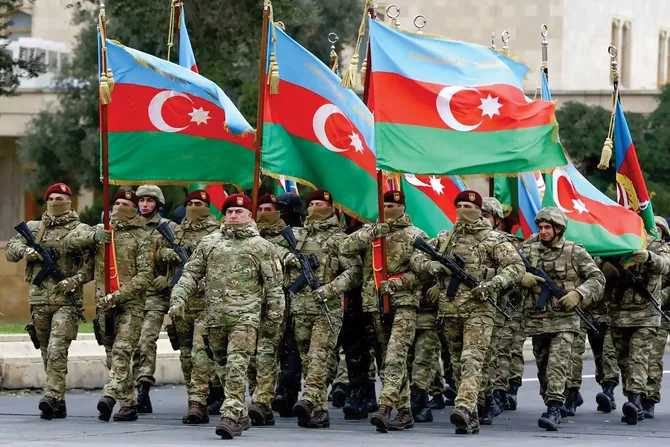
Experts also point out that Azerbaijan’s military technological capabilities have grown significantly in recent years. Modern surveillance, reconnaissance, and intelligence systems allow the country to closely monitor military activity in the surrounding region. These technological capabilities provide Azerbaijan with the ability to track developments not only along its borders but also deep within the broader strategic environment.
Source: Trend
In this context, Iran must understand that any hostile or provocative action against Azerbaijan will inevitably be met with an appropriate response. Azerbaijan possesses sufficient defense capabilities and technological resources to ensure the protection of its national security and territorial integrity.
Overall, the events following Iran’s drone attack on Nakhchivan have produced the opposite effect of what Tehran may have intended. Rather than weakening Azerbaijan’s position, the attack has strengthened the country’s international standing. The calls of support from global leaders to President Ilham Aliyev demonstrate that Azerbaijan is widely regarded as a reliable and important partner within the international community.
At the same time, these developments reflect the emergence of new realities in the regional security system. Azerbaijan is increasingly seen not only as a regional actor but also as a country capable of influencing broader geopolitical dynamics. Its expanding diplomatic network, strengthened military capacity, and strategic partnerships all contribute to reinforcing its role in regional security.
In conclusion, the situation that emerged after Iran’s drone attack clearly shows that Azerbaijan has evolved into one of the key power centers in the region. International support, strategic alliances, and strong state institutions form the foundation of the country’s security architecture. These factors indicate that Azerbaijan’s role in ensuring stability in the South Caucasus and the wider region is likely to grow even further in the coming years.
(If you possess specialized knowledge and wish to contribute, please reach out to us at opinions@news.az).


Similar news