Why Tehran is expanding the war across the Middle East


Editor’s note: Zaur Nurmamedov is a journalist and a graduate of the Faculty of Political Science at the Academy of Public Administration under the President of the Republic of Azerbaijan (1993–1999). He previously served as first deputy editor-in-chief of the Vesti.Az news portal (2009–2023). The views expressed in this article are his own and do not necessarily reflect the position of News.Az.
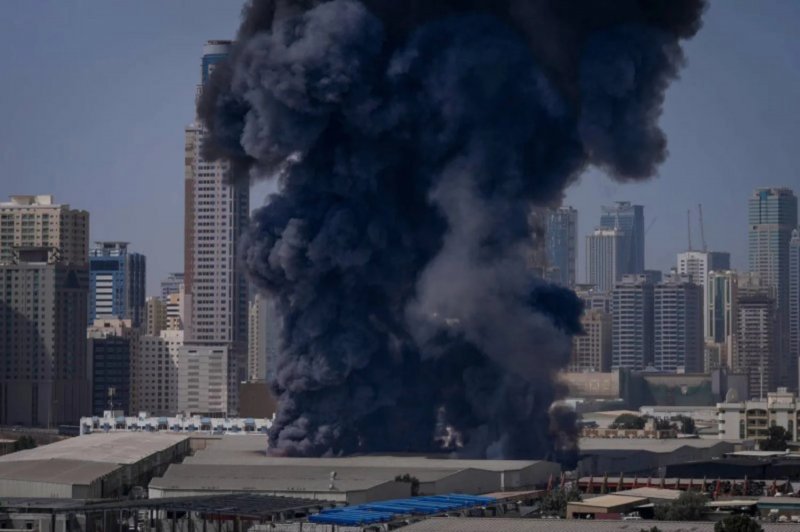
The military escalation around Iran has led Tehran to launch retaliatory missile and drone strikes not only against Israel but also against neighboring countries in the Persian Gulf - Iraq, Jordan, and even Türkiye, Azerbaijan, and Cyprus. It is widely believed that this was not accidental: Iran deliberately expanded the theater of military operations in order to exert maximum pressure on the United States and its allies.
The key question is why Iran, already weakened by years of sanctions and previous conflicts, including the 12-day war with Israel in 2025, chose a strategy of striking neighboring states while risking even deeper international isolation. The answer lies in how the Iranian leadership perceived the recent strikes by the United States and Israel. For Tehran, these attacks were interpreted as an existential threat to the regime.
RECOMMENDED STORIES
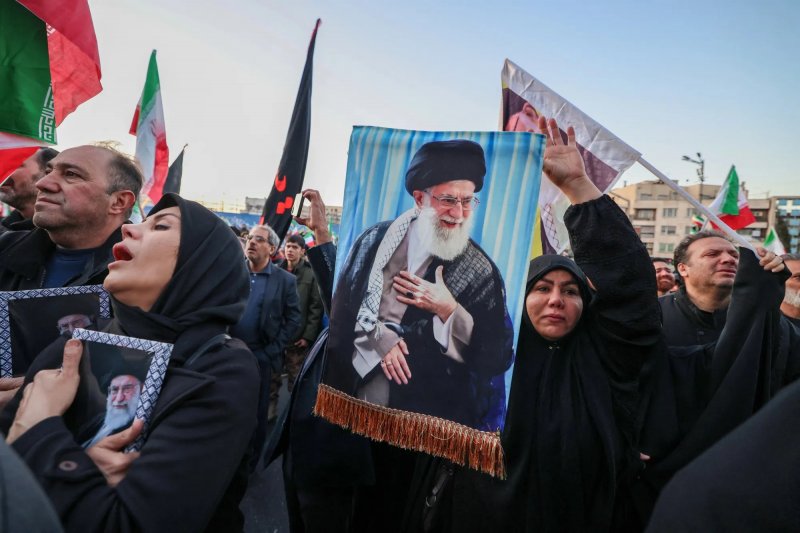
Iran responded both to avenge the death of Supreme Leader Ali Khamenei and to retaliate for the destruction of parts of its nuclear program. Neighboring states, especially Gulf countries, were viewed as “accomplices,” since U.S. military bases are located on their territory and their airspace has reportedly been used for operations against Iran. Although Tehran formally claimed that it was targeting only “American facilities,” in practice some of the strikes affected civilian infrastructure, allowing the Iranian leadership to present the attacks as part of a forced defensive response.
In essence, Iran adopted a strategy often described as “escalation for de-escalation.” The logic behind it is to expand the geographic scope of the conflict so that the overall cost of war becomes too high for the United States and its partners. By targeting energy infrastructure and major logistics and trade hubs, Tehran seeks to drive global oil prices higher, create economic pressure, and force neighboring states to push Washington toward negotiations. In doing so, Iran aims to create a wider regional crisis that stretches its adversaries across multiple fronts.
 Source: AFP
The strategic importance of the region makes this approach particularly dangerous. Roughly 20 percent of the world’s oil and up to 30 percent of liquefied natural gas exports from the Persian Gulf, including supplies from Iraq, Saudi Arabia, Kuwait, Bahrain, Qatar, and the United Arab Emirates, pass through the Strait of Hormuz on their way to Asian markets. Any disruption to this narrow maritime corridor could trigger a sharp spike in global energy prices. In the United States, the average retail price of gasoline has already risen to about $3.32 per gallon.
Iran understands that it cannot defeat its adversaries in a conventional military confrontation. As a result, the country appears to have adopted what could be described as a “survival strategy”: launching drone and missile strikes across the region in an effort to avoid a complete strategic collapse. Attacks on neighboring countries, including Azerbaijan, were therefore part of a broader attempt to destabilize a region where critical Western energy interests intersect.
In this sense, Iran’s strikes against neighboring states were not necessarily driven by aggressive ambitions but rather by a desperate attempt to survive. Faced with what it perceives as an existential threat from the United States and Israel, Tehran attempted to expand the conflict, inflict economic damage, and force its opponents to seek a negotiated settlement.
At the same time, however, the reliance on asymmetric attacks and the attempt to weaponize geography also reveal the limitations and weaknesses of the Iranian system.
Iranian President Masoud Pezeshkian later announced that Iran’s Temporary Governing Council had decided to halt strikes against neighboring Middle Eastern countries. He emphasized that Iran would make exceptions only if attacks were launched against Iran from the territory of those states.
“The Council decided yesterday to stop launching missiles and conducting strikes against neighboring countries unless attacks are carried out against Iran from their territory. We have repeatedly said that they are our brothers. Together we must establish peace and stability in the region,” Pezeshkian stated.
He also apologized to neighboring countries that had suffered damage as a result of Iranian strikes and stressed that Iran has no aggressive intentions toward its neighbors.
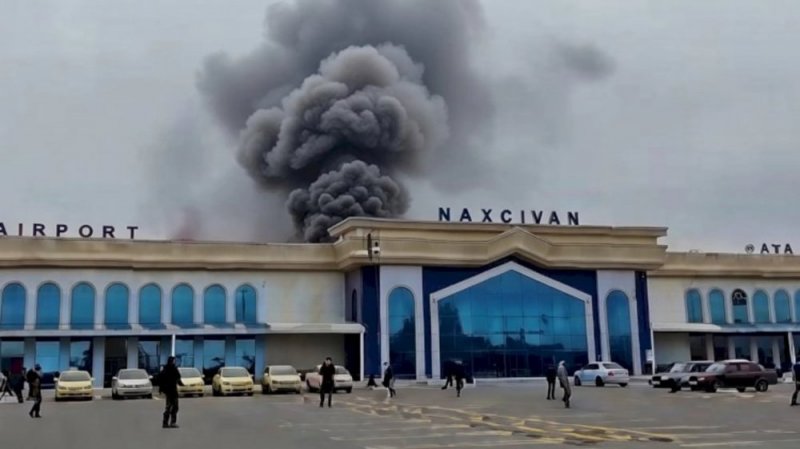
In this context, it is noteworthy that Pezeshkian earlier held a phone call with Russian President Vladimir Putin to discuss the situation surrounding the Iranian drone attack on Azerbaijan that occurred on March 5. During the call, Pezeshkian reportedly stated that Iran had not attacked Azerbaijan and emphasized that Tehran had never intended to strike neighboring states.
This raises a logical question: why did Pezeshkian not immediately call Azerbaijani President Ilham Aliyev after the drone incident in Nakhchivan and instead choose to discuss the situation first with Vladimir Putin? The issue became even more sensitive after accusations emerged that the Islamic Revolutionary Guard Corps (IRGC) had allegedly been preparing a series of terrorist acts on Azerbaijani territory.
If Pezeshkian later apologized to neighboring states affected by Iranian strikes, why did he initially ignore Azerbaijan, one of Iran’s closest neighbors and a country with which efforts had been underway to normalize relations?
Moreover, despite Pezeshkian’s statement, Iranian strikes against neighboring states reportedly continued. The IRGC even released an official statement that effectively contradicted the president’s remarks.
“President Pezeshkian made a mistake by claiming there would be no attacks on neighboring countries, and our forces have demonstrated this clearly. His statement was made five hours ago, and since then Dubai and Abu Dhabi have been under attack. Ignore Pezeshkian’s statements during wartime,” the IRGC statement said.
This episode highlighted a deeper structural issue: the Pezeshkian government does not fully control the IRGC, which effectively operates as a state within a state inside Iran.
The Azerbaijani government strongly condemned the attack on Nakhchivan, describing it as a terrorist act. Azerbaijani officials have demanded explanations from Tehran, an official apology, and the prosecution of those responsible for the attack. These are reasonable demands that Iran has so far failed to fully address. Instead, the IRGC responded with threats against Azerbaijan, calling on Baku to “expel Zionists.”
The situation inevitably recalls the tragic attack on the Azerbaijani embassy in Tehran in January 2023. An armed terrorist stormed the diplomatic mission and opened fire with an assault rifle, killing the head of the embassy’s security service, Orkhan Asgarov, and injuring two other staff members. The attack and its aftermath reportedly lasted around 40 minutes, yet no Iranian security personnel arrived to assist the embassy during that time.
 Source: Screen grab
Iranian authorities initially attempted to portray that attack as a personal dispute and avoided conducting a full investigation. Over time, it became clear that ignoring Azerbaijan’s legitimate demands did not serve Iran’s own interests.
Azerbaijan, for its part, has consistently adhered to the principle of good-neighborly relations. Just one day before the attack on Nakhchivan, on March 4, President Ilham Aliyev visited the Iranian embassy in Baku and signed the condolence book following the death of Supreme Leader Ali Khamenei.
It was a gesture of humanity that could not easily be ignored. The leader of Azerbaijan, a country Iran has frequently accused of cooperating with Israel, visited the Iranian embassy to express condolences over Khamenei’s death. By doing so, Aliyev demonstrated that Azerbaijan has consistently sought to support stability and maintain respectful relations with its neighbors.
Baku’s position in the current crisis remains clear. Azerbaijan is not participating in the war and has no intention of becoming part of it. Even the delayed phone call from Pezeshkian to Aliyev, during which the Iranian president promised an investigation into the Nakhchivan incident, does not eliminate concerns that threats to Azerbaijan may still exist.
Recent events have revealed a dangerous reality inside Iran: the government does not fully control the IRGC. While Pezeshkian appears to be trying to prevent a collapse of the state, the Revolutionary Guard’s actions demonstrate that for Iran’s radical factions, maintaining uncompromising confrontation with the United States and Israel may be a higher priority than preserving the country’s stability.
Iran increasingly appears unable to demonstrate rational behavior even in the face of its own potential destruction.
(If you possess specialized knowledge and wish to contribute, please reach out to us at opinions@news.az).


Similar news