Ofir Haivry: How Israel confronts regional threats and reshapes Middle East dynamics – INTERVIEW


Source: Nepkohn
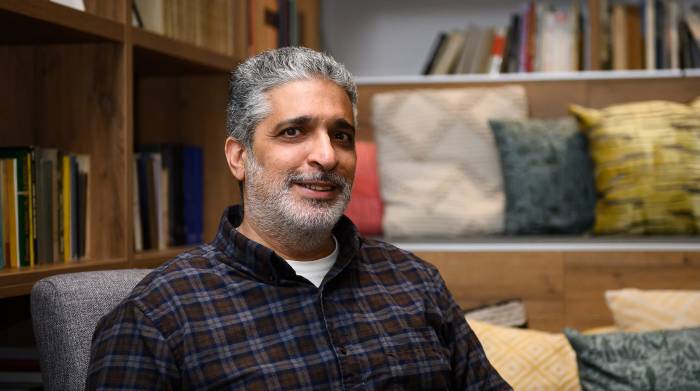
In an exclusive interview with News.az, distinguished Israeli political scientist and historian Ofir Haivry provides an in-depth analysis of the complex dynamics of the ongoing Middle East conflict.
He sheds light on Israel’s strategic responses to threats from Hamas, Hezbollah, and other regional actors, highlighting the unintended consequences of the current war and its impact on reshaping regional power dynamics.The discussion also touches upon Iran's influence in the region and the broader implications for Israel's security. Additionally, Dr. Haivry examines the evolving partnership between Azerbaijan and Israel, focusing on their military-technical cooperation and shared security concerns, offering unique insights into the challenges and opportunities for both nations.
- Can we say that Netanyahu's government aims to eliminate or significantly weaken all major threats, such as Hamas, Hezbollah, and the Houthis?
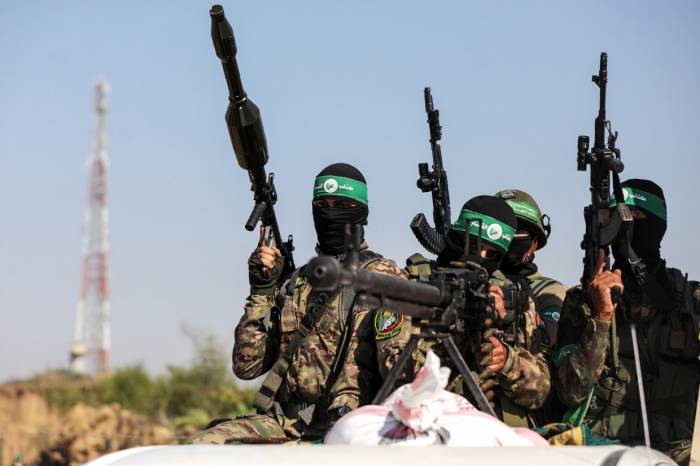
- Well, I would say that this isn't necessarily an explicit aim but rather the consequence of actions from the Iranian axis. If you recall, the current war began with Hamas attacking Israel. Initially, Israel did not intend to widen the conflict to Hezbollah, Syria, the Houthis, and Iran. However, by October 8th, just a day after October 7th, Hezbollah began bombing Israel, followed by the Houthis. In this sense, Israel was pushed into a broader regional conflict.
 NBC/News
Israel’s immediate interest was to engage only with Hamas, which had attacked. The government preferred not to fight on two fronts simultaneously. For months, Israel attempted to halt attacks from Hezbollah and the Houthis, but when these efforts failed, it was compelled to act against Hezbollah and other Iranian axis targets. This was not part of a preventative plan but rather a consequence of how the war developed. Often, wars have unintended consequences, and this one changed the balance of power inside Lebanon and Syria.
Regarding Iran, Israel had no intention of engaging in a direct confrontation with Iran, but from Iran's perspective, it became inevitable to attack Israel. The situation, of course, led to a realignment of regional power.
- If Hamas is defeated, could Israel help reshape it into a more moderate entity, representing Palestinian Arabs under a new name and principles?
- I don't think so. Hamas is not part of the formal Palestinian government but rather a rebellious faction. It controls Gaza and is not recognized by any international body as the legitimate representative of the Palestinian people. Hamas has long opposed Israel’s existence, and Israel cannot cooperate with or reshape this group. The future lies either in a new government in Gaza or the Palestinian Authority regaining control, as it did before 2007. Hamas, as a terrorist organization, will not play a role in representing the Palestinian Arabs in any moderate form.
- Do you see a security threat to Israel from the new Syrian authorities, and will post-Assad Syria remain hostile or shift alliances, being already part of not shiite but sunni bloc?
- It's hard to say right now. The situation in Syria is fluid, with multiple factions controlling different regions. The authority in Damascus, headed by Mr. Al-Shara, is unclear, and the future of Syria remains uncertain. One of the potential problems for Israel is whether the faction in power will align with jihadist groups, which could pose a direct threat. Additionally, Syria's relationship with Turkiye is ambiguous. If Syria becomes a Turkish proxy, this would create another challenge for Israel, as relations with Turkiye have deteriorated in recent years. Israel has already taken steps to secure its borders, but the future of Syria is unclear, and a new government could either remain hostile or seek peace with Israel.
- With the fall of Syria’s regime and the weakening of Hamas, Hezbollah, and the Houthis, are there plans to address the threat posed by Iran?
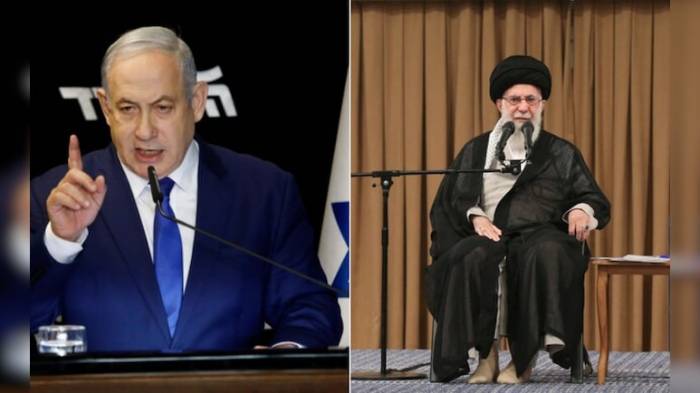
- The short answer is yes. As I mentioned earlier, Hamas, Hezbollah, the Houthis, and other groups are proxies of Iran. The main concern for Israel is Iran’s nuclear ambitions, which are a threat not only to Israel but to other countries, including the U.S. Israel will likely continue to take military action to prevent Iran from acquiring nuclear weapons.
NDTW/World
A confrontation could be imminent, but it’s also possible that Iran might reconsider its stance and seek a peaceful resolution. However, given Iran’s current anti-Israeli rhetoric, the more likely scenario is that military action may be necessary to address the threat.
- What factors have strengthened Azerbaijani-Israeli relations, and what are the main areas of military-technical cooperation? What challenges and opportunities exist for further development of these relations?
- A key factor strengthening Azerbaijani-Israeli relations is the shared threat from radical groups. Both Israel and Azerbaijan face similar challenges from these groups, particularly from Iran. There’s a mutual interest in countering Iranian influence in the region.
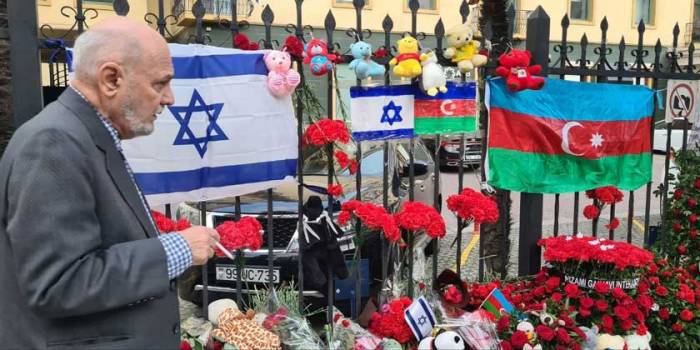
In terms of military-technical cooperation, the focus has shifted from traditional military technologies to newer fields, such as cyber warfare and drones. Israel and Azerbaijan have collaborated extensively on these fronts, with Israel providing advanced missile defense systems like the Iron Dome. Israel also has expertise in non-traditional weapons, such as laser systems and cyber capabilities, which are increasingly important in modern warfare. The future of cooperation will likely continue along these technological lines, with both countries benefiting from advancements in defense technology.


Similar news