Gia Kuchava: The battle for influence over Georgia’s church has begun – INTERVIEW


The South Caucasus is once again emerging as a focal point of major geopolitical competition. Against the backdrop of Armenia’s growing engagement with the European Union, Russia’s weakening influence in the region, and Georgia’s complex balancing act between the West and Moscow, new political realities are taking shape.
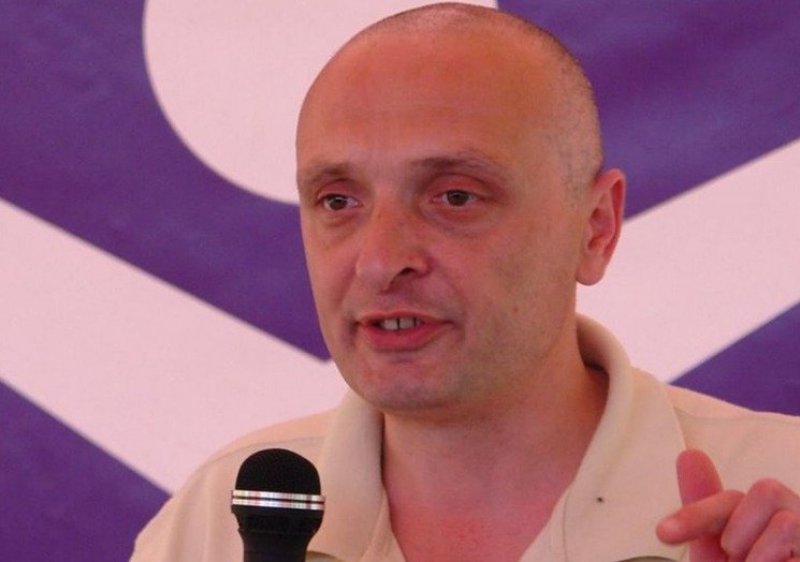
In an interview with News.Az, Gia Kuchava, a Georgian analyst and former aide to President Eduard Shevardnadze, discusses the significance of the European Political Community summit in Yerevan, Armenia’s gradual distancing from Russia, and the evolving role of the West in the South Caucasus.
Kuchava also comments on the election of Shio III as the new Catholicos-Patriarch of Georgia, the internal challenges facing the Georgian Orthodox Church in the post-Ilia II era, and the possible impact of the Church’s leadership on Georgia’s domestic politics. He also shares his views on the recent visit to Georgia by U.S. Deputy Assistant Secretary of State Sonata Coulter and Moscow’s pressure on Tbilisi over sanctions against Russia.
- How do you assess the holding of the 8th European Political Community summit and the Armenia–EU summit in Yerevan?
- Let me begin from a broader perspective. Western attention to the South Caucasus grew in the mid-1990s, when plans were being developed and implemented for the “New Silk Road” project and the construction of the Baku–Tbilisi–Ceyhan and Baku–Tbilisi–Supsa pipelines. However, after the 2008 Russian-Georgian war and Russia’s occupation of Abkhazia and the Tskhinvali region, the so-called “South Ossetia,” interest in our region declined, and EU countries abandoned the Nabucco project.
Let me recall that Nabucco was a cancelled project for a major gas pipeline more than 3,300 kilometers long. This pipeline was intended as an alternative to Russia’s South Stream. At that time, Europe decided not to further provoke Moscow and effectively recognized the South Caucasus as Russia’s “backyard.”
The situation began to change in 2018, when Nikol Pashinyan was elected prime minister following the “Velvet Revolution,” and it changed radically after the 44-day war and the restoration of Azerbaijan’s territorial integrity. After the signing of the joint declaration on the implementation of the TRIPP project in 2025, Western interest in the South Caucasus increased, especially against the backdrop of the current Middle East conflict. To this must be added Russia’s weakening amid the full-scale war in Ukraine. At least at this stage, Russia is no longer able to influence developments in our region to the same extent as before.
Until recently, Georgia was considered the EU’s main ally and partner in the South Caucasus. However, the 44-day war of 2020, the restoration of Azerbaijan’s territorial integrity, and Russia’s invasion of Ukraine changed the political landscape in the region. In the spring of 2025, Armenia adopted a law launching the process of EU accession.
On May 4 and 5, leaders from 50 countries and the political leadership of the EU gathered in Yerevan to hold the European Political Community summit and the first-ever EU–Armenia summit. The holding of the 8th European Political Community summit in Yerevan can be viewed not only as a contribution to stabilizing the situation in Armenia, but also as a sign of the country’s distancing from Russia.
At the same time, it must be especially emphasized that Russia is not only supporting revanchist forces in Armenia, betting on their victory in the parliamentary elections scheduled for June 2026, but is also openly threatening Armenia’s current government with war. For example, Russian Foreign Ministry spokesperson Maria Zakharova first stated that the current foreign policy course of the Armenian authorities would lead to Armenia being drawn into Brussels’ anti-Russian policy. A few days later, less than a month before Armenia’s parliamentary elections, Vladimir Putin publicly presented Yerevan with a choice: friendship with the EU or partnership with Russia, while referring to Ukraine as a warning.
The next parliamentary elections in Armenia will be held on June 7. I would like to express hope in the rationality of the Armenian people and that they will not fall for the tales of revanchists, but will choose peace and mutually beneficial cooperation with their neighbors and with EU countries.
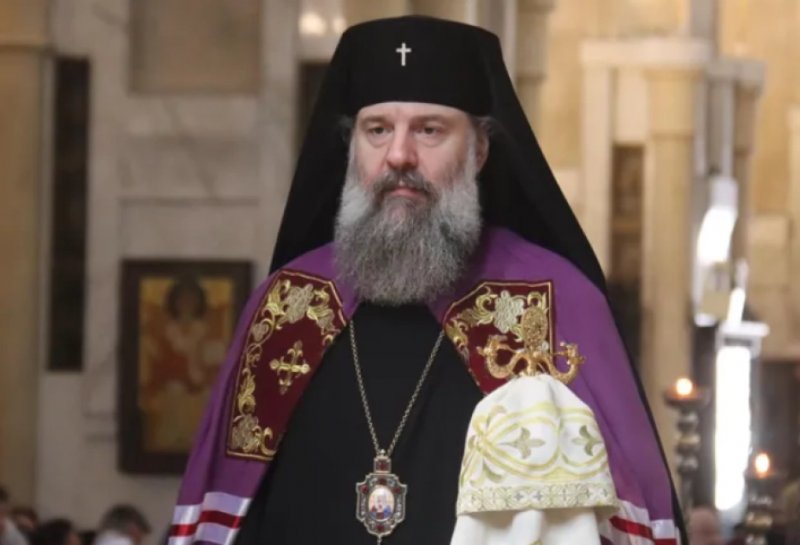
- Metropolitan Shio has been elected the new Patriarch of Georgia. Given the influence of the Georgian Orthodox Church on society, how could Shio’s election as Patriarch affect the country’s politics?
- Although both Georgia and Russia are Orthodox countries, relations between the two churches have not been ideal for more than 200 years. The 20th-century English historian Sir Arnold Toynbee, in his A Study of History, listed the countries for which Christianity is a “mother religion,” and Georgia appears on that list. Russia, however, was included among the countries for which Christianity is not a mother religion.
According to church tradition, Georgia is the allotment of the Most Holy Theotokos, and the Georgian Orthodox Church, unlike the Moscow Patriarchate, is an apostolic church. The first person to preach Christianity in Georgia was Andrew the First-Called, who also established the first apostolic see in our country. In addition to Andrew the First-Called, five other apostles preached Christianity in Georgia: Simon the Canaanite, Matthias, Bartholomew, and Thaddeus. Two of them are buried in Georgia: Simon the Canaanite in Abkhazia, which is occupied by Russia, and Matthias in the Gonio Fortress in Adjara.
Russia, whether under the Romanov Empire or, even more so, in its current form, has never been at ease with the autocephaly and authority of the Georgian Church. In 1811, the Russians abolished the autocephaly of the Georgian Orthodox Church and turned it into an exarchate of the Russian Church.
Before 1811, the Georgian Orthodox Church ranked fifth in the diptychs, while the Russian Church ranked sixth. Today it is the opposite. One bishop of the Georgian Orthodox Church once recalled that during a meeting between the late Ilia II and the previous Patriarch Alexy, Kirill Gundyaev — who at the time was chairman of the Synodal Department for External Church Relations and a permanent member of the Russian Church Synod — spoke out against Georgia, and Alexy sharply interrupted him.
In 1977, when Ilia II was elected Patriarch, Georgia had 34 functioning churches and several dozen priests. Over the 49 years of his patriarchate, Ilia II transformed the Georgian Orthodox Church from an institution devastated by Soviet rule into the structure with the highest level of public trust in the country. In all sociological rankings, Ilia II consistently outranked all politicians, while public trust in the Church was higher than in any state institution. Around two million people came to bid farewell to Ilia II.
For the first time in 50 years, the Georgian Orthodox Church has elected a new Patriarch. Three hierarchs of the Georgian Orthodox Church were named as candidates for the Patriarchal Throne: Metropolitan Shio Mujiri, locum tenens of the Patriarch and Metropolitan of Senaki and Chkhorotsku; Metropolitan Job Akiashvili, Metropolitan of Ruisi and Urbnisi; and Metropolitan Grigol Kacia, Metropolitan of Poti and Khobi.
On May 11, the Holy Synod of the Georgian Orthodox Church elected a new Catholicos-Patriarch. Metropolitan Shio received 22 votes out of 39 and became the 142nd Catholicos-Patriarch of All Georgia. As we can see, almost half of the Holy Synod voted against Metropolitan Shio. Nevertheless, Patriarch Shio III does have a majority, albeit a narrow one.
Before the vote, Archbishop Zenon Iarajuli, a member of the Holy Synod, publicly stated live on air that Shio was dangerous for the Church and, at the same time, a candidate of Russia and the Georgian Dream government. In my view, this is nothing other than a political signal showing how deeply the split in Georgian society has penetrated the Church, the most authoritative institution in Georgia.
There is one more important detail. In June 2023, while serving as locum tenens of the Patriarchal Throne, Shio was reportedly poisoned with arsenic, according to Georgian media. The criminal case has still not been closed. This points to an internal church struggle, as well as to the fact that Patriarch Shio has enemies who are prepared to kill him. At the same time, it should be noted that in February 2017, there was the only court-confirmed case involving the preparation of an assassination attempt against Patriarch Ilia II: Archpriest Giorgi Mamaladze was detained at Tbilisi airport and later sentenced by the court to nine years in prison.
Under Ilia II, the Georgian Church became the most influential institution in the country. Many are asking whether Shio III will be able to replace his predecessor. In my view, replacing Ilia II is impossible. One can inherit what Ilia II created and try not to destroy it.
Under Ilia II, the Church stood above politics. That is precisely why all segments of society trusted him, although representatives of the radical opposition often criticized Ilia II — to put it mildly — calling him pro-Russian. Given that he ascended to the Patriarchal Throne during the Soviet period, they also accused him of ties with the Soviet leadership and security services. But this did not bring the radical opposition any additional points; on the contrary, it irritated a large part of Georgian society.
Ilia II’s political views were moderately conservative. The late Patriarch’s conservatism was expressed through the preservation of historical memory, language, and national identity.
The conservatism of Patriarch Shio III, according to some experts, is directed not only against the influence of Western liberalism, but also against the influence of the Patriarchate of Constantinople. To those who make such claims, I would respond that neither the Ecumenical Patriarch nor the Patriarchate of Constantinople influenced processes within the Georgian Orthodox Church during the patriarchate of Ilia II.
The loss of supra-party authority is nothing less than the loss of what made the Georgian Church a truly national institution. Patriarch Shio III understands this very well. The radical opposition will attack both the newly elected Patriarch and the Church as one of the authoritative institutions of present-day Georgia. The same happened under Ilia II.
The first such attack came on the evening of May 17, the Day of Family Purity and Respect for Parents. This holiday was established by Ilia II in 2014 and has been marked annually since then; it also has the status of a state holiday. In his first sermon as Patriarch, Shio III touched upon Georgia’s demographic problem, warning of the danger that Georgians could become a minority in Georgia. This became a reason for criticism against him. Incidentally, Patriarch Ilia II also spoke more than once about this danger for the country.
Some observers believe that the Georgian Dream government will try to do everything possible to ensure that Patriarch Shio III does not have the same authority and independence as his predecessor. But a weak and unauthoritative Patriarch is not in the interests of the ruling Georgian Dream party. On the contrary, it is in the interests of the radical opposition. In Georgian media, one can find diametrically opposed opinions about the future relationship between the Church and the state. In Chabua Amirejibi’s novel Data Tutashkhia, the character Mushni Zarandia says the following phrase: “It is not the place that honors the man, but the man who honors the place.”
In 2017, Patriarch Ilia II appointed Metropolitan Shio of Senaki and Chkhorotsku as locum tenens of the Patriarchal Throne. For nine years, Metropolitan Shio effectively led the Georgian Orthodox Church.
I would like to express the hope that His Holiness Shio III will be a worthy successor to Ilia II.
- Several days ago, U.S. Deputy Assistant Secretary of State Sonata Coulter visited Georgia and met with Prime Minister Irakli Kobakhidze and Foreign Minister Maka Botchorishvili. Can this be considered the beginning of a reset between Washington and Tbilisi?
- In my opinion, the visit of Deputy Assistant Secretary of State Sonata Coulter is not connected to the issue of resetting relations, because this matter is not a priority for the current U.S. administration. Moreover, in both chambers of the U.S. Congress there are opponents of restoring the strategic partnership between our countries, as well as individuals calling for sanctions against Georgian Dream leaders. Midterm elections will be held in the United States this autumn, and the Republican Party does not want additional complications over the Georgian issue.
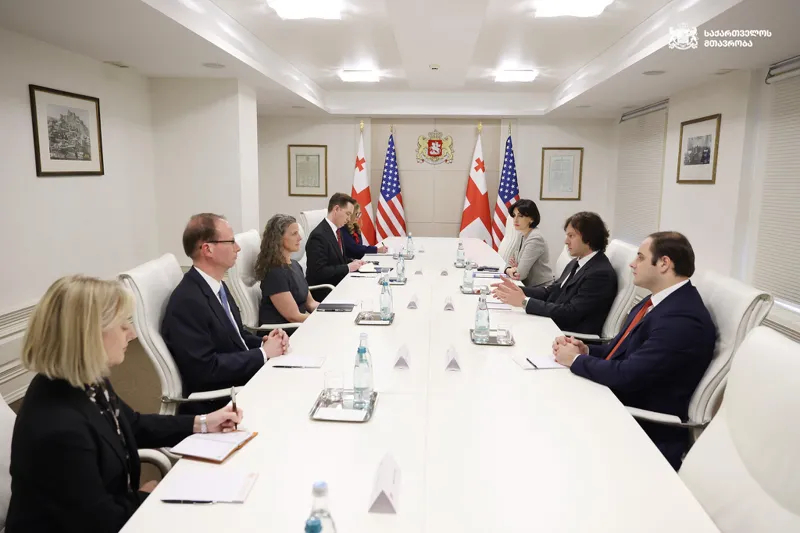
The official press release of the Georgian government stated: “The Prime Minister once again reaffirmed the readiness of the Government of Georgia to reset bilateral relations and renew the strategic partnership from a clean slate, based on a concrete roadmap aimed at achieving tangible results.”
Ms. Coulter also held meetings with Foreign Minister Maka Botchorishvili and Minister of Economy and Sustainable Development Mariam Kvrivishvili. During these meetings, particular attention was paid to regional connectivity and Georgia’s role as a key player in the Middle Corridor.
Sonata Coulter also met with representatives of several opposition parties. After the meeting, it was said that they had “discussed everything.”
- Mikhail Kalugin, Director of the Russian Foreign Ministry’s Fourth Department for CIS Countries, said in an interview with TASS that “Brussels publicly demands that Georgia join the EU’s anti-Russian sanctions, introduce an energy embargo against the country, and halt transport links, including flights.” How would you comment on this?
- Demands from Brussels and a number of EU countries for Georgia to impose sanctions against Russia have existed since Russia’s full-scale invasion of Ukraine in 2022.
According to the portal JAMnews.net, passenger cars held the leading position in Georgia’s overall exports in the first quarter of 2026. During the same period, oil and petroleum products moved into second place. According to Georgia’s National Statistics Office, as of April 20, approximately $200 million of petroleum product exports accounted for local production, while the share of re-exports stood at $8 million.
The Georgian government argues that EU countries themselves are delaying a decision on banning the maritime transportation of Russian oil. Let me recall that in April, the EU did not approve a complete ban on seaborne transportation of Russian oil — one of the key restrictions in the 20th sanctions package. The countries agreed to the ban, but postponed the decision on its implementation until it is coordinated with the G7.
Mikhail Kalugin’s statement is nothing other than a certain form of pressure on the Georgian government, with elements of black PR against Brussels. However, the following point is concerning. Mikhail Kalugin is the Director of the Russian Foreign Ministry’s Fourth Department for CIS Countries. As is well known, in 2008, after the annexation and recognition of the “independence” of Abkhazia and the Tskhinvali region, the so-called “South Ossetia,” official Tbilisi announced its withdrawal from the CIS, and since 2009 Georgia has not been a member of this post-imperial organization. Why, then, are such statements being made by the director of a department responsible for CIS countries, when Georgia has not been a member of the CIS for 18 years?
At the same time, I must note that the Georgian Dream government does not intend to abandon trade with Russia. This has been stated more than once by both Prime Minister Irakli Kobakhidze and Parliament Speaker Shalva Papuashvili.


Similar news