Argentina-U.S. South Atlantic pact fuels sovereignty debate


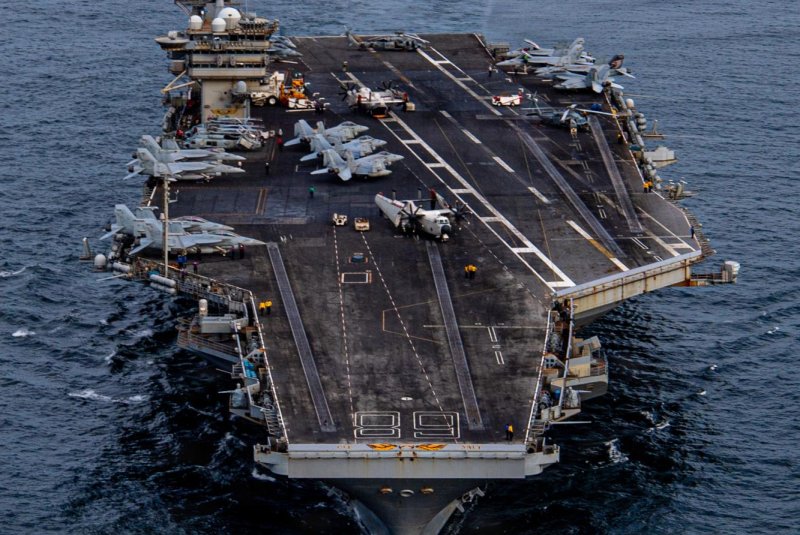
This week, Argentina and the United States launched a new maritime cooperation alliance in the South Atlantic to tackle drug trafficking and other maritime threats, though political, union, and nationalist groups cautioned it could compromise national sovereignty.
The U.S. Southern Command and the U.S. Embassy in Buenos Aires announced the pact under the "Protecting Global Commons Program," an initiative aimed at strengthening maritime surveillance and security in Argentine waters over the next five years, News.Az reports, citing UPI.
RECOMMENDED STORIES
The cooperation will begin with the delivery of a specialized camera for maritime aerial patrol operations and will expand through "advanced equipment, elite training and support to intercept and neutralize maritime threats," the U.S. Embassy said.
Argentine Navy Chief of Staff Adm. Juan Carlos Romay and Rear Adm. Carlos Sardiello, who represents the Southern Command Naval Forces, signed the letter of intent.
U.S. officials described the agreement as part of a broader effort to strengthen regional security in the South Atlantic, a strategic zone for international trade and access to Antarctica.
Argentine President Javier Milei and U.S. President Donald Trump strengthened their cooperation in defense and security in recent months amid growing political alignment between both governments.
In late April, Milei visited the nuclear-powered aircraft carrier USS Nimitz during joint naval exercises between Argentine and U.S. forces in the South Atlantic as part of the Passex operation.
At the time, U.S. Ambassador Peter Lamelas said the exercises demonstrated "concrete capabilities that strengthen South Atlantic maritime security like never before."
"With Argentina, we are building a stronger and safer Western Hemisphere," Lamelas said.
For Washington, the South Atlantic has gained increasing strategic relevance due to concerns linked to illegal fishing, particularly by foreign deep-water fleets, drug trafficking and the presence of actors such as China and Russia.
Argentina has one of the world's largest exclusive economic zones, with strategic maritime corridors near the Drake Passage and the Strait of Magellan -- key routes connecting the Atlantic and Pacific oceans and providing access to Antarctica.
However, opposition sectors in Argentina argue that the agreement represents an increase in U.S. military influence in a region.
The criticism focused particularly on the use of the concept "global commons," a term some sectors consider inappropriate for referring to waters under Argentine jurisdiction.
Union organizations and nationalist leaders said the concept is usually used in reference to international waters or territories such as Antarctica, and not sovereign exclusive economic zones.
"Sovereignty and a large part of the nation's interests are at stake," Hugo "Cachorro" Godoy, secretary-general of the CTA Autónoma labor union, said during a parliamentary meeting on maritime sovereignty and port infrastructure, according to reports by Argentine newspaper La Nacion.
Godoy also argued there is a "geopolitical intention of domination over the territory and fragmentation of the homeland itself."
Evan Ellis told UPI the program appears focused on improving maritime surveillance capabilities and regional coordination rather than transferring sovereign control.
"This is fundamentally about improving maritime domain awareness in the South Atlantic and helping Argentina address challenges such as illegal fishing and transnational trafficking," Ellis said.
"The South Atlantic ... has enormous strategic importance, but I do not see this agreement as an erosion of Argentine sovereignty or as an initiative directed against another country," he said.
Ellis said hat cooperation through maritime patrol aircraft, intelligence sharing and joint training is common among allied countries that seek to monitor vast maritime areas with limited resources.
The debate also revived historical sensitivities surrounding the Falkland Islands, where the United Kingdom maintains a military base about 300 miles from the Argentine coast.
Nationalist sectors questioned why the agreement with Washington makes no reference to the territorial dispute with London or the British military presence in the South Atlantic.
Milei's government, however, frames the rapprochement with the United States as part of a strategic realignment toward the West and a deepening of bilateral cooperation in defense, security and trade.
By Ulviyya Salmanli


Similar news