Australian scientists discover almond-sized crab and tiny lantern shark
- 21 Oct 2025 13:22
- 21 Oct 2025 13:29
- 1037612
- World
-
Share
https://news.az/news/australian-scientists-discover-almond-sized-crab-and-tiny-lantern-shark
Copied
Australian researchers have uncovered two previously unknown deep-sea creatures: a semi-transparent crab no larger than an almond and a tiny, bioluminescent lantern shark.
The discoveries were made during a late-2022 research expedition by CSIRO in the Gascoyne Marine Park, located roughly 20 km (12 miles) off the coast of Western Australia, News.Az reports, citing BBC.
Australia, recognized as one of the world’s richest biodiversity hotspots, hosts over a million species, many of which exist nowhere else on the planet.
But - like much of the globe - large swathes of its water remain unexplored, and the animal and plant life within them unknown to science.
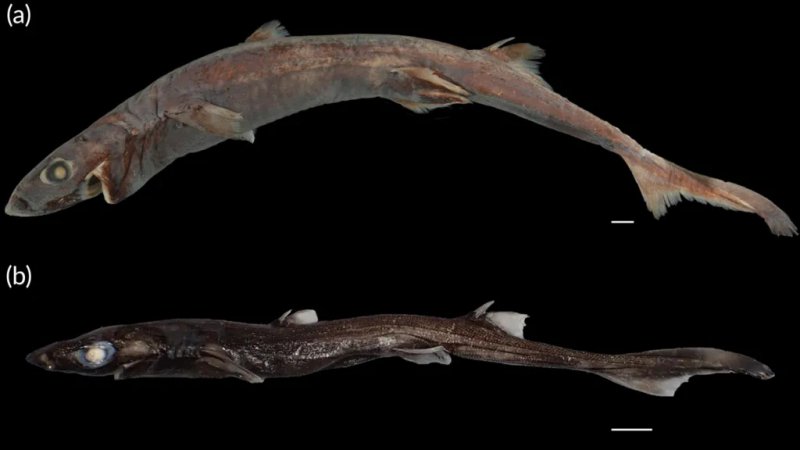
Among the hundreds of specimens collected during the 2022 voyage was the newly described West Australian Lantern Shark. Growing up to 40cm, it has large eyes and a glowing belly, and was found more than 600m below the ocean's surface.
"Lantern sharks are bioluminescent, with light produced by photophores located on their belly and flanks, which is where their common name comes from," Dr Will White, a fish scientist, said.
Photo: CSIRO/Cindy Bessey
They also discovered a new type of porcelain crab, about 1.5cm in length and found about 122m below sea level. They use hairs to catch food, instead of their claws.
"Porcelain crabs are known as filter feeders, feeding on plankton by using modified mouthparts with long hairs to sweep the water for small pieces of food such as plankton, rather than the typical crab method of grabbing and pinching food with their claws," said Dr Andrew Hosie, curator of aquatic zoology from the Western Australian Museum.
About 20 new species have been unearthed as a result of the voyage so far, including the Carnavon Flapjack Octopus, a rusty red creature around 4cm big.
Researchers estimate about 600 more are yet to be described and named, as it can take years for scientists to gather the information to prove they're unique.