How China could use DeepSeek to power the next era of AI-driven warfare


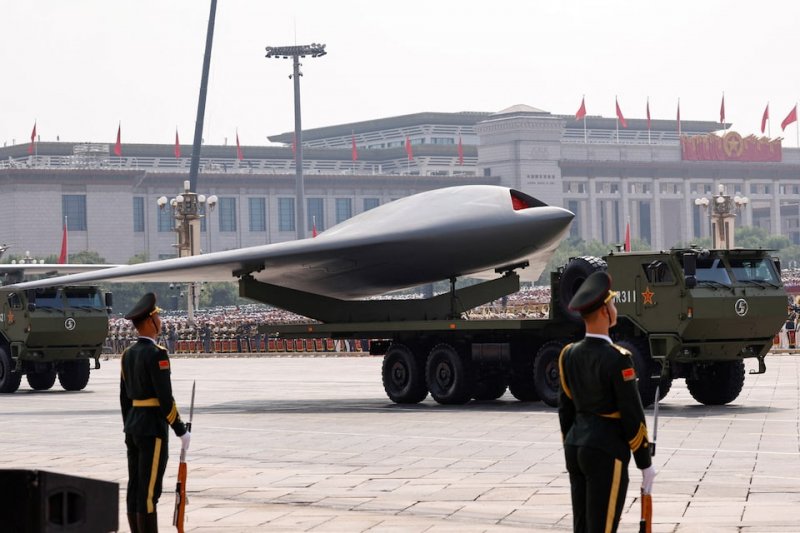
China’s military is rapidly adopting DeepSeek AI and Huawei chips to enhance drones, vehicles, and battlefield planning, as U.S. export bans push Beijing to rely on domestic technology.
China’s military is accelerating efforts to integrate artificial intelligence (AI) into its defense systems, relying increasingly on homegrown models such as DeepSeek to boost battlefield decision-making, surveillance, and autonomous operations — signaling a new phase in the global AI arms race, News.Az reports, citing Reuters.
One of the most striking examples is Norinco’s P60, a combat-support vehicle capable of autonomous operations at speeds of up to 50 km/h, powered by DeepSeek’s AI technology. The system was hailed by Chinese officials as a milestone in Beijing’s quest to catch up with U.S. military capabilities.
Documents reviewed by Reuters show a dozen military tenders in 2025 referencing DeepSeek, far outnumbering those citing other domestic AI models like Alibaba’s Qwen. Analysts say the PLA’s growing preference for DeepSeek highlights China’s push for “algorithmic sovereignty” — reducing dependence on Western technology while expanding state control over digital infrastructure.
Beihang University, a key PLA research partner, has filed patents using DeepSeek to improve drone swarm coordination and target tracking. Researchers at Xi’an Technological University claim their DeepSeek-powered system can analyze 10,000 battlefield scenarios in under a minute, cutting planning time from 48 hours to just 48 seconds — though such claims remain unverified.
Despite U.S. export bans on advanced Nvidia chips, the PLA continues to reference Nvidia’s A100 processors in patents and academic research. However, procurement notices indicate a shift toward Huawei’s Ascend chips, aligning with Beijing’s campaign to promote domestic alternatives.
“The PLA appears to be transitioning from Nvidia to Huawei hardware,” said Sunny Cheung of the Jamestown Foundation, noting a surge in 2025 tenders citing Huawei-based systems. Huawei declined to comment on the findings.
The PLA’s AI ambitions extend beyond vehicles and drones. Defense tenders describe experiments with AI-powered robot dogs for reconnaissance and hazard clearance, as well as immersive digital command centers for real-time strategic simulations.
China’s push toward semi-autonomous and autonomous weaponry mirrors U.S. efforts to deploy thousands of AI-enabled drones by the end of 2025. Both nations insist on maintaining “human control” over lethal systems, but analysts warn the boundary is becoming increasingly blurred.
U.S. officials say they are monitoring China’s growing military use of DeepSeek closely. A State Department spokesperson told Reuters that DeepSeek “has willingly provided, and will likely continue to provide, support to China’s military and intelligence operations.”
Washington has pledged to strengthen AI collaboration with allied nations while restricting access to sensitive technology for its adversaries.
As Beijing expands its use of DeepSeek and domestic AI hardware, experts warn that the race to weaponize artificial intelligence is entering a more sophisticated — and potentially destabilizing — phase.


Similar news