How solar and wind power plants work


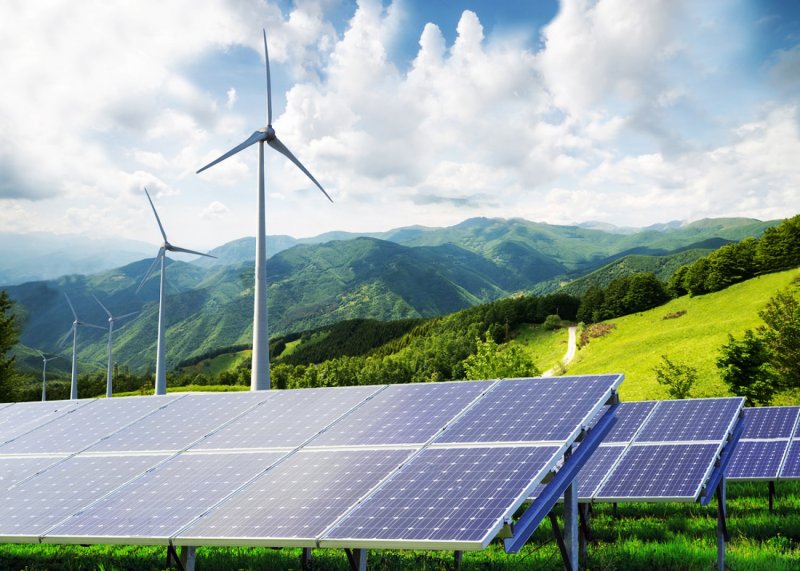
In today’s world, the transition to renewable energy is not just an environmental necessity — it’s a technological revolution. Among the leading sources of clean energy, solar and wind power plants stand out as two of the most widely adopted and fastest-growing solutions. Both harness natural forces — sunlight and wind — to produce electricity without emitting greenhouse gases or depleting finite resources. But how exactly do these fascinating systems work?
The science behind solar power
Solar power plants generate electricity by capturing energy from the sun’s rays. They use two main technologies: photovoltaic (PV) systems and concentrated solar power (CSP) systems.
Photovoltaic (PV) Systems
Photovoltaic systems are what most people think of when they imagine solar panels. Each solar panel is made up of many solar cells — typically composed of silicon, a semiconductor material. When sunlight hits the surface of the cells, photons (light particles) knock electrons loose from the atoms within the silicon. This process, known as the photoelectric effect, creates an electric current.
The electric current generated by each cell is direct current (DC). Since most of the world’s electrical systems use alternating current (AC), an inverter is used to convert DC into AC electricity, making it suitable for homes, businesses, and power grids.
Large-scale solar farms often consist of thousands of panels arranged in rows, covering vast areas of land. Many modern plants use tracking systems that allow panels to rotate and follow the sun’s movement across the sky, maximizing energy capture throughout the day.
Concentrated solar power (CSP) systems
CSP plants operate differently. Instead of directly converting sunlight into electricity, they use mirrors or lenses to concentrate solar energy onto a small area — typically a receiver at the top of a tower. This concentrated sunlight heats a fluid (often molten salt or synthetic oil) to extremely high temperatures. The heat is then used to produce steam, which drives a turbine connected to a generator, much like in traditional power plants.
One of the advantages of CSP systems is thermal energy storage. By storing heat in large insulated tanks of molten salt, CSP plants can continue producing electricity even after sunset, providing a more stable and reliable energy supply.
The mechanics of wind power
Wind power plants, or wind farms, convert the kinetic energy of moving air into mechanical energy — and then into electricity. The key components are wind turbines, which come in various sizes and designs but operate on the same basic principles.
How wind turbines work
When the wind blows, it causes the blades of the turbine to spin. These blades are carefully shaped — similar to airplane wings — to create lift, which makes them rotate efficiently. The blades are attached to a hub, which connects to a shaft inside the turbine’s nacelle (the housing at the top of the tower).
The main shaft spins a gearbox, which increases the rotational speed to a level suitable for electricity generation. The gearbox is linked to a generator, which uses electromagnetic induction to convert the rotational energy into electrical energy.
Like solar panels, wind turbines produce AC electricity, which is then transmitted to a transformer that adjusts the voltage for transmission across power lines.
Onshore and offshore wind farms
Wind farms are categorized into two types: onshore and offshore. Onshore wind farms are built on land, often in open plains or hilly regions where wind speeds are strong and consistent. Offshore wind farms are located at sea, where winds are generally steadier and more powerful. Although offshore installations are more expensive to build and maintain, they produce more energy and have less visual and noise impact on communities.
Modern offshore turbines are engineering marvels — with blades as long as 100 meters and towers taller than 250 meters, capable of powering thousands of homes each.
Energy storage and integration
A key challenge for both solar and wind energy is intermittency — the fact that the sun doesn’t always shine and the wind doesn’t always blow. To overcome this, renewable energy plants are increasingly paired with battery storage systems or integrated into hybrid grids that balance multiple energy sources.
Battery storage allows excess electricity produced during peak generation hours to be stored and used later when production drops. Pumped hydro storage, another popular method, uses excess energy to pump water uphill into reservoirs, releasing it later through turbines to generate electricity when demand is high.
At the grid level, smart energy management systems play a crucial role in maintaining balance between supply and demand, ensuring a stable and reliable power flow even as renewable energy becomes a larger share of the global mix.
Advantages and future outlook
The benefits of solar and wind energy are numerous. They are clean, renewable, and sustainable, with minimal environmental impact compared to fossil fuels. The operation of these plants emits no greenhouse gases, and the “fuel” — sunlight and wind — is free and inexhaustible.
Moreover, as technology advances, the cost of renewable energy continues to fall dramatically. Over the past decade, the price of solar panels has dropped by more than 80%, while wind turbines have become more efficient and less costly to produce. This has made renewables not only environmentally sound but also economically competitive with traditional energy sources.
Many countries are now investing heavily in large-scale solar and wind projects as part of their energy transition strategies. From China’s massive desert solar farms to Europe’s expanding offshore wind networks and Africa’s pioneering hybrid microgrids, renewable power is reshaping the global energy landscape.
The next frontier lies in innovation — from floating solar panels on lakes and reservoirs to airborne wind turbines that harness stronger high-altitude currents. Combined with advances in energy storage, smart grids, and artificial intelligence, the efficiency and reliability of renewable power will continue to grow.
Conclusion
Solar and wind power plants symbolize humanity’s ability to turn nature’s raw forces into sustainable progress. Their operation, though based on simple physical principles, reflects decades of scientific innovation and engineering excellence.
As the world strives to reduce its carbon footprint and achieve energy independence, understanding how these technologies work is crucial. They are not just tools for generating electricity — they represent a vision of a cleaner, more resilient, and harmonious relationship between humans and the planet.


Similar news