Strikes and protests set as French government faces new crisis


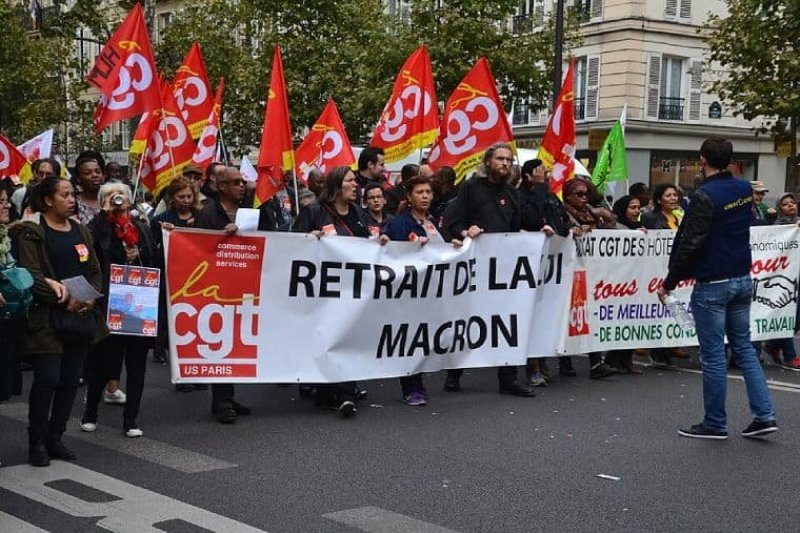
The French government is on the brink of collapse next month, with centrist Prime Minister François Bayrou announcing a confidence vote scheduled for September 8.
Bayrou is set to ask parliament to back his plan for huge budget cuts, News.Az reports citing foreign media.
But the fascist RN, the left wing LFI, the Labour-type PS, the Communist Party and the Greens all said they would vote against the government.
Bayrou has called the vote two days before protests and strikes are expected to hit France.
The Bloquons tout “block everything” movement started on social media but has since been backed by LFI, the Greens, the Communists and several unions. It emerged after the prime minister declared his budget plans for £38 billion in cuts.
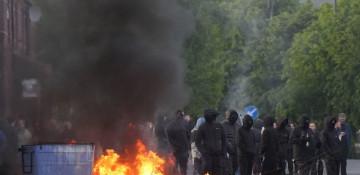
The movement calls for mass resistance on 10 September and has echoes of the gilets jaunes or yellow vest protests that started in 2018 and lasted until 2020.
LFI leader Jean-Luc Melenchon predicted that Bayrou will be removed from office, handing a “victory to the popular mobilisation that is under way”.
Leader of PS, Olivier Faure told Le Monde newspaper that “it’s unthinkable the Socialists will give François Bayrou a vote of confidence. It is François Bayrou who is to blame for political instability by proposing a budget that no-one supports, not even his electorate.”
President of RN, Jordan Bardella, said, “The RN will never vote in favour of a government whose decisions are making the French people suffer” and RN leader Marine Le Pen called for fresh elections.
French president Emmanuel Macron can call new elections if he chooses too, but has recently expressed hesitancy about this option, instead calling upon parliamentarians to work together.
Even before this announcement, Bayrou was expected to use a constitutional clause to override parliament to pass the budget in the autumn. This would have triggered a no-confidence vote, where the swing votes would have likely come from PS and RN.
Instead, Bayrou has decided to speed up this process and take a gamble, as he hopes to pressure one of the parliamentary parties to abstain.
The prime minister has called France’s increasing debt “an immediate danger, which we must tackle”.
He said at the press conference where he announced the vote, “There are moments when only a calculated risk can allow you to escape a more serious risk. It is a matter of the survival of our state, the image of our nation, and each and every family.”
One ministerial adviser was overheard saying, “It’s better to die by suicide than suffer in agony.”
Low revenue and economic growth lies behind the French state’s increasing debt. It has been further fueled by successive tax breaks for bosses and the rich.
Bayrou hopes to avoid mass resistance on the streets and in the workplaces by taking the momentum out of the movement.
He has attacked the 10 September mobilisation, saying, “This is not what France is about, to be brought down by disorder.”
The origins of the 10 September call are contradictory. It was posted on social media by a group called Les Essentiels, which has links to the far right and conspiracy theorists, in July.
But since then, the LFI, the Greens and the Communist Party have all pledged their support for the mobilisation.
Melenchon said in a speech last week, “10 September must be a day of general blockade, which means, as far as wage earners are concerned, that 10 September must be a general strike.”
The CGT Federation of Commerce and Services, a union representing workers in service sectors, has called on its members to strike on that date.
“In every establishment, in every company, in every branch, let’s organise the workers’ response—everyone on strike.”
The FNIC-CGT chemical workers union is also calling on its members to strike. It is also pushing the CGT union federation to call for national action. “We call on the Confederation to make September 10 a national call and to include it in a renewable strike strategy, until the budget and its attacks on workers are withdrawn,” it said.
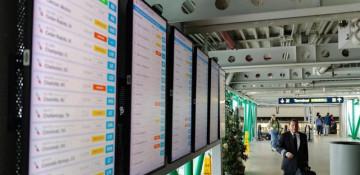
SUD-Rail, a rail workers’ union and SUD-Aerien, an airport workers’ union, are also set to strike.
The fascist RN has criticised the mobilisation and sees the movement as associated with the left. But some far right organisations are trying to use the mobilisation.
Yet 10 September represents an opportunity for working class struggle. If Bayrou survives, the streets can decide his fate and use the protests and strikes to try and bring down his government. If Bayrou goes, working class people can use the mobilisation to shape France’s political future through struggle.


Similar news