The death of the Aral Sea: What one of the world’s worst environmental disasters teaches Central Asia today


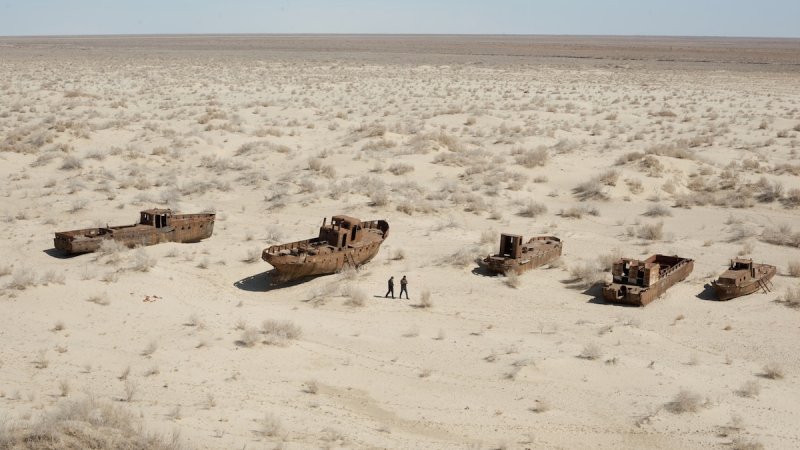
Few environmental catastrophes illustrate the destructive consequences of unsustainable resource management more dramatically than the collapse of the Aral Sea.
Once the fourth largest inland lake in the world, the Aral Sea was historically a vast ecosystem supporting fishing communities, agriculture, regional trade and biodiversity across Central Asia.
RECOMMENDED STORIES
Today, however, much of the sea has disappeared.
What remains is a symbol of environmental collapse visible even from space.
The destruction of the Aral Sea is widely considered one of the greatest ecological disasters of the modern era. It reshaped landscapes, devastated local economies, damaged public health and altered climate conditions across large parts of the region.
More importantly, the crisis continues offering critical lessons for modern Central Asia as governments confront rising climate pressures, water shortages and environmental vulnerability linked to climate change.
The broader question now facing the region is whether the tragedy of the Aral Sea can serve as a warning strong enough to prevent future ecological crises in one of the world’s most climate stressed regions.
What was the Aral Sea originally like?
The Aral Sea once stretched across the border region between present day Kazakhstan and Uzbekistan.
Before its collapse, it was:
-
One of the world’s largest lakes
-
A major fishing center
-
An important regional ecosystem
-
A source of economic activity for surrounding communities
The sea supported:
-
Commercial fisheries
-
Port towns
-
Transportation networks
-
Wildlife habitats
Local economies depended heavily on fishing industries and related businesses.
The surrounding environment also benefited from the sea’s moderating climatic influence, which helped stabilize temperatures and support agriculture in nearby areas.
For generations, the Aral Sea formed an essential part of Central Asia’s environmental and economic system.
What caused the Aral Sea disaster?
The disaster was primarily caused by massive diversion of river water during the Soviet era.
Beginning in the mid 20th century, Soviet planners expanded large scale irrigation projects across Central Asia to increase agricultural production, particularly cotton cultivation.
The two rivers feeding the Aral Sea:
-
The Amu Darya
-
The Syr Darya
were heavily diverted into irrigation canals.
These projects dramatically increased agricultural output but ignored long term environmental sustainability.
As more water was extracted upstream, less water reached the sea itself.
Over time, inflows declined so severely that the Aral Sea began shrinking rapidly.
The environmental consequences became catastrophic.
The disaster demonstrated how large scale state driven resource management can create severe unintended ecological damage when long term environmental balance is ignored.
How quickly did the sea disappear?
The collapse occurred over several decades but accelerated dramatically after the 1960s.
By the late 20th century:
-
Water levels had fallen sharply
-
Shorelines retreated dozens of kilometers
-
Fishing ports became stranded in desert landscapes
Large sections of the former seabed transformed into dry salt plains.
Satellite imagery showed the sea fragmenting into smaller disconnected bodies of water.
Some areas disappeared almost entirely.
The scale of environmental transformation shocked scientists and environmental observers worldwide.
Entire communities that once depended on fishing suddenly found themselves surrounded not by water, but by desert.
The collapse became one of the clearest examples of human driven ecological destruction in modern history.
Why was cotton production central to the problem?
Cotton cultivation was heavily prioritized during the Soviet period because the crop generated major economic value.
Central Asia became one of the Soviet Union’s primary cotton producing regions.
However, cotton farming requires enormous amounts of water.
Massive irrigation systems were constructed to support agricultural expansion across arid landscapes.
The problem was not only water diversion itself, but also inefficiency.
Many irrigation canals:
-
Leaked heavily
-
Lost water through evaporation
-
Used outdated infrastructure
As a result, huge quantities of water were wasted before reaching fields.
The drive for agricultural production ultimately overwhelmed the region’s natural water balance.
The Aral Sea paid the price.
Today, the disaster remains a warning about unsustainable agricultural policy and poor water management.
What environmental damage followed the collapse?
The environmental consequences were devastating.
As the sea dried, exposed seabeds released:
-
Salt
-
Chemicals
-
Pesticide residues
-
Toxic dust
Strong winds carried these particles across large distances, damaging:
-
Agricultural land
-
Ecosystems
-
Human health
The region experienced:
-
Soil salinization
-
Desertification
-
Biodiversity loss
-
Ecosystem collapse
Fish species disappeared and wetlands were destroyed.
The local climate also changed.
Without the moderating influence of the sea, surrounding areas experienced:
-
Hotter summers
-
Colder winters
-
Reduced humidity
-
Shorter growing seasons
The disaster therefore affected not only the sea itself, but the broader regional environment.
How did the crisis affect public health?
The collapse of the Aral Sea created severe public health problems.
Toxic dust storms carried pollutants and salt into populated areas, contributing to:
-
Respiratory diseases
-
Cancer risks
-
Kidney problems
-
Water contamination
-
Poor air quality
Healthcare systems in affected areas struggled with rising illness rates.
Communities also faced:
-
Poor drinking water quality
-
Nutritional problems
-
Economic hardship
Pregnant women and children were especially vulnerable to environmental contamination.
Public health experts often cite the Aral Sea disaster as an example of how environmental collapse can evolve into a humanitarian crisis.
The effects continue impacting local populations today.
What happened to the fishing industry?
The fishing industry collapsed almost completely.
Ports that once operated along active shorelines became stranded far from water as the sea retreated.
Fishing fleets disappeared and thousands of jobs were lost.
Entire communities built around fishing economies faced:
-
Unemployment
-
Poverty
-
Migration
-
Economic collapse
Former fishing towns became symbols of environmental devastation.
Abandoned ships resting on dry desert land became some of the most iconic images associated with the disaster.
The collapse demonstrated how environmental destruction can rapidly destabilize local economies and social systems.
How did the disaster affect regional climate conditions?
Large bodies of water influence local climate systems significantly.
The Aral Sea previously moderated temperatures and supported regional humidity.
As the sea disappeared, climate conditions became harsher.
The surrounding region experienced:
-
Greater temperature extremes
-
More severe winters
-
Hotter summers
-
Reduced agricultural productivity
Dust storms from the dried seabed also damaged crops and soil quality.
Climate change today may intensify some of these pressures further.
The Aral Sea therefore illustrates how environmental degradation can alter entire regional climate systems.
Could the disaster have been prevented?
Many scientists believe the disaster was largely preventable.
The problem was not agriculture itself, but unsustainable resource management and lack of environmental planning.
More efficient irrigation systems, balanced water use and environmental oversight might have reduced damage significantly.
However, Soviet era planning often prioritized short term production goals over long term ecological sustainability.
Decision making was highly centralized, and environmental consequences were underestimated or ignored.
The disaster therefore also reflects governance failures alongside environmental mismanagement.
Have there been restoration efforts?
Some restoration efforts have achieved partial success, particularly in northern parts of the former sea located within Kazakhstan.
Infrastructure projects such as dams helped stabilize and partially restore sections of the North Aral Sea.
In some areas:
-
Water levels increased
-
Fish populations partially recovered
-
Local economic activity improved
However, much of the southern region remains severely damaged.
Complete restoration of the original Aral Sea is generally considered unrealistic.
Nevertheless, smaller scale environmental recovery efforts continue.
These projects demonstrate that targeted intervention can still improve environmental conditions even after severe ecological damage.
Why does the Aral Sea still matter today?
The Aral Sea disaster remains highly relevant because many of the same pressures continue affecting Central Asia today.
The region still faces:
-
Water scarcity
-
Climate change
-
Glacier melt
-
Agricultural stress
-
Desertification
Population growth and economic development continue increasing pressure on shared water systems.
The crisis therefore serves as a warning regarding what can happen when:
-
Environmental sustainability is ignored
-
Water systems are overexploited
-
Regional cooperation fails
Climate change now adds additional risks to already vulnerable ecosystems.
Many experts argue Central Asia cannot afford another ecological disaster of similar scale.
How does climate change make the lessons more urgent?
Climate change intensifies many of the environmental vulnerabilities already visible during the Aral Sea collapse.
Rising temperatures accelerate:
-
Glacier melt
-
Water evaporation
-
Drought risk
-
Land degradation
This places additional pressure on:
-
River systems
-
Agriculture
-
Hydropower
-
Urban water supplies
The lessons of the Aral Sea therefore become even more important in an era of global climate instability.
Sustainable water management is no longer simply an environmental issue.
It is increasingly tied to:
-
Food security
-
Economic stability
-
Public health
-
Regional security
Why is regional cooperation essential?
The rivers feeding Central Asia cross national borders.
This means environmental management requires cooperation between multiple countries.
No single state can fully solve regional water challenges independently.
Effective management requires coordination involving:
-
Water sharing agreements
-
Irrigation modernization
-
Climate adaptation
-
Environmental monitoring
-
Agricultural reform
The Aral Sea disaster demonstrated the consequences of prioritizing short term national production goals without regional sustainability planning.
Today, climate pressures make cooperation even more important.
What lessons does the world learn from the Aral Sea?
The Aral Sea became a global environmental warning.
It demonstrated how:
-
Environmental destruction can occur gradually but become irreversible
-
Water systems are deeply interconnected with economies and public health
-
Unsustainable development creates long term instability
The disaster also showed how environmental collapse can affect:
-
Migration
-
Employment
-
Climate
-
Food systems
-
Political stability
Many climate vulnerable regions worldwide now study the Aral Sea as a cautionary example.
Could Central Asia avoid similar future crises?
Avoiding future ecological disasters depends heavily on:
-
Water efficiency
-
Climate adaptation
-
Infrastructure modernization
-
Regional cooperation
-
Sustainable agricultural reform
Technology may help through:
-
Smart irrigation systems
-
Satellite monitoring
-
Water conservation
-
Renewable energy development
However, long term success ultimately depends on political commitment and regional coordination.
The environmental pressures facing Central Asia today are growing rapidly.
Why does the Aral Sea remain symbolically important?
The dried remains of the Aral Sea symbolize more than environmental collapse alone.
They represent:
-
The cost of unsustainable development
-
The dangers of ignoring ecological balance
-
The long term consequences of resource mismanagement
At the same time, restoration efforts in some areas also demonstrate resilience and the possibility of partial recovery.
The Aral Sea therefore stands as both:
-
A warning
-
A lesson
for Central Asia and the wider world.
The central question is no longer whether environmental degradation can destabilize societies.
History has already answered that.
The real challenge is whether governments can learn from past mistakes quickly enough to prevent climate change and water scarcity from producing new environmental crises across one of the world’s most vulnerable regions.
By Faig Mahmudov


Similar news