Climate migration and the future of Central Asian cities


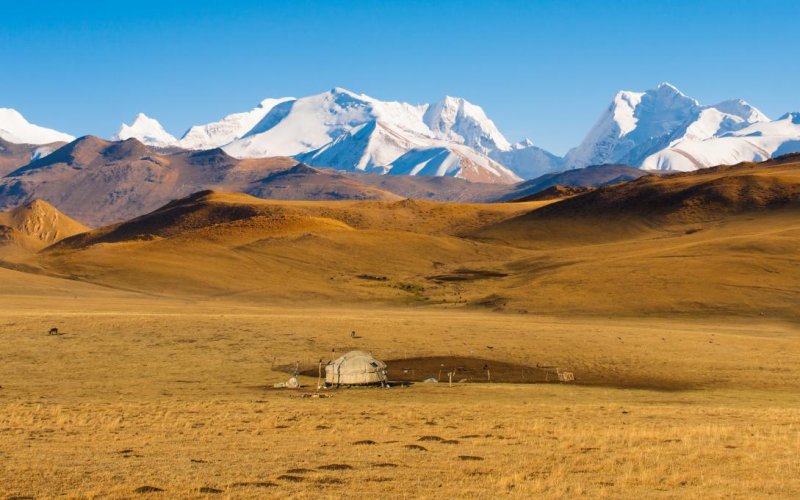
Climate change is beginning to reshape not only landscapes and economies across Central Asia, but also the movement of people. Rising temperatures, water shortages, droughts and agricultural decline are increasingly placing pressure on rural communities throughout the region.
As environmental conditions worsen in vulnerable areas, millions of people may gradually relocate toward larger urban centers in search of employment, infrastructure and stability.
RECOMMENDED STORIES
This process, often described as climate migration, is emerging as one of the most important long term social and economic challenges facing Central Asia.
Major cities such as Tashkent, Almaty and Bishkek are already expanding rapidly because of demographic growth and economic centralization. Climate pressures may accelerate these trends significantly over coming decades.
At the same time, many urban areas remain poorly prepared for large scale migration linked to environmental stress.
Governments increasingly face difficult questions regarding:
-
Housing
-
Infrastructure
-
Water supply
-
Employment
-
Transportation
-
Public health
-
Social stability
The broader issue is no longer only environmental adaptation in rural areas.
It is increasingly about whether Central Asian cities themselves can remain sustainable and resilient under growing climate pressure.
What is climate migration?
Climate migration refers to the movement of people driven partly or entirely by environmental pressures linked to climate change.
Unlike traditional migration caused mainly by war or economic opportunity, climate migration often emerges gradually through:
-
Droughts
-
Water shortages
-
Agricultural decline
-
Extreme heat
-
Desertification
-
Environmental degradation
People may leave areas where livelihoods become increasingly unsustainable.
In Central Asia, climate migration is expected to occur mostly within countries rather than across international borders initially.
Rural populations facing declining agricultural productivity may move toward urban centers offering:
-
Jobs
-
Services
-
Infrastructure
-
Education
-
Healthcare
Over time, however, cross border migration pressures could also increase if environmental conditions worsen significantly.
Why is Central Asia especially vulnerable?
Central Asia faces multiple overlapping environmental vulnerabilities.
The region depends heavily on:
-
Irrigated agriculture
-
Glacier fed rivers
-
Water intensive farming
-
Climate sensitive ecosystems
At the same time, rising temperatures are accelerating:
-
Glacier melt
-
Drought risk
-
Water scarcity
-
Desertification
Large rural populations across Uzbekistan, Kazakhstan, Kyrgyzstan, Tajikistan and Turkmenistan remain dependent on agriculture and water availability for livelihoods.
As environmental conditions deteriorate, rural economic pressures may intensify.
Climate migration therefore increasingly intersects with:
-
Economic modernization
-
Urbanization
-
Infrastructure development
-
Social policy
The region’s vulnerability is not only environmental.
It is also demographic and economic.
Why are rural communities under pressure?
Many rural communities in Central Asia already face structural challenges including:
-
Limited economic diversification
-
Aging infrastructure
-
Water stress
-
Poor public services
-
Agricultural dependence
Climate change intensifies these existing vulnerabilities.
For example:
-
Droughts reduce crop yields
-
Water shortages threaten irrigation
-
Heatwaves damage livestock production
-
Soil degradation lowers agricultural productivity
Younger populations often migrate first in search of better economic opportunities.
Over time, entire communities may experience population decline and economic weakening.
This process is already visible in some environmentally stressed areas.
If climate conditions worsen significantly, migration patterns may accelerate further.
How does water scarcity influence migration?
Water lies at the center of Central Asia’s climate challenges.
Agriculture across much of the region depends heavily on rivers such as:
-
The Syr Darya
-
The Amu Darya
However, climate change, glacier retreat and inefficient irrigation systems are increasing pressure on water supplies.
As water becomes scarcer:
-
Agricultural productivity declines
-
Rural incomes weaken
-
Living conditions worsen
Communities facing chronic water shortages may gradually relocate toward cities where infrastructure and services are more reliable.
Water scarcity therefore becomes not only an environmental issue, but also a demographic driver reshaping population distribution.
Why are cities attracting more migrants?
Urban centers offer opportunities often unavailable in rural regions.
Major cities such as:
-
Tashkent
-
Almaty
-
Bishkek
provide:
-
Employment markets
-
Universities
-
Healthcare systems
-
Transportation infrastructure
-
Digital connectivity
Urban economies are generally more diversified than rural agricultural regions.
As climate pressures increase, cities may increasingly become perceived as safer and more economically stable environments.
However, rapid urban growth also creates serious challenges.
Without adequate planning, cities may struggle to absorb large migration flows sustainably.
How could climate migration affect housing?
Housing may become one of the most immediate urban challenges.
Rapid migration can lead to:
-
Rising property prices
-
Informal settlements
-
Overcrowding
-
Infrastructure strain
-
Housing shortages
Low income migrants are especially vulnerable because affordable housing options are often limited.
Unplanned urban expansion may create:
-
Poor sanitation
-
Limited public services
-
Environmental degradation
-
Social inequality
Some Central Asian cities already face pressure from rapid population growth.
Climate migration could intensify these existing urban problems significantly.
Governments therefore increasingly need long term urban planning strategies linked directly to climate adaptation.
Could climate migration increase social inequality?
Climate impacts are rarely distributed equally.
Poorer communities often suffer the most severe consequences because they possess fewer financial resources and less resilient infrastructure.
Climate migration may therefore deepen existing inequalities involving:
-
Income
-
Housing
-
Employment
-
Healthcare access
-
Education
Migrants arriving in cities may struggle to access stable employment or affordable services.
If governments fail to manage urban expansion effectively, social tensions could increase.
Economic inequality, unemployment and infrastructure shortages may create frustration among both migrant and existing urban populations.
Climate adaptation therefore increasingly overlaps with social stability and governance challenges.
How does climate change affect urban infrastructure?
Central Asian cities themselves are highly vulnerable to climate pressures.
Urban areas face increasing risks involving:
-
Extreme heat
-
Water shortages
-
Air pollution
-
Flooding
-
Energy demand surges
Rapid population growth intensifies pressure on:
-
Electricity systems
-
Water networks
-
Transportation infrastructure
-
Waste management
-
Healthcare services
Many urban systems were not originally designed for climate intensified conditions or large migration driven population growth.
Modernizing infrastructure therefore becomes increasingly urgent.
Climate resilient urban planning is now a strategic necessity rather than simply an environmental goal.
Why is heat becoming a major urban problem?
Heatwaves are intensifying across Central Asia.
Cities are especially vulnerable because concrete and asphalt trap heat, creating “urban heat island” effects.
Extreme temperatures affect:
-
Public health
-
Labor productivity
-
Energy demand
-
Transportation systems
Poorer urban residents often face greater exposure because they may lack:
-
Air conditioning
-
Green space access
-
High quality housing
Heat stress may therefore become one of the most important public health challenges in rapidly growing Central Asian cities.
Urban climate adaptation increasingly requires:
-
Green infrastructure
-
Tree planting
-
Cooling systems
-
Sustainable building design
How could climate migration affect employment?
Urban labor markets may face major pressure if migration accelerates significantly.
Migrants arriving from rural areas may struggle to find:
-
Stable jobs
-
Professional training
-
Formal employment opportunities
Without sufficient economic growth, rapid migration can increase:
-
Informal labor
-
Unemployment
-
Poverty
-
Social instability
However, urbanization can also create economic opportunities if governments invest effectively in:
-
Infrastructure
-
Industry
-
Education
-
Technology sectors
The long term outcome depends heavily on economic planning and labor market development.
Could climate migration reshape politics?
Population shifts may gradually alter political and economic priorities across the region.
Governments may face growing pressure regarding:
-
Housing policy
-
Water management
-
Urban investment
-
Social welfare
-
Employment creation
Cities themselves may gain greater political influence as urban populations expand.
At the same time, declining rural regions may face:
-
Economic stagnation
-
Population aging
-
Reduced investment
Climate migration therefore has implications not only for urban planning, but also for governance and regional development policy.
How does the Aral Sea disaster connect to migration?
The collapse of the Aral Sea already demonstrated how environmental degradation can trigger long term demographic change.
Communities affected by:
-
Economic collapse
-
Water shortages
-
Public health crises
experienced migration and population decline over time.
The Aral Sea remains a warning about how ecological disasters can reshape entire regional societies.
Climate change today may produce similar migration pressures in other vulnerable areas if environmental conditions continue deteriorating.
Could regional cooperation help manage migration pressures?
Regional cooperation may become increasingly important because climate migration affects interconnected systems involving:
-
Water resources
-
Energy infrastructure
-
Labor markets
-
Transportation networks
Shared strategies may help countries coordinate:
-
Climate adaptation
-
Infrastructure investment
-
Disaster response
-
Economic development
Without cooperation, environmental pressures may intensify competition and instability.
With effective coordination, however, regional integration could strengthen resilience.
What role can technology play?
Technology may help reduce migration pressure by improving rural resilience.
Potential solutions include:
-
Smart irrigation systems
-
Climate monitoring
-
Precision agriculture
-
Renewable energy
-
Digital education
-
Remote work opportunities
If rural economies become more resilient and diversified, migration pressures may slow.
At the same time, cities themselves increasingly require:
-
Smart infrastructure
-
Water efficient systems
-
Sustainable transportation
-
Climate resilient construction
Technology alone cannot solve climate migration, but it may improve adaptation capacity significantly.
How important is urban planning now?
Urban planning is becoming one of the most critical policy areas in Central Asia’s climate future.
Cities must prepare for:
-
Population growth
-
Water stress
-
Heatwaves
-
Infrastructure expansion
-
Housing demand
Poorly managed urbanization could create:
-
Congestion
-
Pollution
-
Informal settlements
-
Social instability
Well planned urban development, however, could support:
-
Economic growth
-
Climate resilience
-
Better living standards
-
Regional modernization
Climate adaptation increasingly depends on city planning as much as environmental policy.
Could renewable energy help cities adapt?
Renewable energy may play a major role in strengthening urban resilience.
Solar and wind projects can help:
-
Reduce energy shortages
-
Support cooling systems
-
Improve air quality
-
Lower emissions
Several Central Asian countries are already investing more heavily in:
-
Solar infrastructure
-
Wind power
-
Energy efficiency
-
Green urban development
Sustainable cities may become increasingly important in adapting to climate driven population growth.
What could the future look like?
Several possible scenarios exist.
In a positive scenario:
-
Cities modernize infrastructure
-
Governments manage migration effectively
-
Renewable energy expands
-
Climate adaptation improves resilience
In a negative scenario:
-
Water shortages intensify
-
Informal settlements expand
-
Social inequality worsens
-
Urban systems become overwhelmed
The outcome depends heavily on:
-
Political leadership
-
Investment
-
Regional cooperation
-
Climate adaptation planning
Climate migration is no longer a distant possibility for Central Asia.
It is gradually becoming part of the region’s emerging reality.
The central question is no longer whether climate change will reshape population patterns across Central Asia.
It already is.
The real challenge is whether Central Asian cities can adapt quickly enough to transform climate driven migration from a source of instability into an opportunity for sustainable urban modernization and economic transformation.
By Faig Mahmudov


Similar news