Why does Singapore suddenly need both Koreas?


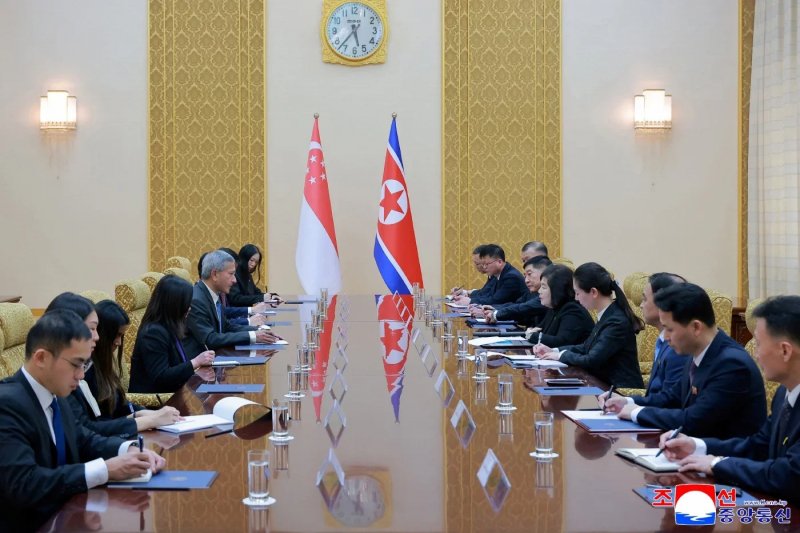
The rare diplomatic visit by Singapore’s Foreign Minister Vivian Balakrishnan to North and South Korea has become one of the most notable developments on the Asian diplomatic agenda. Formally, it is a visit by the foreign minister of a small Southeast Asian state. Politically, however, it carries much broader significance.
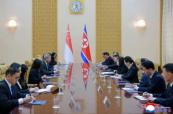
Balakrishnan began his trip in Pyongyang, where he met North Korean Foreign Minister Choe Son Hui. According to North Korea’s KCNA, the two sides discussed strengthening bilateral relations and exchanged views on regional and international issues. The details of the talks were not disclosed, which is typical for contacts involving Pyongyang. After North Korea, the Singaporean foreign minister is expected to continue his trip in South Korea, making the route especially significant: visits to both Koreas during one diplomatic tour are rare.
Singapore is not a major military power and is not one of the central players in the Korean crisis, unlike the United States, China, Japan or Russia. Yet this is precisely what makes its role important. For decades, Singapore has built its foreign policy on pragmatism, neutrality, economic openness and the ability to maintain channels of communication with very different political systems. In a region where confrontation often blocks direct dialogue, this kind of quiet diplomacy can sometimes matter as much as the public statements of major powers.
RECOMMENDED STORIES
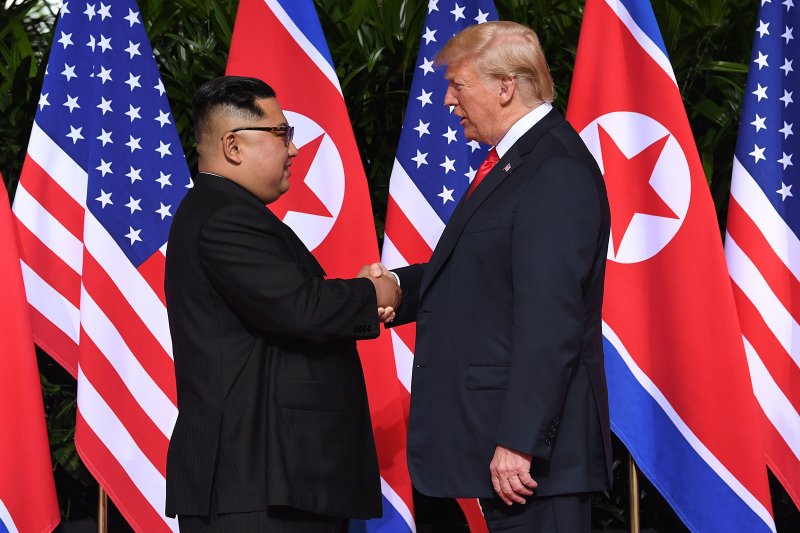
Historical memory also matters. In June 2018, Singapore hosted the first summit between U.S. President Donald Trump and North Korean leader Kim Jong Un. At the time, the meeting created hope for a possible diplomatic breakthrough and a new negotiation process on the denuclearization of the Korean Peninsula. Since then, that momentum has largely disappeared. North Korea has continued to develop its military capabilities, relations between the two Koreas have sharply deteriorated again, and direct dialogue between Washington and Pyongyang has effectively stalled. Against this background, Balakrishnan’s visit looks like an attempt to preserve at least a minimal diplomatic channel around one of the world’s most closed states.
The economic side of Singapore’s relations with the two Koreas shows a striking contrast. With South Korea, Singapore has a full-scale and rapidly developing partnership. In 2025, bilateral trade in goods between Singapore and South Korea reached S$72.2 billion. South Korea is Singapore’s eighth-largest trading partner, making it one of the city-state’s key economic partners in Asia.
These figures are important because the partnership is no longer limited to traditional trade. Singapore and South Korea are two advanced, technology-driven economies that depend on open markets, maritime trade, resilient supply chains, investment flows and access to cutting-edge technologies. In 2026, the two sides announced talks to upgrade their free trade agreement, which has been in force since 2006. They also signed several memorandums of understanding covering small modular nuclear reactors, artificial intelligence, quantum technologies and satellite systems.
In practice, Seoul and Singapore are building a new model of partnership centered not only on commerce, but also on technological security. For South Korea, Singapore offers a gateway to Southeast Asia and a major financial, logistics and innovation hub. For Singapore, South Korea is a source of industrial expertise, semiconductor-related capabilities, energy solutions and digital technologies. At a time of global competition over AI, chips, clean energy and satellite systems, this relationship is becoming increasingly strategic.
With North Korea, the situation is entirely different. In 2017, Singapore suspended trade relations with Pyongyang as part of the tightening of UN sanctions over North Korea’s nuclear and missile programs. Singapore’s customs authorities made clear that commercially traded goods imported from or exported to North Korea would be prohibited. This means Balakrishnan’s current visit to Pyongyang cannot be seen as an attempt to quickly restore economic ties.
The main value of the visit is therefore not in trade contracts or economic cooperation, but in political contact. Singapore is showing that even under a sanctions regime, diplomatic channels should not be completely destroyed. This is a delicate balance: Singapore remains a responsible participant in the international sanctions system, but it also understands that total isolation can make North Korea even more unpredictable.
For Pyongyang, the visit also has value. North Korea remains under heavy sanctions pressure, its international contacts are limited, and its main external support comes from China and Russia. A visit by Singapore’s foreign minister allows North Korea to show that it is not fully diplomatically isolated. At the same time, Singapore is a convenient interlocutor because it is not seen as a direct participant in the military confrontation on the peninsula.
For Seoul, Balakrishnan’s visit is also significant. South Korea has an interest in ensuring that ASEAN countries and major Southeast Asian hubs continue to pay attention to the Korean Peninsula. Singapore is one of ASEAN’s most influential voices, and its diplomacy is usually viewed as cautious, pragmatic and credible. The Singaporean minister’s arrival in South Korea after talks in Pyongyang could also give Seoul an additional sense of North Korea’s current diplomatic mood.
The regional context makes the trip even more important. The Korean Peninsula is no longer just a conflict between two Korean states. It is a strategic junction where the interests of the United States, China, Japan, Russia and Southeast Asian countries intersect. Any escalation around North Korea affects maritime security, trade routes, insurance costs, financial markets and energy flows. For Singapore, one of the world’s leading port, financial and logistics centers, stability in Northeast Asia is a direct national interest.
In this sense, Balakrishnan’s visit can be seen as cautious diplomatic probing. Singapore is not presenting itself as an official mediator and is not making loud political claims. But it is demonstrating a readiness to speak with all sides. In today’s Asia, that alone is a valuable diplomatic asset. As U.S.–China competition intensifies, military activity in the region grows and inter-Korean contacts remain limited, small and medium-sized states are trying to preserve space for independent diplomacy.
The visit also reflects the changing role of middle powers in Asia. In the past, security issues on the Korean Peninsula were largely shaped by major powers. Today, the diplomatic space is more fragmented. Talks between Washington and Pyongyang have not produced lasting results, inter-Korean contacts are weak, China and the United States are locked in strategic rivalry, and Russia’s closer ties with North Korea make Moscow look less like a neutral actor in the eyes of the West. In this environment, countries such as Singapore can serve as informal channels of communication.
There is also a broader Asian calculation. Singapore is carefully watching how the regional balance of power is changing. Military tensions around Taiwan, the South China Sea and the Korean Peninsula all create risks for the city-state. Singapore’s economy depends on stable sea lanes, predictable trade and investor confidence. Any opportunity to reduce tensions, even symbolically, serves its national interests.
At the same time, no quick breakthrough should be expected from this trip. North Korea’s nuclear program, the sanctions regime and the confrontation between the two Koreas cannot be changed by one visit. But diplomacy often begins not with major agreements, but with the preservation of contact. In that sense, Balakrishnan’s trip matters precisely because it signals that, despite deep confrontation, the Korean Peninsula is not completely closed to dialogue.
For North Korea, it is an opportunity to show that it can still speak to countries beyond China and Russia. For South Korea, it is a chance to strengthen coordination with an important Southeast Asian partner. For Singapore, it is a reaffirmation of its status as a country capable of maintaining diplomatic access to different sides of a conflict. For the wider region, it is a reminder that stability in Asia depends not only on the decisions of great powers, but also on the quiet diplomacy of states that are able to speak to everyone.
That is why Balakrishnan’s visit should not be seen as an ordinary diplomatic trip. It is a rare episode of movement around North Korea, connected at the same time to security, trade, technology and the balance of power in Asia. Against the backdrop of rising tensions on the Korean Peninsula, even such a cautious contact may matter more than it appears at first glance.
By Samir Valiyev


Similar news