New anti-Russia sanctions: Impact on Azerbaijan's economy


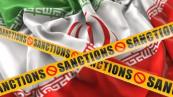
The new sanctions announced by the U.S. Department of the Treasury on May 1 against organizations that support the Russian military-industrial complex may indirectly affect Azerbaijan's economy by damaging trade and economic relations with important trading and investment partners.
The new anti-Russian sanctions have been adopted amid ongoing tensions between the U.S. and Russia. Predictably, the new list of sanctioned companies has caused a wave of concern and discussions not only in Russia but also in other countries where companies from this list are located. For Azerbaijan, which has a developing economy and is integrated into the global trading system, these sanctions represent a serious test, requiring adaptation and alternative development strategies.
The Azerbaijani company Lahic Energy MMC has been included in this list. According to the Treasury Department, Lahic Energy actively supports the Russian military-industrial base, which served as the basis for its inclusion in the sanctions list.
It is worth noting that sanctions are not always effective in achieving their goals. The expansion of U.S. sanctions reflects ongoing efforts to limit Russia's military capabilities through economic pressure. It should be emphasized that this pressure now extends not only to Russia but also to companies located in Azerbaijan, Belgium, China, the UAE, Slovakia, and Turkey.
From an international relations perspective, a comprehensive investigation into Lahic Energy's activities is needed to determine its role in relation to the Russian military sector. If cooperation with the Russian military-industrial complex is confirmed, decisive measures should be taken. However, if such connections are not confirmed, public clarification will be required to mitigate potential consequences from the West and to protect Azerbaijan's international relations.
The economic situation also raises concerns. Nearly two-thirds of Azerbaijan's imports come from European Union countries, making it vulnerable to the actions of the U.S. and the EU in the context of sanctions against Russia.
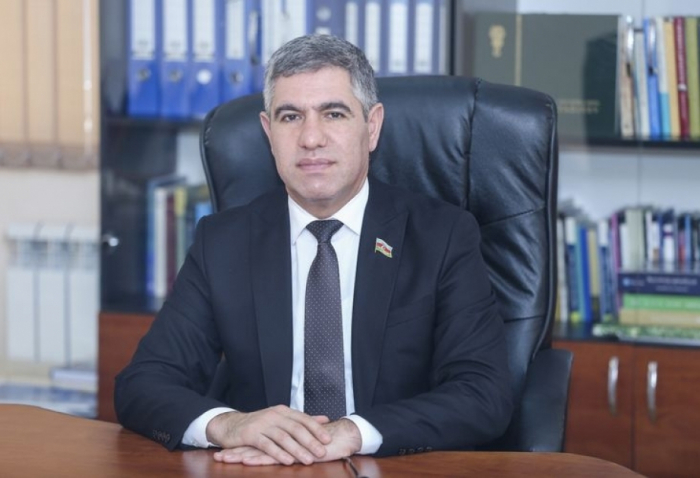
In an interview with News.Az, MP and economic expert Vugar Bayramli stated that there have been repeated biased calls from Washington and Brussels to impose sanctions against Azerbaijan. "All these calls are unequivocally biased and based on double standards. But despite this, Azerbaijan continues its just path and, of course, strengthens cooperation with other countries. Azerbaijan became the first country among post-Soviet states to restore its territorial integrity and sovereignty. And, unfortunately, the restoration of territorial integrity and sovereignty has started to worry some countries. This, of course, should be seen as a result of double standards," he said.
The expert noted that Azerbaijan's economy, accounting for more than 65% of the South Caucasus economy, has a strong strategy. Therefore, despite such attempts, the Azerbaijani economy will maintain its growth rate. "We have new regions and new geographies for cooperation, including the Turkic world, and this cooperation opens up new opportunities for us. Therefore, Azerbaijan maintains its active position in global and regional issues and, despite such attempts, will continue to maintain the growth rate of its economy in the next period," the MP said.
One of the main consequences of sanctions for Azerbaijan's economy may be the potential deterioration in access to financial resources and loans in global markets. Blocking bank accounts or restricting financial transactions can hinder the implementation of investment projects and business development in the country.
Moreover, sanctions aimed at key sectors of the economy, such as the oil and gas sector or other raw materials, could lead to a reduction in trade and exports. This may result in decreased state revenues and a weakening of the national currency, which, in turn, can affect the population's standard of living and the country's socio-economic stability.
A group of American congressmen, led by Dina Titus, is preparing to introduce a bill to impose sanctions against Azerbaijan in the U.S. Congress, citing cases of violations of the rights of Armenian prisoners. These events have raised concerns among American congressmen and led to proposals for imposing sanctions against Azerbaijani officials.
It should be noted that the sanctions proposal has faced criticism. Some observers point to Dina Titus's connections with the Greek caucus in Congress and her close ties with the Armenian National Committee of America (ANCA). This raises concerns that the sanctions proposal may be linked to geopolitical interests and a biased view of the situation in the region.
Nevertheless, a decision by the U.S. Congress to impose sanctions on Azerbaijan could have serious consequences. Sanctions could put pressure on the Azerbaijani authorities and draw international attention to the human rights situation in the country. However, as with any sanctions, their effectiveness and fairness remain subjects of discussion and additional international investigations.
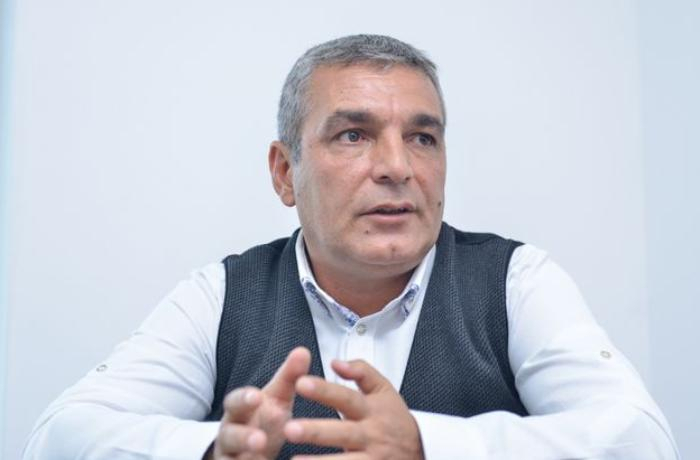
In an interview with News.Az, economic expert Natig Jafarli stated that neither the U.S. nor Europe has any legal basis for imposing sanctions on Azerbaijan. "Azerbaijan has not taken any actions outside international law that would warrant sanctions against it. All of Azerbaijan's actions have been within the framework of international law," he said.
The expert emphasized that by imposing sanctions, the West, would not want to cut off the branch on which it sits. This would be madness. He noted that Azerbaijan plays a crucial role in providing energy to Eastern and Southern European countries, including Italy and Israel. Therefore, even if theoretically such sanctions are imposed, they will cause more harm to the initiators themselves. "Thus, the likelihood of imposing sanctions against Azerbaijan is close to zero, and I repeat, there is no basis for imposing sanctions on a country that operates within the framework of international law. How can you impose sanctions on a country that operates within the framework of international law?" Natig Jafarli said.
Thus, sanctions are a complex and multifaceted phenomenon requiring careful analysis and a flexible approach from the state. Azerbaijan should use sanctions as an impetus to modernize and develop its economy, as well as to strengthen its position on the world stage.


Similar news