In an interview with News.Az, Russian Iranologist Lana Ravandi-Fadai discussed Iranian Foreign Minister Abbas Araghchi’s recent visit to Azerbaijan, the dynamics of the long-standing dispute over the three Persian Gulf islands, Iran’s prospects for importing water amid a deepening drought, and Tehran’s sustained commitment to its nuclear program. Ravandi-Fadai noted that the new Iranian administration under President Masoud Pezeshkian, himself an ethnic Azerbaijani, is making a strong political effort to improve relations with Baku, even as regional tensions and domestic pressures continue to shape Iran’s foreign-policy decisions.
– How do you assess the outcome of Iranian Foreign Minister Abbas Araghchi’s visit to Azerbaijan? What is behind this visit?
– I see it as an extremely positive step. Abbas Araghchi met with President Ilham Aliyev, Foreign Minister Jeyhun Bayramov, and Deputy Prime Minister Shahin Mustafayev to discuss the further development of bilateral relations.
They reviewed cooperation in agriculture, trade, industry, and education — essentially all key sectors. Special attention was given to the development of the North–South transport corridor.
Araghchi and the Iranian delegation also visited the Alley of Martyrs, a sacred place for Azerbaijanis, and laid flowers at the graves. Clearly, this visit reflects the genuine desire of Iran’s current president, Masoud Pezeshkian, who is Azerbaijani by ethnicity, to improve relations with Azerbaijan at all levels. Shortly after taking office, he instructed Iran’s political institutions to pay special attention to strengthening ties with Baku.
Unlike the period when Iran was governed by ultra-conservatives, we no longer see military exercises near Azerbaijan’s borders or provocative statements from certain clerics. Instead, the president recites poetry in Azerbaijani and tries to speak Azerbaijani whenever the setting allows. To be fair, relations between the two countries had already begun to improve at the end of Ebrahim Raisi’s presidency, but under Pezeshkian they have gained new momentum.
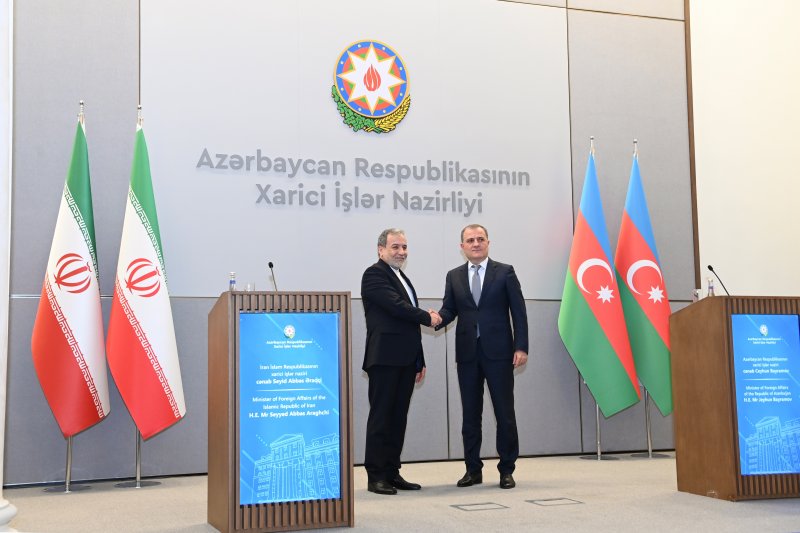 Photo: Azerbaijan's Foreign Ministry
– In early December, the Gulf Cooperation Council issued a statement supporting the UAE’s claims over the Iranian islands of Abu Musa, Greater Tunb, and Lesser Tunb. Ali Akbar Velayati, adviser to Iran’s Supreme Leader, called the UAE’s claims unfounded and accused Abu Dhabi of regional expansion with U.S. and British support. Why are the UAE’s claims resurfacing now? Could this become a pretext for military escalation involving Israel or the United States?
– The UAE’s claims are not new; they date back to the early 1970s, when the Emirates emerged as an independent state and Iran established control over the three disputed islands. Arab states regularly pass resolutions stating that the islands should be returned to the UAE, and Iran regularly protests. It has become routine — I see nothing new or escalatory here.
Meanwhile, the Emirates maintain robust economic relations with Iran and help bypass sanctions. Territorial disputes are one thing; mutually beneficial business is another, and it continues regardless. There will be no escalation between Iran and the UAE, especially not with U.S. or Israeli involvement. A war would hurt the Emirates most of all — they want to preserve active trade with Iran.
– Iranian authorities have stated they are prepared to import water due to severe drought and shortages. How realistic is large-scale water importation from neighboring countries?
– The problem is that nearly all neighboring states, except perhaps Türkiye, Azerbaijan, Armenia, and, if we consider the wider region — Russia, are themselves suffering from acute water shortages.
Iraq is in particularly dire condition: river levels, especially the Euphrates, continue to fall while the population grows rapidly. It will soon reach 50 million, whereas just 25 years ago it was only 20 million.
Syria, Afghanistan, and Pakistan also face serious water problems. Even Türkiye, although generally better off than Iran, is seeing worsening conditions in major cities.
I do not see where Iran could import enough water from its immediate neighbors to meet the needs of its large population, except potentially from Russia. Therefore, Iran urgently needs to develop its own desalination technologies, similar to those used in Israel and, on a smaller scale, in the Gulf monarchies. It must also radically reform its agricultural sector, which consumes several times more water than in most countries.
This will be extremely difficult and painful, but it is necessary for Iran’s survival. I hope President Pezeshkian understands this and is preparing measures. Even if Iran finds a source for water imports, this will not solve its long-standing internal problems. These must be addressed through long-term, consistent reforms, and the sooner, the better.
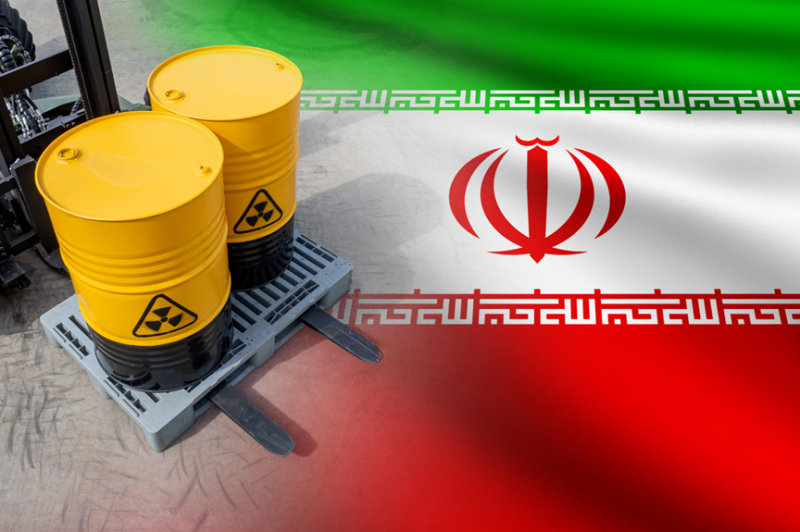 Photo: Shutterstock
– Why is Iran so committed to its nuclear program?
– Tehran insists on its nuclear program primarily because it sees it as a matter of national pride. Iranians want their country to be perceived, by both friends and adversaries, as a great power, and nuclear energy development is viewed as one of the paths to that status.
Iran also claims that its nuclear program is essential for research in medicine, energy, agriculture, and the broader advancement of a high-tech economy.
Another stated goal is reducing reliance on oil by developing nuclear energy. This is true, and Russia has been helping Iran build nuclear power plants since the 1990s. However, some countries, especially the United States and Israel, suspect that Iran is pursuing a covert military objective. I disagree with this; Iran is not seeking to develop nuclear weapons. Ayatollah Khamenei has even issued a fatwa forbidding their production.
However, it is possible that Iran wants to bring its nuclear infrastructure closer to having that capability in order to use it as leverage in negotiations with the United States and to strengthen its strategic position.
By Asif Aydinly
News.Az