The Eastern Mediterranean is once again emerging as one of the most tense geopolitical hotspots in the world. Military activity around Cyprus, the growing presence of the United States and France, energy competition, and Türkiye’s increasing role are shaping a new regional security architecture.
What is really happening around the island? Why is Ankara now firmly supporting a two-state model, and could Cyprus become a flashpoint between major powers? News.Az discussed these and other issues with Turkish political scientist Hüsamettin İnaç, professor at Dumlupınar University.
– What strategic role is Cyprus beginning to play today in the security architecture of the Eastern Mediterranean, and could its military infrastructure effectively turn the island into one of the key footholds for a possible confrontation between the United States, Israel, and Iran?
– The recent intensification of activity around Cyprus, both militarily and diplomatically, is largely the result of the extremely aggressive and hostile policy pursued by the Greek Cypriot administration of Southern Cyprus. In particular, since October 7, 2023, when military operations began in Gaza, Southern Cyprus, contrary to the provisions of the Zurich and London Agreements of 1959–1960, has provided its military facilities and infrastructure to France, the Netherlands, and the United States.
In practice, this has allowed the part of the island controlled by the Greek Cypriot side to be used to facilitate military operations. In this context, the United States essentially “rewarded” the Greek Cypriot administration by fully lifting the arms embargo that had been imposed after the 1974 Cyprus Peace Operation.
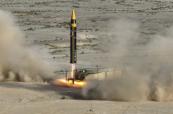
Source: AA
Thus, the current tensions and military activity around the island are largely linked to the fact that the infrastructure in Cyprus could be used by the United States and Israel in the context of potential operations against Iran, including strikes and other military actions.
– Can Türkiye’s shift from supporting a federal model to advocating the concept of two sovereign states in Cyprus be viewed as a strategic turning point in Ankara’s Eastern Mediterranean policy?
– Türkiye clearly understands that under the Zurich and London Agreements of 1959–1960 it is one of the guarantor states for Cyprus, and therefore it does not take even the slightest step back on this issue.
In particular, in 2004, within the framework of the so-called Annan Plan, proposals were put forward to withdraw Turkish troops from the island and to strip Türkiye of its guarantor status. Ankara rejected all these proposals and managed to introduce substantial changes to the plan. Consequently, it has consistently preserved its guarantor rights.
Moreover, since 1974, for more than 50 years, peace has been maintained on the island. It is evident that the existing status quo has effectively ensured security and stability for both Greek and Turkish Cypriots.
However, according to Türkiye, the next stage should be the institutional consolidation of Turkish Cypriot statehood. Until 2017, up to the negotiations in Crans-Montana, Ankara supported the idea of a federal settlement. However, it later became clear that the Greek side would not accept such a model and that it could pose serious risks for Turkish Cypriots.
Furthermore, there was growing concern that the federal model could be used as an instrument for the gradual assimilation of the Turkish community on the island. For this reason, since 2017 Türkiye has advocated a new settlement model based on the recognition of two independent and sovereign states.
– Can France’s growing activity in the Eastern Mediterranean, including the deployment of the aircraft carrier Charles de Gaulle, be seen as an attempt by Paris to shape its own geopolitical architecture in the region, and how does Türkiye respond to this?
– According to Turkish Foreign Minister Hakan Fidan, France in reality represents a state that seeks to rely on larger powers. In this context, it is sometimes described as a country that tries to exist through symbiotic relations with major powers.
From this perspective, Türkiye views France as a player attempting to expand its influence while sheltering under the support of the United States. If we analyze the situation in this light, we see France trying to occupy geopolitical space while effectively acting under the umbrella of the United States.
In particular, the deployment of the aircraft carrier Charles de Gaulle is an attempt to demonstrate its presence and influence in Lebanon. As is well known, Lebanon has long been an arena of tension and confrontation between Israel and Hezbollah, which creates serious instability in the region.
Source: AFP
Against this backdrop, while declaring its intention to contribute to resolving the situation, France is simultaneously trying to build its own geopolitical configuration in the Eastern Mediterranean in cooperation with Greece and the southern part of Cyprus.
In response, Türkiye intends to more clearly define its strategic line in the region by developing dialogue and maritime boundary agreements with countries such as Egypt, Lebanon, and Syria, as well as engaging with Christian political structures in Lebanon.
It is believed that such agreements on exclusive economic zones and maritime borders could form a new regional balance. According to this logic, such steps could limit France’s ability to demonstrate independent influence in the region and significantly narrow the space for its active political role in the Eastern Mediterranean.
– Can it be said that the growing tension around Cyprus is less about a territorial dispute and more a reaction to Türkiye’s rapidly increasing geopolitical role?
– Southern Cyprus and the Greek Cypriot administration are, in fact, interested in the emergence of a serious regional crisis.
This is because they increasingly realize that Türkiye, thanks to large-scale investments in its defense industry in recent years, as well as its active foreign policy and military engagement in the Middle East, the Caucasus, and Africa, is gradually transforming from a regional power into a global actor.
Awareness of this process causes them serious concern and, at the same time, strengthens their sense of strategic frustration.
Greece had expected that the United States would consistently restrain Türkiye through sanctions, embargoes, and political pressure, and that, in the long term, Washington would not build full cooperation with Ankara. However, the situation is now developing in the opposite direction. Greece is clearly dissatisfied that Türkiye maintains strong ties with the United States.
Particular concern is also caused by the fact that Türkiye is increasingly emerging as one of the key states capable of financing and supporting the formation of a new European security and defense architecture, including projects described as safety initiatives.
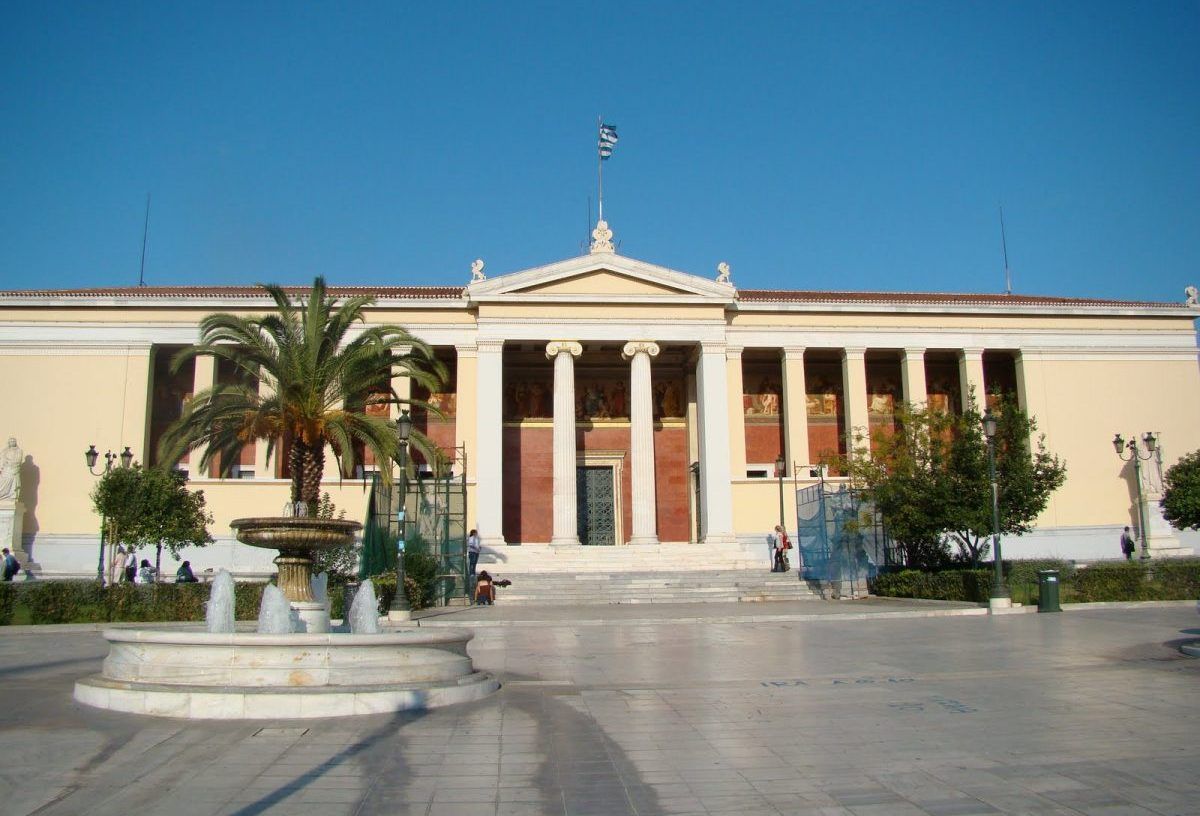
Source: tovima
At the same time, despite attempts to provoke regional tensions, Athens and the Greek Cypriot side will have far fewer opportunities to pursue such a policy in the future. After leading European states, primarily Germany and France, made a strategic decision to develop cooperation with Türkiye, their willingness to align with the positions of Greece and Southern Cyprus has significantly decreased.
As a result, a new agenda is gradually emerging in the region. It is oriented not toward confrontation but toward pragmatic solutions to pressing energy and economic issues. This, in turn, may lead to the creation of a mechanism for the distribution of hydrocarbon resources in the Eastern Mediterranean without military confrontation or escalation.
– Can the narrative that Türkiye might become the “next target after Iran” be viewed as part of a broader struggle over the security architecture of the Middle East?
– Yes, over the past two or three months, Israeli and Greek media have indeed actively discussed the thesis that Türkiye could become the next target after Iran. As is known, several months ago statements were made by the US ambassador to Türkiye and special representative for Syria, Tom Barrack.
They suggested that in the region there are essentially two fully functioning nation-states left — Iran and Türkiye. It was also argued that Israel generally has a negative attitude toward strong nation-states, which could be interpreted as an indirect signal.
Of course, in theoretical scenarios Türkiye could be viewed as an object of pressure or a potential target. However, speaking about any realistic prospect of successfully implementing such plans would be unrealistic.
Türkiye fundamentally differs from countries such as Iran or Iraq in its nature and state structure. It is a NATO member, a democratic and pluralistic country that actively interacts with many European states and is part of the broader European political space.
In addition, Türkiye carries the historical legacy of a major imperial tradition and embodies several geopolitical dimensions simultaneously: Mediterranean, Black Sea, Middle Eastern, Caucasian, and Balkan. On the international stage, it positions itself as a country advocating peace and justice.
Therefore, it is difficult to explain on what basis or how Türkiye could be included in a scenario similar to the Iranian one. Accordingly, assumptions that Türkiye could end up in a “ring of pressure” from Israel or the United States, with prospects of destabilization, division, or collapse, have no real foundation.
Attempts of this kind have already been made — it is enough to recall the events of July 15, 2016. However, they did not succeed. Turkish society demonstrated its ability to consolidate and mobilize around the state and the national flag. This capacity for national unity is well known both in the United States and in Israel.
Therefore, today there are neither real reasons for an attack on Türkiye nor practical possibilities for its implementation. Moreover, Türkiye’s high level of strategic deterrence and its overall national potential make such a scenario extremely unlikely.
News.Az