Pakistan responds to "Operation Sindoor": Nuclear stability at risk in South Asia? - INTERVIEW


.png)

Since the end of April 2025, the geopolitical and military tensions between India and Pakistan have entered a dangerously escalating stage. Following the incident on April 22 in the Pahalgam region of Jammu and Kashmir, under Indian control, New Delhi's rhetoric swiftly transformed into military actions, resulting in a severe destabilization of the region. On May 7, missile strikes by the Indian Armed Forces on Pakistan's sovereign territory were a direct reflection of this provocative rhetoric. The missile attacks, lasting for several hours, damaged civilian infrastructure and caused casualties among the civilian population. This represents India's calculated attempt to escalate tensions in the region and alter the strategic balance in its favor.In response to these aggressive actions, large-scale civil defense exercises were immediately initiated within India, 21 major airports were closed to civilian flights, and planned power outages were enforced in the capital, New Delhi. These measures indicate that India has effectively transitioned into a state of war readiness, further confirming that its strategic objectives are military and political in nature.

To explore the current escalation News.Az interviewed Muhammad Asif Noor, Director of the Centre for Central Asia and Eurasian Studies at the Pakistan Institute of Peace and Diplomatic Studies.
– How do you interpret the immediate causes of the recent escalation between India and Pakistan?
– The immediate causes of the recent escalation between India and Pakistan trace back to the April 22 attack in Pahalgam, Indian-administered Kashmir, which killed 26 civilians, mostly tourists. India quickly blamed Pakistan for harboring or facilitating the attackers, naming the Resistance Front, allegedly a Lashkar-e-Taiba offshoot, as responsible. However, no concrete evidence was shared publicly, and the speed with which India moved from attribution to military action raised questions. Pakistan outright rejected the allegations and instead called for a neutral international investigation, suspecting India of premeditated blame-setting.
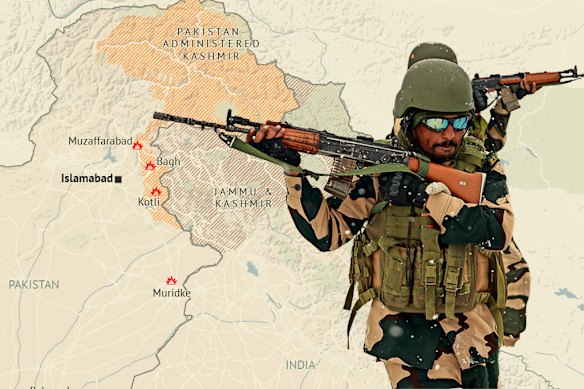
India's decision to launch airstrikes across the Line of Control and deeper into Pakistani territory including sites in Muridke and Bahawalpur signaled a deliberate choice to establish military dominance rather than seek verification or diplomacy. These attacks, dubbed “Operation Sindoor,” targeted locations India claimed were terrorist infrastructure, but Pakistani authorities insist the strikes hit civilian areas including mosques and homes, causing significant casualties. The Pakistani military’s downing of five Indian jets in response and the destruction of Indian military positions along the LoC showed that Pakistan was prepared for a retaliatory response, having anticipated the incursion for over a week.
Internally, the situation was also influenced by political timing. Indian Prime Minister Modi is in the midst of an election campaign where national security posturing resonates strongly with his base. Pakistan, meanwhile, faces political fragility, economic distress, and external pressure, but it was still forced into a decisive response to demonstrate deterrence and domestic credibility. The sequence of the Pahalgam attack, immediate blame, swift Indian strikes, and Pakistan’s military counteraction indicates that the escalation was both reactive and politically calculated.
Source: Reuters
– What do you think is India's purpose in launching military operations?
India appears to be pursuing multiple objectives. One likely aim is to project military dominance in the region by showcasing its capability to carry out standoff strikes across the border. The operations also serve as a domestic political message, particularly ahead of elections, reinforcing a strongman image in line with the current government's political narrative. Furthermore, India may be attempting to set a precedent for punitive strikes as part of its evolving military doctrine in response to terrorism, regardless of the evidence or international consensus.
India’s leadership may have sought to reassert strategic dominance across the Line of Control and demonstrate an evolved posture of retaliation that no longer distinguishes between claimed militant activity and civilian geography.
This decision also seems to carry political overtones. The strikes occurred at a time when India is heading into a sensitive electoral season. They bolster a domestic narrative of strength, reinforcing the government’s self-image as decisive on national security. Such actions tend to resonate with key voter blocs, especially in a high-stakes political environment where internal dissent and economic challenges remain sensitive issues. This, combined with broader ambitions to shift the conventional threshold of response, suggests that India’s calculus may involve military signaling layered with domestic political motivations.
Source: News18 Hindi
– In the context of this act of war, what form could Pakistan's response take? Military or diplomatic?
Pakistan’s response has already shown a combination of military preparedness and diplomatic engagement. Immediately after India’s airstrikes, Pakistan responded with targeted military actions, which included the downing of five Indian fighter jets, according to Pakistani authorities. This was a calibrated and proportionate response aimed at restoring deterrence without expanding the conflict. The military operations have been accompanied by strong messaging that Pakistan reserves the right to respond at a time and manner of its choosing, indicating that strategic restraint remains part of Islamabad’s approach.
On the diplomatic front, Pakistan has activated multiple channels. The government has reached out to friendly nations, engaged with the United Nations, and facilitated on-ground inspections by UN observers in affected areas to present evidence of Indian strikes on civilian infrastructure. Foreign Minister Ishaq Dar has confirmed that national security advisers from both sides have made contact, showing that backchannel diplomacy is still active despite the hostility.
Going forward, Pakistan may continue a dual-track strategy. Militarily, it will maintain high alert and readiness along the border while avoiding indiscriminate escalation. Diplomatically, Islamabad is likely to deepen its outreach to allies, regional stakeholders, and international institutions to highlight its restraint and to urge the global community to press India toward de-escalation. The aim is to defend sovereignty without crossing the threshold that could trigger a larger regional conflict.
Source: Getty Images
– From a Pakistani standpoint, do you believe India is using these strikes for internal political gain?
– Yes, from a Pakistani standpoint, there is a widely held belief that India’s timing and method of the strikes suggest a strong domestic political motive. The attacks occurred during a sensitive period in Indian politics, with national elections either underway or imminent. Historically, such escalations with Pakistan have been used to consolidate nationalist sentiment within India. The political leadership in New Delhi may be attempting to demonstrate strength and decisiveness, particularly in appealing to a voter base that responds to tough-on-Pakistan rhetoric.
There is also concern in Islamabad that the strikes were not purely military actions but part of a calculated strategy to shape public opinion in India. The Indian government’s narrative, which emphasized surgical precision and claimed targeting of “terror infrastructure,” coincided with significant domestic political messaging. At the same time, Pakistani officials argue that these claims are unsupported and the strikes hit civilian areas, including mosques, homes, and educational facilities, leading to civilian deaths.
Source: The Kathmandu Post
– How do you assess Pakistan’s response so far, both diplomatically and militarily?
Pakistan’s response has been swift, coordinated, and, by its own framing, proportionate to the scale of aggression. Militarily, the country moved quickly to intercept Indian air activity, claiming the downing of five fighter jets and targeting Indian military positions along the Line of Control. These actions, which followed India’s Operation Sindoor, were not random retaliations but specific counterstrikes, intended to establish deterrence and demonstrate operational readiness. The rapid closure of airspace and high alert across command structures underscored the seriousness with which Islamabad viewed the situation.
Diplomatically, Pakistan has activated multiple channels. The Foreign Office briefed ambassadors from key capitals, and the Prime Minister held direct engagements with leaders from Turkiye, China, and Gulf countries. Pakistan also took the matter to the United Nations Security Council and briefed UNMOGIP, who were allowed to inspect damaged civilian areas in Azad Jammu and Kashmir. This openness contrasts with India’s approach, where no independent access to strike sites was granted. By inviting international observers, Pakistan sought to position itself as the party responding to, rather than initiating, hostilities.
Source:Brijesh Vaghela
– What risks do these developments pose for regional stability in South Asia?
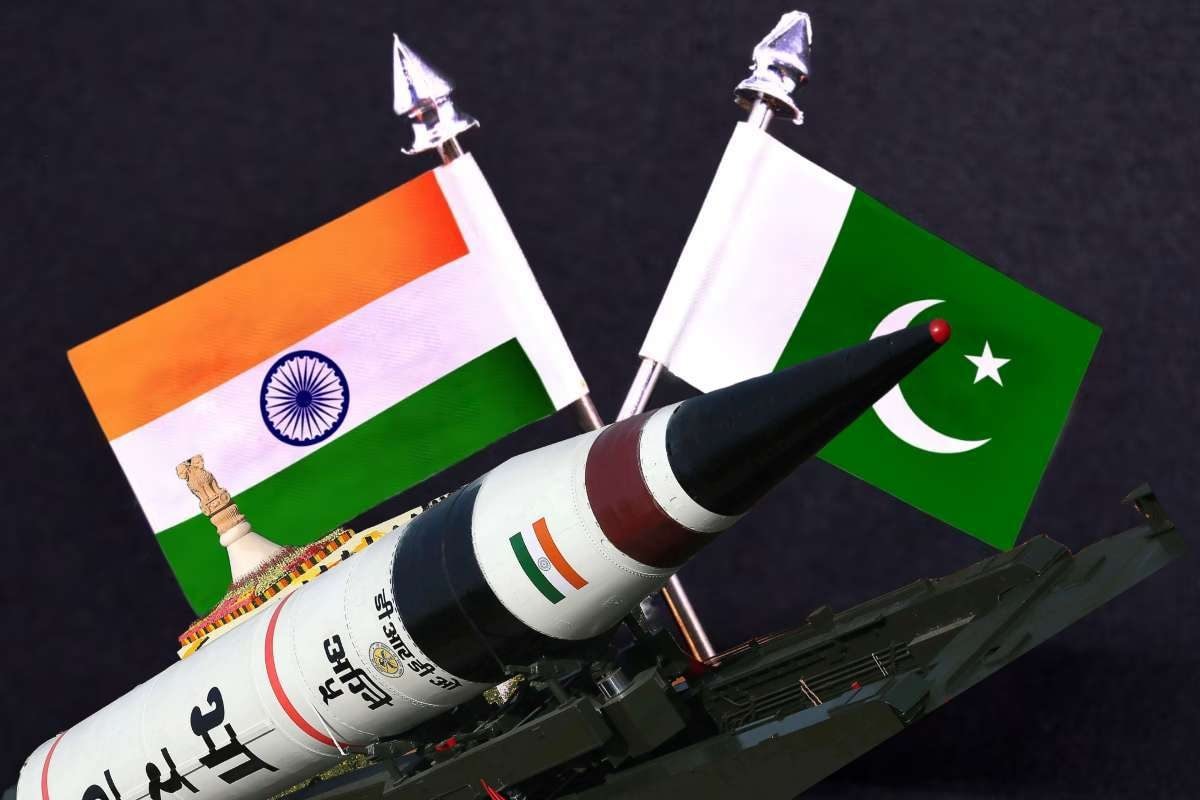
– The current escalation between India and Pakistan introduces a heightened level of strategic uncertainty in South Asia, where both states are nuclear-armed and possess long-standing grievances, particularly over the unresolved status of Jammu and Kashmir. The most immediate risk is the possibility of miscalculation. When both countries operate in a climate of high emotion, limited direct communication, and rapidly shifting military postures, even a tactical misstep could trigger an uncontrollable spiral. In the current situation, the line between a punitive strike and a strategic provocation becomes dangerously thin.
Another risk lies in the erosion of existing crisis management mechanisms. Past confrontations saw some degree of international mediation or at least pressure from global powers to restrain both sides. However, with the current geopolitical environment marked by multipolar fragmentation and shifting alignments—particularly the deepening US-India strategic partnership and China’s continued support for Pakistan—there is less clarity about which actors can credibly intervene to de-escalate. If these channels fail to function in time, localised clashes could evolve into broader engagements.
Economically, both countries face inflationary pressures and fiscal constraints. Prolonged confrontation could disrupt trade, scare investors, and force governments to divert resources from development to defense. For Pakistan, with its ongoing IMF program and structural economic stress, the margin for absorbing shocks is especially narrow. On the Indian side, although the economy is larger, war-related expenditures could undermine growth and social stability ahead of domestic elections.
Finally, there is a risk of regional contagion. Afghanistan remains volatile, and instability in South Asia could affect the wider neighborhood, including Central Asia and the Gulf. Militant groups may also exploit the situation, using it as a justification or cover for their activities. In that sense, the longer this confrontation persists, the more likely it is that secondary and unintended actors will get drawn in, complicating de-escalation efforts further. Stability, therefore, hinges not only on restraint but also on urgent diplomatic engagement and reactivation of crisis hotlines and backchannels.
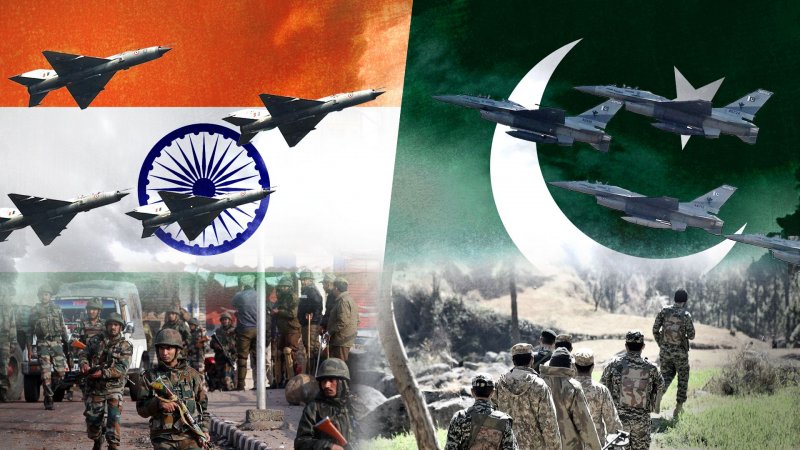
– How should Pakistan recalibrate its defense and foreign policy in light of repeated Indian aggression?
Pakistan’s response to repeated Indian military actions must involve a recalibration that strengthens both its defensive posture and its diplomatic leverage. The starting point is clarity of doctrine. Pakistan should reinforce a credible conventional deterrent that limits the space for Indian adventurism without relying too early on nuclear signaling. That requires sustained investment in air defense, electronic warfare, and precision missile capabilities, as well as joint operational readiness between the services to absorb and respond to air or cross-border strikes quickly and proportionately.
At the same time, Pakistan should prioritize institutionalizing crisis management channels. This includes operational-level hotlines, regular backchannel contact between intelligence and security officials, and bilateral military deconfliction mechanisms even in the absence of formal diplomatic breakthroughs. These lines of communication do not signal weakness; they are practical tools to avoid strategic miscalculation in high-stakes moments.
On the diplomatic front, Pakistan needs to shift from reactive engagement to proactive agenda-setting. That means consistently briefing regional blocs like the OIC, SCO, and ASEAN not only during crises but on a sustained basis. Special envoys for Kashmir and regional peace could be appointed to maintain this narrative beyond periodic UNGA speeches. In the West, Islamabad should identify and engage with influential constituencies that shape policy in Washington, Brussels, and London, including think tanks, security forums, and legislative aides who often function as early-warning nodes in crisis response.
Pakistan should also deepen security ties with countries that remain neutral or sympathetic. Strategic dialogues with Türkiye, Iran, and Central Asian republics on border stability, counterterrorism, and trade corridors will give Islamabad more maneuvering room and options. In parallel, intelligence sharing with China and Gulf countries on Indian military posturing can strengthen regional support for de-escalation.
Source: Thefridaytimes
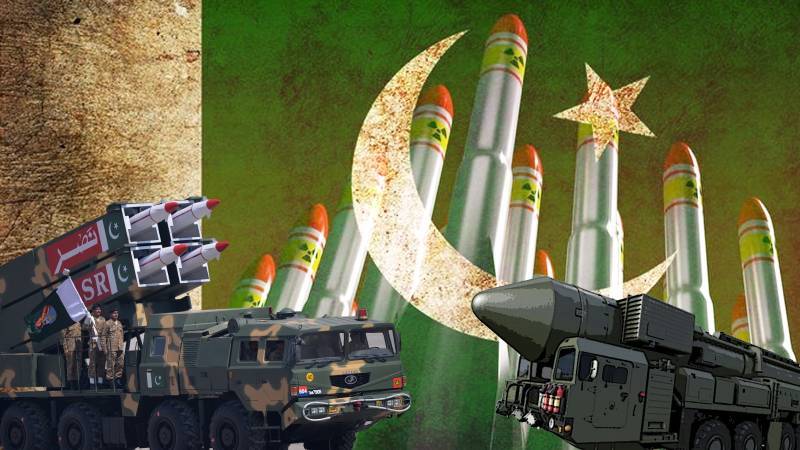
– Do you believe Pakistan's nuclear deterrent still serves its purpose in preventing full-scale war?
Yes, Pakistan’s nuclear deterrent continues to serve its core purpose, which is to prevent a full-scale conventional war with India. Despite the intensity of the current escalation, both countries have demonstrated a certain level of restraint that suggests the threshold for nuclear engagement remains high. India, while carrying out precision strikes, has avoided hitting major military installations or command structures. Pakistan, in turn, has responded forcefully but within the bounds of proportionate retaliation. These patterns imply that the existence of nuclear weapons still influences decision-making at the highest levels on both sides.
The fact that India has not escalated beyond a certain point, and that diplomatic channels such as contacts between national security advisers remain active, also points to a lingering awareness of nuclear risk. While the credibility of deterrence cannot be measured in absolute terms, it is evident that both sides recognize the catastrophic consequences of strategic misjudgment. The doctrine of Full Spectrum Deterrence, as articulated by Pakistan, provides flexibility in response while keeping the final threshold ambiguous, which in itself acts as a stabilizer in moments of crisis.
However, nuclear deterrence alone cannot carry the burden of strategic stability. It must be complemented by credible conventional capability, robust diplomacy, and the ability to control the narrative globally. Deterrence works best when paired with preparedness and clear signaling. In that context, Pakistan’s nuclear doctrine remains effective, but it is part of a larger toolkit, not a standalone shield. As long as this logic prevails in Rawalpindi and New Delhi, the worst outcomes can still be avoided.


Similar news