Strategic crossroads: Will Estonia fast-track or stall its EU ambition?


.png)
Editor's note: Faig Mahmudov is an Azerbaijan-based journalist. The article expresses the author's personal opinion and may not coincide with the view of News.Az.
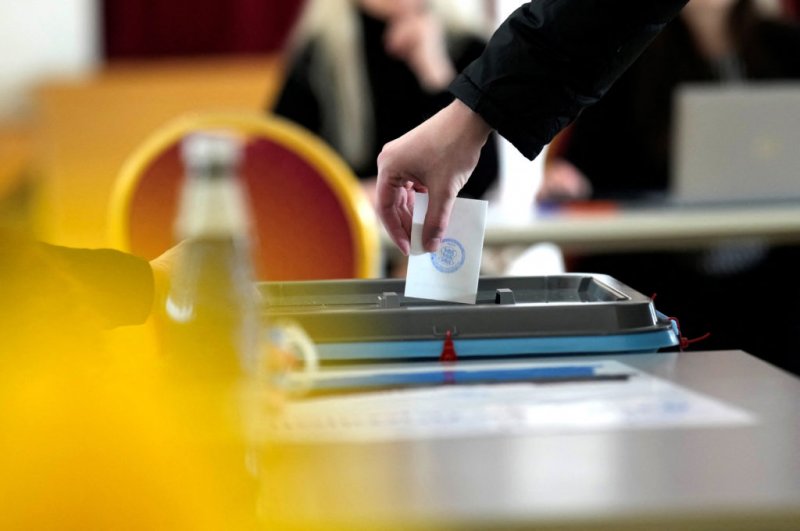
Estonia is on the threshold of parliamentary elections that transcend ordinary political competition. This ballot will not only determine the configuration of the Riigikogu but also define the trajectory of Estonia’s strategic ambition: accession to the European Union. Since restoring independence in 1991, Estonia’s ruling elites have consistently articulated integration with the West as the central pillar of national strategy, seeking to dismantle the vestiges of Soviet domination and consolidate the state within European political, economic, and security structures. The outcome of this election will indicate whether that course is accelerated, recalibrated, or subjected to renewed domestic contestation.
The project of EU accession embodies both symbolic and material dimensions. Politically, it would consummate Estonia’s transformation from a Soviet republic into a sovereign European democracy, completing its civilizational reorientation. Together with NATO, the EU is perceived as a guarantor of Western identity and as a definitive break from Moscow’s sphere of influence. Economically and socially, accession promises structural funds, capital inflows, and integration into continental markets, while also extending to citizens the tangible benefits of free movement, educational exchange, and enhanced welfare protections. For a small state with 1.3 million inhabitants and an exposed geopolitical position, EU membership is a mechanism of anchoring national security within a collective Western framework.

Source: CNN
Estonia has long stood out in the post-communist space as a reform laboratory. The liberalization and privatization of the 1990s, together with the pioneering of e-governance, earned Tallinn the reputation of a “Baltic Tiger.” Its EU application in 1995 and negotiations beginning in 1998 represented not a deviation but the logical culmination of this reformist trajectory. These measures, while painful—marked by unemployment and rural dislocation—were endorsed by the political class as necessary instruments of long-term state consolidation and Euro-Atlantic alignment.
The present electoral campaign reflects the same structural dilemmas but refracted through the current party landscape. The liberal and reformist camp, rooted in Estonia’s post-independence governing tradition, advocates rapid convergence with Brussels, promising judicial reform, stronger anti-corruption frameworks, and regulatory harmonization in fields ranging from environmental policy to digital governance. A mandate for these forces would signal an unambiguous commitment to rapid integration and cement Estonia’s profile as a model reformer within Europe.
National-conservative and sovereigntist parties counter with caution. Their discourse highlights risks of dependency, threats to agricultural sustainability, and the erosion of sovereign policy space under supranational regulation. Brussels, in their narrative, is not only a guarantor but a potential constraint, imposing subsidy regimes and environmental obligations that may undermine local competitiveness. A victory for this camp would not derail integration but would recalibrate its tempo and scope, privileging national control.

Source: ERR News
Centrist forces, acting as potential coalition brokers, advocate pragmatic sequencing: steady but cautious integration, protective measures for vulnerable sectors, and emphasis on social equilibrium. For them, EU accession is inevitable, but the mode and velocity must be managed in line with domestic cohesion.
The electoral process unfolds against a backdrop of mounting economic and geopolitical pressures. Inflation, migration of skilled youth, and persistent structural unemployment have strained the social fabric. Agriculture—already under stress—is bracing for stricter EU compliance regimes. Corruption, while comparatively limited in scale, has sharpened public appetite for transparency and strengthened the salience of rule-of-law discourses in campaign platforms.
Energy security has emerged as the defining cleavage of this electoral cycle. Estonia’s dependence on oil shale is unsustainable both environmentally and geopolitically. EU membership is framed by many as the pathway to diversification, renewable energy investment, and insulation from Russian energy leverage. The war in Ukraine has deepened this consensus, reinforcing pro-Western orientations within both elite and popular opinion.
Historical memory remains a potent electoral force. The trauma of Soviet occupation continues to shape strategic culture. The 2007 cyberattacks demonstrated the country’s exposure to hybrid aggression. Russia’s annexation of Crimea in 2014 and full-scale invasion of Ukraine in 2022 reaffirmed the conviction that only irrevocable integration into Western institutions can safeguard Estonia’s sovereignty. NATO provides deterrence; the EU complements it with political solidarity and economic resilience.
The results of the election will have a direct bearing on Estonia’s EU accession path. If liberals prevail, Estonia is expected to accelerate negotiations with Brussels, embracing tough reforms in return for rapid integration and positioning itself as a leading enlargement candidate. A conservative victory would introduce caution, slowing legislative harmonization and potentially weakening Estonia’s leverage by projecting inconsistency to European partners. Should centrists emerge as kingmakers, Estonia would likely follow a pragmatic middle road—remaining firmly on the pro-European track but pursuing accession through gradualism, prioritizing domestic stability over speed.
For Brussels, these distinctions matter. The EU tends to favor candidate states that show reform momentum and political consensus. Estonia’s credibility as a frontrunner will therefore hinge on whether the elections deliver a government with a strong mandate for integration or one that tempers ambition with sovereignty-first rhetoric.
Source: The Conversation
Three strategic scenarios therefore emerge. A liberal mandate would propel accelerated integration, embed Estonia within EU policymaking, and attract capital, though at the risk of reform fatigue and social tension. A conservative ascendancy would prioritize sovereignty and protectionism, slowing the accession timetable but preserving policy autonomy—at the cost of diminished influence in Brussels. A centrist-mediated coalition would pursue a hybrid course, combining gradualism with commitment, privileging equilibrium over velocity.
Thus, the elections are not merely about forming a cabinet—they are about defining Estonia’s civilizational orientation for the coming generation. The ballot box will decide whether the European project is realized swiftly, delayed in the name of sovereignty, or pursued through incremental pragmatism. Ultimately, the contest is about more than economics or administration. It is about Estonia’s geopolitical destiny, the durability of its Western choice, and its permanent place within the European order.
(If you possess specialized knowledge and wish to contribute, please reach out to us at opinions@news.az).


Similar news