A clean victory: Azerbaijan is the only one that won the war unconditionally


Today, security has become the most pressing issue in the world. This is because security itself has become scarce. The world is engulfed in conflicts. The war in Ukraine, now entering its fourth year, and the 40-day war in the Middle East are increasingly viewed by analysts as steps towards a third world war. Looking at current developments, such forecasts no longer seem distant. This is no longer a scenario from apocalyptic cinema, but a situation in which approaching the brink could at any moment become irreversible.
Russia’s aggression against Ukraine has already become routine in global news cycles, so routine that it is mentioned less and less frequently. Before long, the war in the Middle East may also become normalised. Neither conflict shows any clear prospect of ending. The ceasefire recently announced between the United States and Iran is already fragile, while in the Russia–Ukraine war, a ceasefire is not even being discussed.
Armed conflicts across different regions are no longer exceptions but a persistent trend undermining global security and economic stability. At the same time, the nature of these conflicts has fundamentally changed. Modern wars tend to be prolonged, producing no decisive outcomes and failing to establish lasting peace.
The most vivid example of such a deadlock remains the Russia-Ukraine war, which has now lasted four years. Enormous human losses, destroyed infrastructure, and a deep economic crisis are accompanied by a lack of clear prospects for ending the confrontation. Even with significant military resources on both sides, neither has been able to achieve a decisive and final outcome.
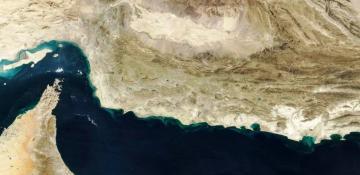
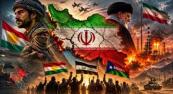
A similar uncertainty can be observed in the Middle East. The escalation involving Iran, the United States, and Israel, initially seen as a short-term military confrontation, has dragged on and led to serious consequences. In just 40 days, the war in the Middle East has caused extensive damage. According to available data, between February 28 and April 7, significant losses were recorded: in Iran, 2,076 people were killed and 26,500 wounded; in Lebanon, 1,497 were killed and 4,639 injured; in Israel, 26 were killed and 7,183 wounded. If the conflict resumes, it is likely to become even more severe, with casualties rising exponentially.

Source: AzerTAG
Against this backdrop, Azerbaijan’s position appears consistent and well calculated. From the first days of escalation, Baku called for a diplomatic resolution, urged restraint, and offered its mediation efforts. The country’s Ministry of Foreign Affairs welcomed the ceasefire and expressed hope that it would evolve into lasting peace. This approach reflects Azerbaijan’s broader strategic line, combining the principled defence of national interests with adherence to international law.
It is important to understand that this position did not emerge in a vacuum. It is shaped by difficult historical experience. For more than a quarter of a century, 20 percent of the country’s territory remained under occupation. This period includes tragic episodes such as the Khojaly genocide, other acts of violence against Azerbaijani civilians, the destruction of cities and villages, and nearly one million refugees and internally displaced persons.
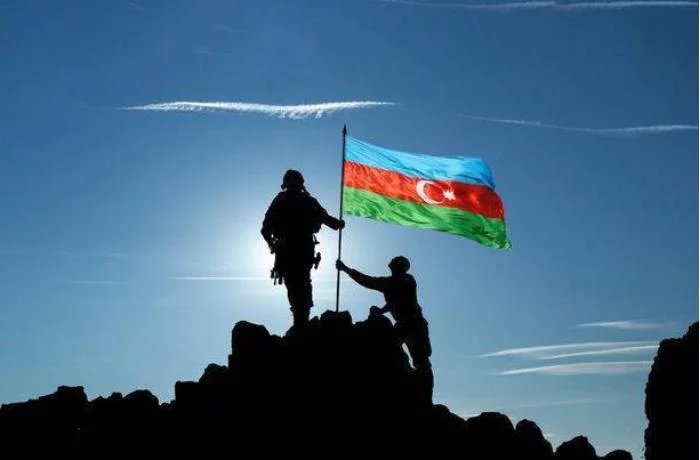
This experience largely explains the uniqueness of what occurred in 2020. The Second Karabakh War became a rare example of a conflict that ended not with a compromise freeze, but with a complete military victory by one side. In 44 days, Azerbaijan not only restored control over its territories but also compelled Armenia to accept new realities enshrined in relevant agreements. Unlike most modern wars, where military gains are often diluted by political concessions or prolonged negotiations, in this case the outcome was comprehensive: military, political, and territorial dimensions aligned. This allows the conflict to be considered effectively concluded in terms of achieving strategic objectives. In other words, Azerbaijan achieved a full, final, and decisive victory.
This result was consolidated by the 2023 anti-terrorist operation, which fully restored the country’s sovereignty over its entire territory. Thus, a long-standing confrontation was brought to an end — something that is itself rare in contemporary international practice.
The reasons behind this outcome lie not only in the military sphere. Certainly, the professionalism, courage, and heroism of Azerbaijani servicemen played a key role. However, an equally important factor was the consistent state strategy developed over many years. At the centre of this strategy stood the country’s political leadership, particularly the position of President Ilham Aliyev. His approach can be characterised by several key principles.
First, there was an unwavering commitment to international law and territorial integrity. The president repeatedly emphasised that the issue could not be resolved through compromises that undermine national sovereignty.
Second, for a quarter of a century, Baku engaged in negotiations in good faith while simultaneously preparing for a forceful resolution if necessary. Over many years, Azerbaijan demonstrated patience, but ultimately made clear that endless delays were unacceptable. The country did not rush events, instead preparing carefully and waiting for the right moment. The war to liberate the territories became inevitable, yet Baku continued to seek a peaceful solution for as long as possible.
Third, the Azerbaijani leadership maintained a principled position that the conflict must be resolved once and for all. This objective shaped the military strategy, which aimed not at partial success but at the full restoration of justice. Although this goal was not immediately achieved after the 2020 war, it was clear that Baku would not allow the issue to be frozen at any stage.
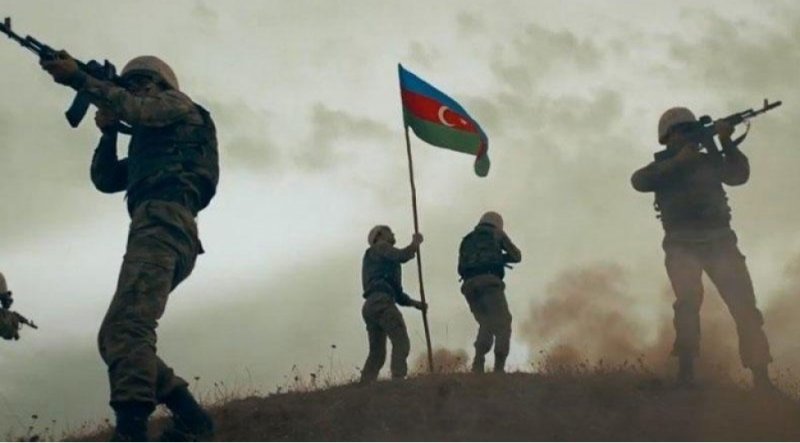
Finally, societal consolidation played a crucial role. During the war, the country demonstrated a high level of unity, which became a key factor in its resilience and effectiveness. This unity had already been evident during the April clashes of 2016. The cohesion displayed by Azerbaijani society in the autumn of 2020, along with the unity of government, army, and people, came as an unexpected factor for the opposing side. Notably, during the 44-day war, there was not a single case of desertion in the Azerbaijani army.
It should also be emphasised that Azerbaijan achieved its full and unconditional victory largely through its own capabilities.
Thus, against the backdrop of prolonged and largely inconclusive conflicts in different parts of the world, Azerbaijan’s experience appears unique. It demonstrates how a combination of political will, strategic planning, and military effectiveness can lead to a definitive outcome.
Azerbaijan is sincere in its calls for peaceful conflict resolution worldwide. For many years, it sought to achieve justice through peaceful means, often standing alone in that effort.
Today, when advocating for peaceful settlements in other regions, Azerbaijan draws on its own experience — an experience in which war, despite all its tragic consequences, ended with the restoration of justice and the creation of conditions for long-term stability. This is why it can be argued that in modern history, Azerbaijan represents a rare example of a state that not only achieved a complete military victory but also successfully cemented it in political reality.
By Tural Heybatov


Similar news