Bangladesh court scraps job quotas after deadly unrest


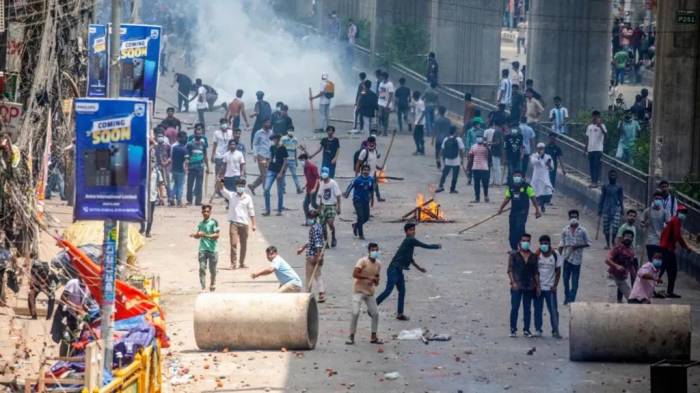
Bangladesh's top court has scrapped most of the quotas on government jobs that had sparked violent clashes across the country that have killed more than 100 people, News.Az reports citing BBC.
A third of public sector jobs had been reserved for the relatives of veterans from the country’s war for independence from Pakistan in 1971.But now the court has ruled just 5% of the roles can be reserved for veterans' relatives.
The government has not yet responded to the ruling. But a lawyer for the petitioners who wanted the quotas kept in place called the supreme court ruling “historic” and urged calm.
Streets in the capital Dhaka are deserted as a second day of curfew is in force, but sporadic clashes have been reported in some areas.
An armoured vehicle was stationed outside the Supreme Court building and soldiers are still patrolling the streets of the capital, Reuters reports.
Some of the protest leaders have reportedly been arrested. Others are demanding justice for those killed in the clashes.
About 115 people are known to have died but local media report a much higher casualty figure. At least 50 people were killed on Friday alone.
The Supreme Court ruling orders that 93% of public sector jobs should be recruited on merit, leaving 5% for the family members of the veterans of the country's independence war.
A remaining 2% is reserved for people from ethnic minorities or with disabilities.
Scrapped in 2018 by Prime Minister Sheikh Hasina’s government, the quota system was reinstated by a lower court last month, sparking huge protests.
The government responded with a harsh crackdown, including a curfew and a communications blackout.
Protest coordinators say police and the student wing of the governing Awami League – known as the Bangladesh Chhatra League – have been using brutal force against peaceful demonstrators. The government denies this.
Bangladesh is one of the fastest growing economies in the world, but that growth has not translated into jobs for university graduates.
Estimates suggest that around 18 million young Bangladeshis are looking for jobs. University graduates face higher rates of unemployment than their less-educated peers.


Similar news