Yandex metrika counter
 Can Azerbaijan become the next Islamic finance hub in the South Caucasus?
Photo: ChatGPT

Editor’s note: Zaur Nurmamedov is a journalist and a graduate of the Faculty of Political Science at the Academy of Public Administration under the President of the Republic of Azerbaijan (1993–1999). He previously served as first deputy editor-in-chief of the Vesti.Az news portal (2009–2023). The views expressed in this article are his own and do not necessarily reflect the position of News.Az.

The prospects for the development of Islamic banking in Azerbaijan appear highly promising. With a predominantly Muslim population, significant economic potential, and a strategic location in the South Caucasus, the country is well positioned to integrate Islamic finance as a complement to its traditional banking system. The sector could become an important component of efforts to diversify the economy, reduce dependence on oil revenues, and attract new investment.

While discussions about Islamic banking were previously largely theoretical, in 2025–2026 the Central Bank of Azerbaijan (CBA) moved to the practical stage of implementing relevant instruments. The CBA has already completed draft legislative amendments for the introduction of Islamic banking and submitted them for government approval. At the initial stage, Islamic financial services are expected to be offered through “Islamic windows” within existing commercial banks rather than through separate Islamic banking institutions.

This means that conventional commercial banks will be able to offer customers products that comply with Sharia principles without establishing fully fledged Islamic banks. To facilitate this, amendments to the Civil Code, the Tax Code, and the Law on Banks have already been prepared. In other words, traditional banks will be able to introduce dedicated Sharia-compliant product lines without the need to create new institutions from scratch.

The proposed changes include the introduction of five core Islamic financial instruments: murabaha, mudaraba, istisna, ijarah, and wadia — a classic set of Islamic finance tools covering trade financing with a markup, partnership financing with profit-and-loss sharing, construction and manufacturing financing, leasing, and safekeeping deposits, respectively.

At a later stage, the introduction of sukuk (Islamic bonds) is planned. The legal framework for sukuk could be prepared by 2027, with the first issuance potentially taking place in 2028. These measures form part of the testing of Islamic finance mechanisms under a special regulatory regime launched by the CBA in 2025–2026 as part of the Financial Sector Development Strategy for 2024–2026.

Azerbaijan has already allocated approximately 370 million manats ($218 million) to finance projects in cooperation with Islamic financial institutions. According to World Bank data for 2024, around 44% of Azerbaijan’s population does not have a bank account, partly due to religious objections to interest-based financial products. This is a substantial figure for a country with a relatively developed banking infrastructure. Islamic financial products could help bring this segment of the population into the formal financial system.

In addition, Azerbaijan could gain access to liquidity from Gulf countries and Islamic development institutions, creating an additional channel for attracting investment that is not dependent on traditional Western markets. The development of Islamic banking would reduce regulatory barriers to investment from Muslim-majority countries. While not a guarantee of increased investment, it is an important prerequisite. Investors from countries such as the UAE and Saudi Arabia often prefer instruments that are compatible with their own financial traditions. A developed Islamic finance infrastructure could therefore make Azerbaijan more attractive to such investors.

If the reform proves successful, Baku could emerge as a hub for Islamic finance in the South Caucasus, serving as a link between the markets of Türkiye, Central Asia, and the Gulf states. Islamic finance could become an additional source of funding, particularly for the non-oil sector, infrastructure projects, and small businesses.

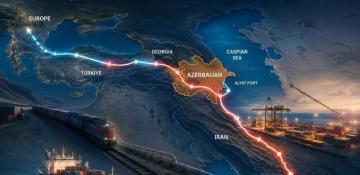
Arab investors themselves are pursuing economic diversification strategies aimed at reducing dependence on oil. Azerbaijan, with its resource base and strategic position as a bridge between the Caspian region and Europe, is attractive as both an energy partner and a transit hub with access to the European gas market through geopolitically significant routes.

In broader sectors such as finance, real estate, consumer markets, and technology, however, Azerbaijan still lags behind Central Asia — particularly Kazakhstan and Uzbekistan — as a destination for investment. This is one reason why the Azerbaijani authorities view the development of Islamic banking as a tool for expanding what remains a relatively narrow, energy-focused area of cooperation into the financial sector.

From this perspective, Azerbaijan is not yet regarded by Arab investors as a priority all-purpose investment destination. Rather, it is seen as a targeted energy and geostrategic partner with a growing but still limited portfolio of cooperation. Its attractiveness is relatively high in areas such as green energy and gas infrastructure, where substantial investments and a long track record of cooperation already exist. Beyond these sectors, however, much of the country's appeal remains potential rather than realised. Future progress will depend in part on whether Baku can develop a financial and regulatory framework, including Islamic banking, that makes the country attractive not only for energy projects but also for portfolio and financial investments.

In this context, Malaysia's experience may be of particular interest to Azerbaijan. Among non-Arab countries, Malaysia ranks first in the world by Islamic banking assets and is among the global top five alongside several Arab states. For Malaysia, the development of Islamic banking has long been a strategic national objective and an important means of enhancing the country’s position within the global financial system. Malaysia was also one of the first countries to introduce Islamic banking and actively promote it to both domestic and international clients.

In 2015, the total assets of Malaysia’s Islamic banking sector were estimated at 680 billion ringgit, accounting for 22.4% of the country’s total banking assets. At the time, 35 Islamic financial institutions operated in the country, including 18 Islamic banks — 12 domestic and six foreign — with 138 branches nationwide. Today, Malaysia remains one of the world’s three leading markets for Islamic banking assets, alongside Saudi Arabia and the UAE.

Malaysia is also a global leader in the issuance and trading of sovereign and corporate sukuk. The first issuance of sukuk ijarah trust certificates took place in 2002, raising $600 million for the government. This is the same instrument Azerbaijan is only planning to introduce by 2028. Malaysia completed this process more than two decades ago and subsequently became a global centre for sukuk financing.

Importantly, Malaysia did not limit itself to developing a domestic market. It positioned itself as an international hub for Islamic finance, granting Labuan Island the status of a recognised international Islamic financial centre. As a result, the country began generating revenue not only by serving domestic clients but also by attracting foreign capital and financial institutions.

Today, the total assets of Malaysia’s Islamic banking sector are estimated at approximately $275 billion, or around 1.2–1.3 trillion ringgit, representing roughly 25–30% of the country’s banking assets. Malaysia is therefore not only a leader in scale but also one of the most frequently cited models for countries seeking to build Islamic finance systems from the ground up, particularly those with mixed or partially Muslim populations rather than fully Islamic economies such as those of the Gulf states.

Its trajectory — from a niche financial product to a sector accounting for more than one-fifth of the banking system — is often cited by experts discussing the future of Islamic banking in Azerbaijan and Central Asia. The lesson is that countries can begin modestly, as Azerbaijan is doing with Islamic windows, and with consistent state support gradually expand Islamic finance into a significant component of the broader financial system over the course of two or three decades.


(If you possess specialized knowledge and wish to contribute, please reach out to us at opinions@news.az).


News.Az 

Similar news

Archive

Prev Next
Su Mo Tu We Th Fr Sa
  1 2 3 4 5 6
7 8 9 10 11 12 13
14 15 16 17 18 19 20
21 22 23 24 25 26 27
28 29 30 31