China's PLA unveils electronic warfare 'kill list' targeting US carrier groups


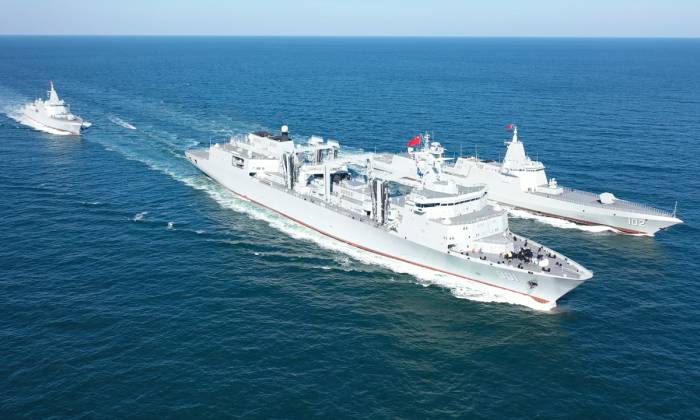
The Type 901 comprehensive supply ship Hulunhu conducts maritime replenishment to the Type 055 destroyers Lhasa and Anshan at an undisclosed sea region in 2022. Photo: Courtesy of the PLA Navy
China's People's Liberation Army (PLA) has compiled a list of key targets for a coordinated electronic attack against US aircraft carrier strike groups.
In a potential conflict, these precisely labelled US military radars, sensors and communication systems are likely to take concentrated fire from China's electronic warfare weapons, according to a researcher involved in the project, News.Az reports, citing the South China Morning Post.This unprecedented revelation was made in the latest issue of Defence Industry Conversion in China, a magazine supervised by the State Administration of Science, Technology and Industry for National Defence. The publication aims to encourage civilian institutions and companies to participate in research on military technologies and weapon production.
Do you have questions about the biggest topics and trends from around the world? Get the answers with SCMP Knowledge, our new platform of curated content with explainers, FAQs, analyses and infographics brought to you by our award-winning team.
"This information can provide references for the development of electronic countermeasures technology and related equipment in China's future naval battlefields," Mo Jiaqian, an electronic countermeasures expert with the PLA's 92728 Unit, wrote in the report.
Her report delved into the workings and advantages of the US Navy's Cooperative Engagement Capability (CEC) system, which is a vital component of the aircraft carrier fleet's air defence and early warning network.
The system enables the entire fleet to share air defence resources, allowing ships to launch ship-to-air missiles for interception even if their own sensors do not detect an incoming target.
However, the CEC has a fatal weakness.
"It is formed through the networking of phased array radars, which relies on wireless communication links. When the opposing force employs electronic interference, the wireless links are prone to disconnection or disruption," she wrote.
The primary focus of the PLA's electronic warfare attacks is the AN/SPY-1 phased array radar on Aegis ships. This radar, manufactured by US aerospace company Lockheed Martin and in service for over four decades, may struggle to withstand the onslaught of various new technologies.
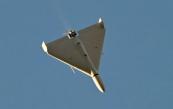
Emerging platforms, such as drones, can approach the radar and create noise and false targets, "significantly reducing its detection accuracy and impacting the overall effectiveness of the CEC system".
Another major target for the PLA is the E-2C Hawkeye early warning aircraft, a powerful information collection platform capable of operating from aircraft carriers. This aircraft plays a crucial role in the coordination of the entire US fleet.
Additionally, the PLA has identified some US military signal transponders as key targets, which they believe can be exploited to gain access to the US military network and cause damage.
"If the opposing force obtains accurate network access information and mimics a friendly response with the correct signalling method, they can infiltrate the CEC network as a cooperative unit and launch attacks," Mo wrote in the report.
"Alternatively, continuous access requests can be made to overwhelm one of the CEC nodes with identification tasks, disrupting its operation."
China is the world's largest producer of electronic devices, with many of these products not only being cost-effective but also incorporating more advanced and complex technologies than those used by rival Western counterparts.
A recent study has revealed that China has the ability to convert over 90 per cent of its new civilian technologies into military applications.
In response, the US has imposed sanctions on more than 1,000 Chinese enterprises, with the number growing significantly over the past decade.
But the study found that these sanctions have inadvertently accelerated the integration of China's military and civilian industries.


Similar news