Curiosity rover captures strange spiderweb-like formations on Mars


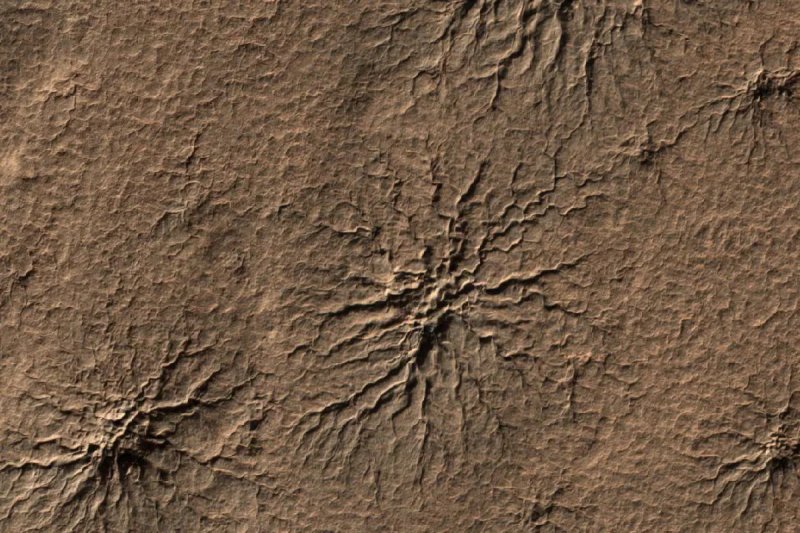
NASA’s Curiosity rover has recorded detailed images of unusual spiderweb-like structures on the surface of Mars, providing new insights into the planet’s geological history and past water activity.
The formations, known as boxwork, appear from orbit as large web-like patterns across the terrain but are revealed up close to be a network of low ridges and shallow channels. They are located in Gale Crater on the slopes of Mount Sharp, where Curiosity has been conducting long-term exploration, News.Az reports, citing Sky at Night Magazine.
Scientists believe the structures formed billions of years ago when groundwater moved through cracks in Martian rock, leaving behind mineral deposits. Over time, the surrounding rock eroded away, exposing the harder mineral-filled ridges that remain today.
Researchers say the presence of these formations suggests that liquid water may have existed underground on Mars for longer than previously thought, potentially extending the period during which the planet could have supported habitable conditions.
RECOMMENDED STORIES
The discovery also raises new questions about the planet’s ancient environment and whether microbial life could have survived in subsurface water systems before Mars became the cold and dry world seen today.
Curiosity continues to study the region, with scientists analyzing surrounding minerals and geological features to better understand the history of water on Mars and the processes that shaped the boxwork structures.
By Leyla Şirinova


Similar news