ECB to cut interest rates again, signal further easing as growth falters


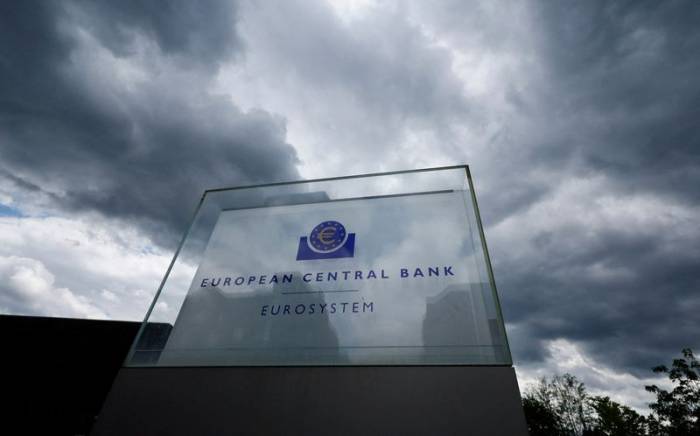
© Reuters. FILE PHOTO: Dark clouds are seen over the building of the European Central Bank (ECB) in Frankfurt, Germany, June 6, 2024. REUTERS/Wolfgang Rattay/File Photo
The European Central Bank is all but certain to cut interest rates again on Thursday and signal further easing in 2025 as inflation across the euro zone is nearly back at target and the economy is faltering, News.az reports citing Investing.
The ECB has already cut rates at three of its last four meetings. Nevertheless the debate has shifted to whether it is easing policy fast enough to support an economy that is at risk of recession, facing political instability at home and the prospect of a fresh trade war with the United States.
That question is likely to dominate Thursday's meeting but policy hawks, who still command a comfortable majority on the 26-member Governing Council, are likely to back just a small, 25-basis-point cut, taking the benchmark rate to 3%, nearly all economists in a Reuters poll said.
In a possible compromise with more dovish policymakers, the cut could come with tweaks to the ECB's guidance to make clear that further policy easing is coming provided there are no new shocks to inflation, which could ease to the central bank's 2% target in the first half of 2025.
"The already restrictive policy stance, the deteriorating growth outlook, and inflation at target should all speak in favour of a 50 basis point cut," Danske Bank (CSE:DANSKE) economist Piet Haines Christiansen said.
"From a communication perspective, I think it is easier to deliver a 25 basis point rate cut, keeping the optionality to deliver a jumbo cut if they see the need for it."
A cut is warranted because fresh projections will show inflation, above target for three years now, back at 2% in a few months' time. That is partly because economies are barely growing across the 20 countries that share the euro.
The outlook is so fraught with risk that some policymakers argue the ECB now risks undershooting its inflation target, as it did for nearly a decade before the pandemic, and should move more quickly to avoid falling behind the curve.
But hawks say inflation is still a risk given rapid wage growth and the fast-rising cost of services, so that a steady stream of incremental steps is appropriate.
U.S. protectionism and political instability in France and Germany are further reasons for caution.
Governing Council members simply do not know what policies will be approved by President-elect Donald Trump's new U.S. administration, how Europe will respond - or what the economic impact will be.
Political turmoil in France and Germany's upcoming election add to the uncertainty and could force the ECB to step in, reinforcing arguments that it should leave itself space to take bold action if needed, keeping its powder dry for now.
"There is a high risk that on the back of Trump, France and Germany, euro zone growth will come in much weaker than the ECB’s projections will show," ING economist Carsten Brzeski said.
"The only problem for the ECB to preemptively react to the current political woes is that it could be seen as intervening in national politics on behalf of France," Brzeski added.
The ECB has already cut rates at three of its last four meetings. Nevertheless the debate has shifted to whether it is easing policy fast enough to support an economy that is at risk of recession, facing political instability at home and the prospect of a fresh trade war with the United States.
That question is likely to dominate Thursday's meeting but policy hawks, who still command a comfortable majority on the 26-member Governing Council, are likely to back just a small, 25-basis-point cut, taking the benchmark rate to 3%, nearly all economists in a Reuters poll said.
In a possible compromise with more dovish policymakers, the cut could come with tweaks to the ECB's guidance to make clear that further policy easing is coming provided there are no new shocks to inflation, which could ease to the central bank's 2% target in the first half of 2025.
"The already restrictive policy stance, the deteriorating growth outlook, and inflation at target should all speak in favour of a 50 basis point cut," Danske Bank (CSE:DANSKE) economist Piet Haines Christiansen said.
"From a communication perspective, I think it is easier to deliver a 25 basis point rate cut, keeping the optionality to deliver a jumbo cut if they see the need for it."
A cut is warranted because fresh projections will show inflation, above target for three years now, back at 2% in a few months' time. That is partly because economies are barely growing across the 20 countries that share the euro.
The outlook is so fraught with risk that some policymakers argue the ECB now risks undershooting its inflation target, as it did for nearly a decade before the pandemic, and should move more quickly to avoid falling behind the curve.
But hawks say inflation is still a risk given rapid wage growth and the fast-rising cost of services, so that a steady stream of incremental steps is appropriate.
U.S. protectionism and political instability in France and Germany are further reasons for caution.
Governing Council members simply do not know what policies will be approved by President-elect Donald Trump's new U.S. administration, how Europe will respond - or what the economic impact will be.
Political turmoil in France and Germany's upcoming election add to the uncertainty and could force the ECB to step in, reinforcing arguments that it should leave itself space to take bold action if needed, keeping its powder dry for now.
"There is a high risk that on the back of Trump, France and Germany, euro zone growth will come in much weaker than the ECB’s projections will show," ING economist Carsten Brzeski said.
"The only problem for the ECB to preemptively react to the current political woes is that it could be seen as intervening in national politics on behalf of France," Brzeski added.


Similar news