How US election could reshape global politics and why world is watching


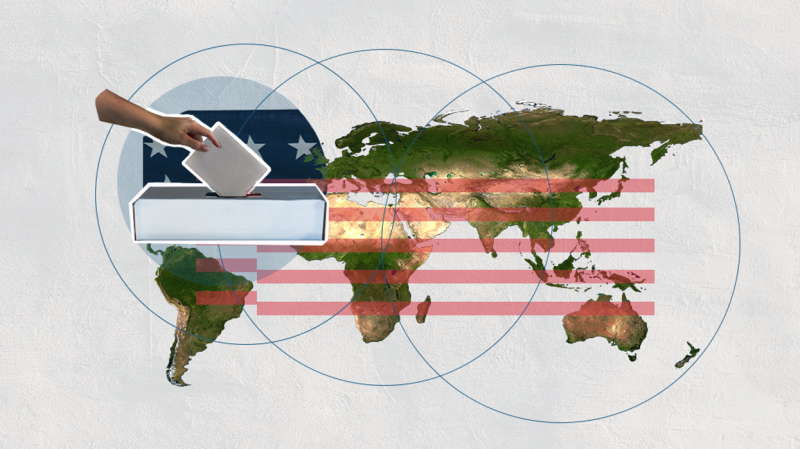
Few political events draw as much global attention as a United States presidential election, News.Az reports.
People across the world search daily for updates, forecasts and implications of the voting process, recognising that the outcome will influence not only American domestic policy but also the international system. The question “How will the US elections shape global politics?” has become one of the most widely discussed topics on the internet, as governments, analysts, investors and ordinary citizens try to understand how global dynamics may shift in the months ahead.
The United States holds a unique position in global diplomacy, defence, technology and economic leadership. This means that every election carries consequences for alliances, markets, conflicts and diplomatic strategies. Whether continuity or change emerges, the election will affect how major powers interact, how conflicts evolve and how international institutions respond to new challenges.
The global stakes: why the world cares
International interest in US elections is driven by several interconnected factors:
– The US is a leading security actor in Europe, the Middle East and Asia.
– It shapes global economic rules, trade policy and sanctions regimes.
– It influences technological development, digital regulation and AI governance.
– It acts as a major player in climate agreements and environmental standards.
Because these elements affect countries everywhere, the results of a US election can shift global expectations almost overnight.
Foreign governments follow the election closely not out of curiosity, but because their national strategies depend on it. Investors track it because financial markets react to shifts in policy signals. Everyday people search for information because US decisions influence everything from energy prices to migration trends.
US elections and the Russia–Ukraine war
One of the most closely watched implications of the election is its effect on the Russia–Ukraine war. The conflict has reached a phase in which both military support and diplomatic pressure from the United States play crucial roles.
Two broad scenarios are often discussed:
1. Continuation of strong US support for Ukraine
A US administration committed to supporting Ukraine militarily and politically would maintain weapons transfers, intelligence cooperation and diplomatic coordination with European allies. Such a scenario strengthens Ukraine’s negotiating position and signals continued pressure on Russia.
2. Reduced American involvement
If a future US administration adopts a more restrained approach, it could slow military support or shift more responsibility to European partners. This could reshape the battlefield, influence peace negotiations and alter the balance of power in Europe.
These possibilities explain why global audiences search constantly for updates on candidates’ foreign policy statements and congressional debates. The outcome will directly impact conflict dynamics, European security and NATO cohesion.
The Middle East: shifting alliances and strategic calculations
US policy toward the Middle East is another major area of global interest. The region remains central to energy security, counterterrorism, maritime trade routes and geopolitical stability. Several ongoing issues are deeply affected by US leadership:
– The Israel–Hamas conflict
– Israel’s relations with Arab states
– Iran’s nuclear program
– Security in the Red Sea and Persian Gulf
– Reconstruction and governance in post-conflict zones
A future US administration may prioritise de-escalation and diplomacy or may pursue pressure-based strategies. The direction taken will influence peace efforts, humanitarian access, military cooperation and regional alliances.
Countries across the Middle East monitor the election closely because shifts in US policy have immediate consequences for their security strategies and domestic politics.
US–China relations and the future of global competition
Another defining global issue is the US–China rivalry, which shapes economic trends, technology supply chains and military planning across the Indo-Pacific and beyond. The outcome of the US election could determine:
– the future of tariffs and trade restrictions
– export controls on semiconductors and advanced technology
– diplomatic engagement on issues like Taiwan
– military alliances in the Asia-Pacific
– competition over artificial intelligence, green technology and critical minerals
A more confrontational US posture would intensify global geopolitical competition, forcing countries to choose sides on issues like 5G infrastructure, technology standards and investment security. A more cooperative approach would open possibilities for climate coordination, expanded trade and crisis-management mechanisms.
Because this rivalry defines global economic architecture, governments in Asia, Europe and Africa track the US election to understand whether competition will escalate or stabilise.
Global economy and markets: why investors care
Markets respond quickly to political signals from the United States. Investors and economists watch the election for clues on:
– interest rate and inflation policy
– future taxation and spending
– trade agreements
– regulations on technology, finance and energy
– sanctions and export controls
A continuation of current economic policy may support market stability, while a significant shift could introduce volatility. For example:
– A more protectionist administration could reduce trade flows.
– A more investment-heavy government could stimulate economic growth.
– Diverging regulatory approaches could affect technology companies and innovation.
Developing economies also watch closely, as US decisions influence global commodity prices, capital flows and the strength of the dollar.
NATO, Europe and transatlantic relations
European governments view every US election as a strategic moment. The United States is central to NATO’s defence posture, especially in light of recent security threats.
Key questions for Europe include:
– Will the US remain committed to NATO’s collective defence?
– How will Washington approach defence spending and troop deployments?
– Will transatlantic cooperation strengthen or weaken?
– How will the US position itself on climate, technology and trade issues affecting the EU?
European security architecture depends heavily on American involvement. Any major shift could require Europe to accelerate defence integration and increase military spending.
Climate change and global environmental policy
The world also watches US elections for signals on climate leadership. The United States plays a pivotal role in:
– global climate agreements
– emissions reduction targets
– renewable energy investment
– environmental regulations
– funding for climate adaptation in developing countries
A climate-forward administration could strengthen global commitments, while a climate-sceptical government could slow international progress. Countries facing acute climate threats—small island states, drought-prone regions, energy-dependent economies—pay especially close attention.
Technology, AI and regulation
The United States is a global leader in artificial intelligence, cybersecurity and digital governance. The next administration’s approach could reshape:
– AI safety frameworks
– data privacy rules
– cross-border tech regulation
– competition with China
– global standards for digital infrastructure
Tech companies, researchers and policymakers worldwide monitor US positions because they influence global innovation, investment flows and digital rights frameworks.
Immigration and global mobility
US immigration policy affects not only those seeking entry but also global talent flows, education markets and labour shortages. Changes to:
– student visa policies
– high-skill work permits
– refugee programs
– border enforcement
can reshape how international students, tech workers and migrants plan their future. Universities, multinational companies and diaspora communities track election developments closely.
Global perception and soft power
The US election also shapes American soft power—its cultural influence, global reputation and leadership credibility. Countries take into account:
– how the US engages with multilateral institutions
– whether it promotes democratic values
– how it responds to global crises
– its tone toward allies and rivals
A respected and stable US administration boosts Western alignment; a fragmented or inward-facing one can weaken international cooperation.
Multiple possible outcomes
Although predictions vary, analysts generally outline three possible global impact scenarios:
1. Continuity:
Minimal policy change, stable alliances, steady support for partners and predictable economic policies.
2. Strategic recalibration:
Partial shifts in foreign policy, new diplomatic initiatives or adjustments in defence commitments.
3. Major shift:
Significant transformation in alliances, trade policy, security posture or global leadership strategy.
Each scenario would reshape international politics differently.
Conclusion: a world watching for signals
The US election remains a defining global event because the world understands that American leadership—whether stable or changing—directly affects international security, economic growth, conflict resolution, climate action and technological innovation.
From Kyiv to Tel Aviv, from Brussels to Beijing, from energy markets to digital marketplaces, everyone is watching for signals of what comes next.
The election will not only determine America’s future. It will help define the next chapter of global politics.


Similar news