How Visa and Mastercard dominate global payments and what their future looks like


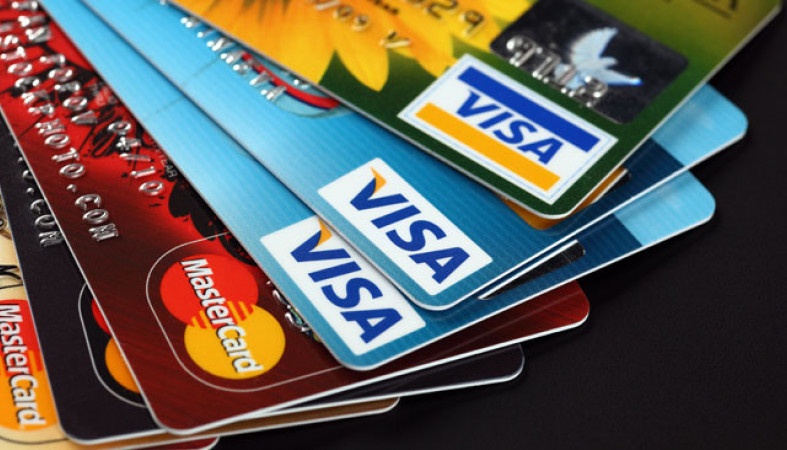
Visa and Mastercard are at the center of modern commerce. Their payment networks move trillions of dollars each year, power online shopping, support global tourism and enable everyday transactions for billions of people. Yet many consumers misunderstand what these companies really do, how they differ from banks and why they remain dominant in an era of rapid technological change. This extended FAQ explainer provides a deep look at their role in the financial ecosystem, the challenges they face and the future of global payments.
What exactly do Visa and Mastercard do?
Visa and Mastercard run massive global payment networks. When a shopper taps, swipes or enters card details online, the payment travels instantly through their systems. Banks, merchants and consumers rely on these networks to ensure that transactions are authorized, verified and settled securely.
Importantly, Visa and Mastercard do not issue cards themselves. Banks and fintech companies issue cards that carry their branding, and those institutions decide credit limits, interest rates and rewards. Visa and Mastercard provide the technology that allows the payment to move from the consumer to the merchant.
Their value lies in ensuring speed, security and global compatibility between millions of banks and businesses.
How do their payment networks work in practice?
Every card transaction involves multiple steps:
-
The cardholder uses their Visa or Mastercard to pay a merchant.
-
The merchant’s point of sale system sends the request to the acquiring bank.
-
The acquiring bank communicates with Visa or Mastercard.
-
The network forwards the request to the issuing bank.
-
The issuing bank approves or declines the charge.
-
Funds flow to the merchant.
This entire cycle usually takes a fraction of a second, even for cross border payments or currency conversion. Behind the scenes, fraud detection, encryption and tokenization protect the transaction.
Do Visa and Mastercard compete?
Yes, they are fierce competitors in a global duopoly. Both offer similar services, target the same banks and merchants, and develop parallel technologies for digital payments, contactless cards, fraud prevention and artificial intelligence.
Their competition focuses on:
-
Lowering processing costs for partners
-
Offering better anti fraud tools
-
Expanding geographic reach
-
Supporting banks with value added services
-
Attracting fintech collaborators
However, from a consumer perspective, there is rarely a dramatic difference in day to day use.
Why do Visa and Mastercard dominate global payments?
Their dominance is rooted in network effects. Each network benefits from having:
-
Millions of merchants that accept their cards
-
Thousands of banks that issue their cards
-
Billions of consumers who rely on their services
The more participants involved, the stronger and more valuable the network becomes. New competitors must invest billions to build relationships, infrastructure and standards that approach this global reach.
Visa and Mastercard also offer:
-
Strong cybersecurity systems
-
High reliability with minimal downtime
-
Cross border acceptance in over 200 countries
-
Consumer protection frameworks
This combination has created a highly resilient and trusted global infrastructure.
How do Visa and Mastercard earn money?
They earn revenue through fees for using their networks. These include:
1. Assessment fees
Charged to banks for issuing cards on their networks.
2. Processing fees
Charged for authorizing and clearing transactions.
3. Cross border fees
Applied when cards are used internationally.
4. Value added services
These include fraud detection software, tokenization systems, data analytics and dispute management tools.
Notably, Visa and Mastercard do not make money from interest. That revenue goes to the banks issuing the credit cards.
What is the interchange fee and how does it relate to them?
The interchange fee is paid by the merchant’s bank to the card issuing bank. It compensates the bank for providing credit and bearing fraud risk.
Visa and Mastercard influence these fees, but they do not collect them. They set fee ranges to ensure consistency across their networks.
Merchants often criticize interchange costs, yet they are part of what keeps fraud low and credit flowing.
How important are Visa and Mastercard to the global economy?
Their networks are as essential as the internet or telecommunications infrastructure. Without them:
-
Online shopping would be far slower and riskier
-
International travel would be far more complicated
-
Banks would struggle to offer credit products
-
Merchants would face high handling costs for cash
-
Consumers would have fewer protections
Governments, businesses and financial institutions rely on these networks for economic stability.
Are digital wallets a threat to Visa and Mastercard?
Digital wallets such as Apple Pay, Google Pay and Samsung Pay may look like alternatives, but they actually depend on Visa and Mastercard.
A digital wallet is simply a new way to access an existing card. When a user taps with Apple Pay, the transaction still travels through the Visa or Mastercard network.
Digital wallets strengthen the networks by increasing:
-
Contactless transactions
-
Online payment volume
-
Global card usage
Instead of disrupting the duopoly, wallets reinforce it.
What about buy now pay later companies?
Buy now pay later services like Klarna or Afterpay do create competition by offering alternative credit sources. However:
-
Most buy now pay later platforms still use Visa and Mastercard rails to fund merchant payments
-
Many are integrating with the networks directly
-
Banks issuing Visa or Mastercard products now offer similar installment features
Both companies have responded by launching their own installment capabilities, which integrate into existing card systems.
Are instant bank transfer systems a bigger threat?
Instant payments allow money to move directly between bank accounts without using card networks. Examples include:
-
Faster Payments in the United Kingdom
-
Pix in Brazil
-
UPI in India
-
SEPA Instant in the European Union
These systems have gained traction, especially for peer to peer transfers. However, merchants often still prefer cards because they offer:
-
Chargeback protections
-
Global acceptance
-
Better fraud controls
-
Integration with existing checkout systems
Instant payments will grow, but cards retain advantages in security and reliability.
How do Visa and Mastercard approach cybersecurity?
Cybersecurity is one of their largest expenses. Both invest heavily in:
-
AI driven fraud detection
-
Tokenization to anonymize card details
-
Biometric authentication systems
-
Real time risk scoring
-
Merchant data breach monitoring
-
Encryption technology
They analyze millions of transaction data points continuously to identify suspicious behavior.
Their sophisticated fraud prevention systems are a major reason banks and merchants trust these networks.
How are Visa and Mastercard investing in new technologies?
Both companies have adopted a broad innovation strategy.
AI and machine learning
Used to reduce fraud, accelerate approvals and support dispute management.
Blockchain research
Explored for cross border settlements and digital identity. They partner with blockchain firms and pilot digital currency payment tools.
Open banking and data aggregation
They have acquired fintech companies that allow consumers to share financial data securely.
Contactless and tokenized payments
Visa and Mastercard now support payments via:
-
Smartphones
-
Smartwatches
-
Wearables
-
Internet of things devices
Embedded finance
They help non financial companies integrate payments directly into apps, cars, appliances and digital platforms.
Why do regulators scrutinize Visa and Mastercard?
Because of their size and influence, both face regulatory pressure around the world. Key issues include:
-
Interchange fee caps
-
Antitrust reviews
-
Rules governing cross border transactions
-
Data protection requirements
-
Anti money laundering standards
Regulators aim to maintain competition and protect consumers while preserving the stability of the global payment system.
Why are some governments developing national alternatives?
Several countries promote domestic card schemes for reasons such as:
-
Lower fees for small businesses
-
Keeping payment data inside national borders
-
Reducing reliance on foreign companies
-
Strengthening local financial sovereignty
Yet building a global scale network requires decades of investment, international partnerships and trust. Domestic systems often coexist with Visa and Mastercard rather than replace them.
What is the long term outlook for Visa and Mastercard?
Both companies are positioned for long term growth because:
-
Global commerce is shifting toward digital payments
-
Cash usage is declining in most regions
-
Ecommerce continues to expand
-
Mobile and contactless payments are rising
-
Banks rely heavily on their security infrastructure
Even with competition from fintechs and instant payment systems, Visa and Mastercard retain unmatched global acceptance.
Their future success will depend on:
-
Rapid innovation
-
Effective regulation management
-
Adoption of AI tools
-
Expansion in developing markets
-
Partnerships with digital wallets and fintechs
Conclusion
Visa and Mastercard are more than card companies. They are the backbone of global commerce, enabling billions of transactions daily and shaping how consumers interact with money. Although new competitors are emerging and regulation continues to evolve, both companies hold deep strategic advantages in scale, security, technology and global reach.
As the world moves toward a fully digital financial system, Visa and Mastercard will remain essential pillars of the payment ecosystem. Their evolution will profoundly influence the future of global finance, retail and technology.


Similar news