NASA spacecraft set for uncontrolled return to Earth


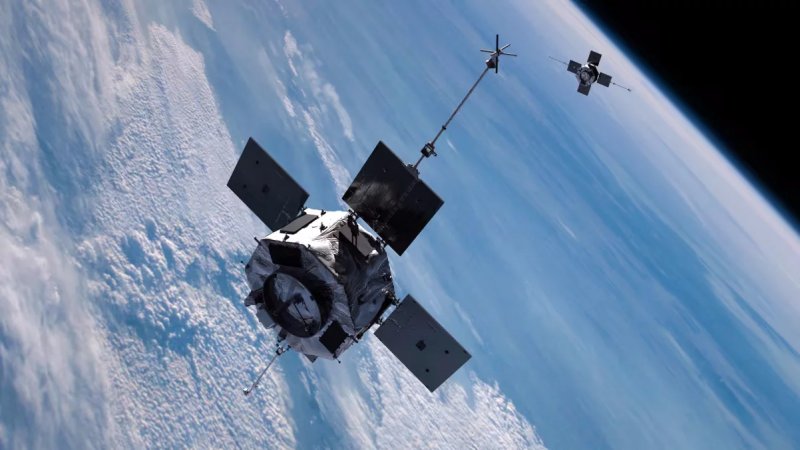
A defunct NASA spacecraft is expected to reenter Earth’s atmosphere in an uncontrolled descent, potentially as early as Tuesday evening, years earlier than originally predicted.
According to the NASA, the spacecraft, Van Allen Probe A, could enter the atmosphere at around 7:45 p.m. ET Tuesday, with a possible timing uncertainty of plus or minus 24 hours, News.Az reports, citing CNN.
The probe weighs about 1,323 pounds (600 kilograms). While most of the spacecraft is expected to burn up during the intense heat of reentry, scientists say some fragments could survive and reach the ground.
RECOMMENDED STORIES
NASA estimates that the probability of debris injuring someone is about 1 in 4,200, a relatively low risk but still higher than some previous spacecraft reentry events.
The Van Allen probes were launched in 2012 to study the radiation belts surrounding Earth, which are zones of high-energy particles trapped in the planet’s magnetic field.
These belts help shield Earth from cosmic radiation, solar storms, and solar wind, making them an important focus for scientific research.
During their mission, the probes made several major discoveries, including evidence of a temporary third radiation belt that can appear during intense solar activity.
The mission officially ended in 2019 after both spacecraft ran out of fuel, though they continued orbiting Earth afterward.
NASA had initially predicted that the probe would remain in orbit until 2034.
However, scientists say increased solar activity during the current solar cycle has accelerated atmospheric drag on the spacecraft.
In 2024, the Sun reached its solar maximum, producing stronger space weather and causing the spacecraft’s orbit to decay faster than expected.
The probe’s twin spacecraft, Van Allen Probe B, is also expected to reenter Earth’s atmosphere before 2030.
Space debris has become an increasing concern as the number of satellites and launches grows. Experts warn that uncontrolled reentries and orbital collisions could create more debris in space.
Recent incidents have included a piece of debris from the International Space Station that punctured the roof of a home in Florida in 2024 after surviving reentry.
According to space-tracking experts, objects such as old rocket bodies or defunct satellites reenter Earth’s atmosphere roughly once a week, though most burn up harmlessly before reaching the ground.
By Aysel Mammadzada


Similar news