Iceland signals support for reopening EU membership talks amid geopolitical tensions


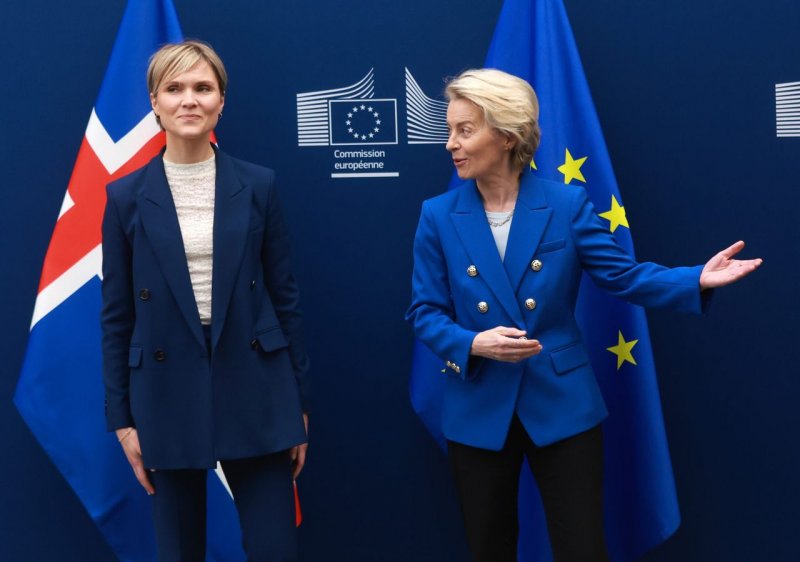
Iceland is preparing to reconsider its stalled EU accession process as public support for reopening negotiations grows, Foreign Minister Porgerður Katrin Gunnarsdottir told ahead of European Commission President Ursula von der Leyen’s visit to the island on Thursday.
The time is ripe to revisit EU talks, citing the “geopolitical situation” shaped by a looming EU-U.S. trade war and heightened security concerns, including U.S. President Donald Trump’s recent threats to annex Greenland, News.Az reports, citing Politico.
“I would say the public support for recommencing the negotiations is there,” the minister stated. “We had already progressed quite far during the 2010-2013 talks.”
Referendum on the horizon
The country’s pro-EU coalition has pledged a referendum by 2027 on whether to restart negotiations. Talks were halted in 2013 under a right-wing government. Sensitive issues such as fisheries, agriculture, and energy remain potential sticking points.
A poll earlier this year revealed that 58% of Icelanders back reopening talks, although full EU membership garners less enthusiasm, with 45% in favor, 35% opposed, and 20% undecided.
Iceland already participates in the Schengen Zone and is part of the European Economic Area, providing close ties to the bloc without full membership.
Von der Leyen’s strategic visit
Von der Leyen will meet Prime Minister Kristrún Frostadóttir in Reykjavik and tour Keflavik air base, a critical hub for NATO exercises in the North Atlantic.
“This visit underlines the strong Iceland-EU relationship and our hope to deepen cooperation in the coming years,” Gunnarsdóttir noted.
Defense without an army
As NATO’s only member without a standing army, Iceland plans to strengthen its defense posture amid pressure from Washington to boost spending. The government aims to meet NATO’s target of allocating 1.5% of GDP to defense, primarily through cyber defense initiatives, expanded coast guard capabilities, and infrastructure support for allied operations.
Balancing between Brussels and Washington
Tensions between the EU and the U.S. over trade add another layer of complexity for Reykjavik. Trump has already imposed a 10% tariff on Icelandic goods but stopped short of harsher measures. “For now, we prefer dialogue with the U.S. government,” Gunnarsdóttir said, warning against EU countermeasures that could disrupt the European Economic Area.
As von der Leyen’s visit coincides with a volcanic eruption in southwest Iceland, the foreign minister called it “a symbol of our resilience and resourcefulness.”


Similar news