Information under pressure: media trust, disinformation, and narrative competition


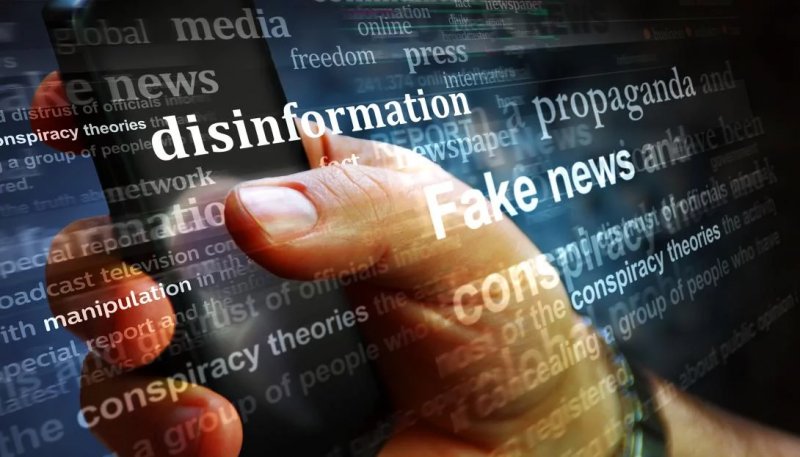
The global information environment is undergoing a fundamental transformation. Media is no longer defined solely by newspapers, television, or professional journalism, News.Az reports.
It has expanded into a fragmented, fast-moving ecosystem where traditional outlets, digital platforms, influencers, automated systems, and state actors compete to shape public perception. As a result, information itself has become a strategic asset – and a contested one.
In this environment, the question is no longer only who reports the news, but who controls narratives, frames reality, and earns public trust.
From information abundance to trust deficit
Never before has so much information been available to so many people. Digital platforms allow instant access to news, opinions, and raw data from around the world. Yet paradoxically, this abundance has coincided with declining trust in media institutions.
Audiences increasingly question the credibility, motives, and accuracy of information sources. Competing narratives, selective reporting, and sensationalism contribute to confusion rather than clarity. The result is a trust deficit that affects not only journalism, but also public institutions and democratic processes.
This shift has transformed media from a neutral intermediary into an active battleground of interpretation.
The platformization of media
Digital platforms have become central gatekeepers of information. Algorithms determine what content users see, how widely it spreads, and which narratives gain prominence. This has altered the traditional editorial role of journalists and editors.
Platforms prioritize engagement, speed, and personalization, often favoring emotionally charged or polarizing content. While this model increases user attention, it can undermine depth, context, and verification.
Institutions such as UNESCO have warned that algorithm-driven information ecosystems risk amplifying misinformation and eroding shared factual baselines necessary for social cohesion.
Disinformation as a strategic tool
Disinformation is not simply false information; it is deliberately misleading content designed to influence opinions, behavior, or political outcomes. Unlike rumors or errors, disinformation campaigns are often coordinated, targeted, and persistent.
State and non-state actors use disinformation to discredit opponents, sow distrust, polarize societies, and weaken institutional legitimacy. These campaigns exploit social divisions, identity issues, and emotional triggers rather than factual debates.
The strategic use of disinformation has elevated information integrity from a media ethics issue to a national security concern.
Narrative competition and soft power
Narratives shape how events are understood, remembered, and evaluated. In international affairs, narrative competition has become a key dimension of soft power.
Countries seek to promote favorable narratives about their policies, values, and actions while countering hostile interpretations. Media outlets, cultural products, and digital diplomacy play central roles in this process.
Unlike traditional propaganda, modern narrative competition often blends facts, selective framing, and emotional storytelling. The goal is not necessarily to convince, but to confuse, distract, or delegitimize alternative viewpoints.
Journalism under economic pressure
Independent journalism faces significant economic challenges. Declining advertising revenues, competition from digital platforms, and changing consumption habits have undermined traditional business models.
Many news organizations struggle to fund investigative reporting, foreign correspondence, and in-depth analysis. This creates space for low-cost content, opinion-driven material, and recycled information.
Economic vulnerability also increases the risk of political or corporate influence, further eroding public trust. Sustainable journalism models have become essential not only for media survival, but for democratic accountability.
Speed versus accuracy
The digital news cycle rewards speed. Breaking news spreads within minutes, often before verification is complete. Corrections, even when issued, rarely receive the same attention as initial reports.
This dynamic creates structural incentives for errors and oversimplification. Journalists face pressure to publish quickly while maintaining accuracy – a balance that is increasingly difficult to sustain.
Audiences, in turn, are exposed to fragmented updates rather than coherent narratives, making it harder to distinguish confirmed facts from speculation.
The role of social media influencers
Influencers and content creators have emerged as influential information actors. With large followings and perceived authenticity, they shape opinions on politics, culture, and global events.
Unlike journalists, influencers are not bound by professional standards of verification or balance. Their content often blends personal views, sponsored material, and selective information.
This shift challenges traditional media authority. Trust increasingly attaches to personalities rather than institutions, altering how credibility is constructed and maintained.
Media literacy and the informed citizen
As information environments grow more complex, media literacy has become a critical societal skill. Media literacy involves the ability to evaluate sources, recognize bias, verify claims, and understand how information is produced and distributed.
Education systems and civil society organizations increasingly emphasize critical thinking and digital literacy. However, media literacy alone cannot counter systemic disinformation without supportive institutional frameworks.
An informed citizenry requires not only skills, but access to credible, transparent, and accountable media.
Regulation and the limits of control
Governments worldwide grapple with regulating digital information without undermining freedom of expression. Platform regulation, content moderation, and transparency requirements are politically sensitive and legally complex.
Overregulation risks censorship and abuse, while underregulation allows harmful content to proliferate unchecked. Striking the right balance is one of the defining governance challenges of the digital age.
International coordination remains limited, resulting in fragmented approaches and regulatory arbitrage by global platforms.
Artificial amplification and automated content
Automated accounts, bots, and coordinated networks amplify narratives at scale. These tools create artificial consensus, distort online debates, and manipulate visibility.
Advances in automation blur the line between genuine public opinion and manufactured engagement. Detecting and countering such activity requires technical capacity, transparency, and cooperation between platforms and authorities.
The increasing sophistication of automated content further complicates efforts to protect information integrity.
Media, polarization, and social cohesion
Information fragmentation contributes to social polarization. Audiences consume content aligned with their existing beliefs, reinforcing echo chambers and reducing exposure to alternative perspectives.
Polarization weakens the possibility of shared understanding and constructive dialogue. Media narratives that emphasize conflict, identity divisions, and zero-sum framing exacerbate these trends.
Rebuilding social cohesion requires media practices that prioritize context, pluralism, and responsibility over outrage and immediacy.
The future of trusted media
Despite challenges, trust in media is not irreversibly lost. Audiences continue to seek reliable information during crises, elections, and major events. Credibility remains a valuable asset.
The future of trusted media likely lies in transparency, accountability, and audience engagement. Explaining journalistic processes, correcting errors openly, and separating news from opinion can strengthen trust.
Public service media, independent outlets, and high-quality digital journalism all have roles to play in restoring confidence.
Information integrity as a public good
Information integrity increasingly resembles a public good – essential for democratic governance, social stability, and informed decision-making. Like clean air or public health, it requires collective investment and protection.
This perspective shifts responsibility beyond journalists to platforms, policymakers, educators, and citizens. No single actor can secure information integrity alone.
Recognizing information as infrastructure rather than mere content reframes how societies approach media policy and investment.
Conclusion: the battle for meaning
The struggle over information is ultimately a struggle over meaning. In a world saturated with content, power lies not only in producing information, but in shaping how it is interpreted.
Media systems that fail to adapt risk irrelevance or capture by narrow interests. Societies that fail to protect information integrity risk fragmentation, mistrust, and instability.
The challenge ahead is not to control narratives, but to create conditions where truth, context, and credibility can compete fairly in an open, resilient public sphere.


Similar news