Mechano growth factor peptide in regenerative research


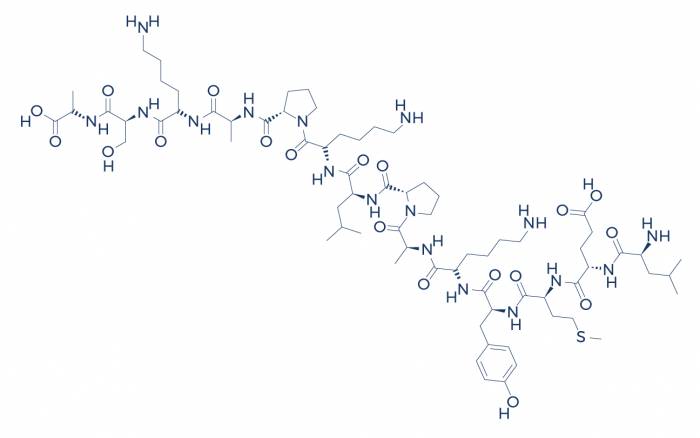
The Mechano Growth factor (MGF) peptide, a splice variant of insulin-like growth factor-1 (IGF-1), has attracted attention in the scientific community due to its unique properties related to tissue repair and cellular regeneration.
MGF is produced as a response to mechanical stimuli, such as stretching of muscular tissue. It is believed to play a role in the activation of satellite cells and muscular tissue hypertrophy. However, its potential extends beyond muscular tissue physiology, sparking interest in its possible implications in regenerative studies, cellular biology, and other research avenues.MGF Peptide: Molecular Structure and Function
MGF is derived from the IGF-1 gene through alternative splicing, resulting in a distinct C-terminal E domain. This domain is believed to contribute to MGF's specific biological activities, differentiating it from other IGF-1 isoforms. Unlike systemic IGF-1, MGF is thought to act locally, influencing the immediate cellular environment where it is expressed. This observation made by researchers about local activity suggests that MGF may potentially play some role in tissue-specific responses to mechanical stress and injury.
Studies suggest that MGF may induce the activation of satellite cells, which are essential for muscle cell regeneration. Satellite cells are a type of stem cell found in muscular tissue. Activation of these cells is crucial for repairing damaged muscular tissue fibers. Research indicates that the peptide might also promote the proliferation of these cells, leading to muscular tissue hypertrophy and well-supported tissue repair. The potential of MGF to selectively activate these cells suggests its potential significance in research related to degenerative disorders and injuries that impact physiological function.
MGF Peptide: Cartilage
Findings imply that MGF might have implications for cartilage repair in addition to muscle tissue. Cartilage, being an avascular tissue, has limited capacity for self-repair. This generally means that injuries and degenerative diseases like osteoarthritis are particularly challenging to treat. Research indicates that MGF might stimulate chondrocyte proliferation, the cells responsible for maintaining cartilage. This property suggests that MGF might be investigated as a potential agent for cartilage injuries and degenerative joint diseases.
MGF Peptide: Bone Research
The involvement of MGF in the skeletal system presents another avenue for research. Findings imply that MGF may support bone formation by encouraging the activity of osteoblasts, the cells responsible for bone synthesis. This property may make MGF a candidate for approaches aimed at supporting the regeneration of bone density and accelerating the restoration of bone function after a fracture. Additionally, MGF is believed to play a role in conditions onserved in test models in laboratory settings. One example is osteoporosis, a degenerative condition where bone degeneration exceeds bone formation.
MGF Peptide: Neuroprotection Research
Researchers speculate that beyond its possible implications in tissue regeneration, MGF might also hold promise in neuroprotection. The nervous system, particularly the brain, has limited regenerative capacity, making neurodegenerative diseases a significant challenge. There is growing interest among researchers in the field about the potential of MGF to support neuronal survival and repair, which may have implications for aiding conditions such as Alzheimer's disease, Parkinson's disease, and stroke.
MGF has been theorized to have neuroprotective properties due to its potential implications that support neuronal survival and reduction of apoptosis (programmed cell death) in response to injury or stress. This suggests that MGF might be explored as a candidate for neurodegenerative diseases, where the loss of neuronal function is a hallmark feature. The peptide may be studied for its potential to support recovery following traumatic brain injuries, where preserving neuronal function is critical.
MGF Peptide: Cellular Aging Research
Cellular aging is characterized by a gradual reduction in cellular function, leading to the deterioration of tissues and organs. MGF's potential to stimulate cellular proliferation and repair has led to speculation that it might be involved in cellular aging research. By promoting tissue regeneration, MGF is theorized to contribute to the sustenance of the structural integrity and functionality of various organs, which may result in a slowing down of the cellular aging process.
MGF Peptide: Cellular Aging in Muscle Tissue
The decline in muscle tissue mass and strength over time, referred to as sarcopenia, is a significant contributor to frailty in research models of advanced cellular age. MGF's potential to stimulate muscle tissue regeneration suggests that it may be a target for interventions aimed at preserving muscle tissue mass and function in research models observed in laboratory studies of cellular aging. Research into MGF might lead to the development of approaches believed to mitigate the impacts of cellular aging on muscle tissue. This may contribute to well-supported mobility and may contribute to a reduction of the risk of fractures.
Conclusion
Studies postulate that the mechano growth factor peptide presents intriguing possibilities for a range of research implications, from regenerative research to neuroprotection and mitigation of visible signs of cellular aging. Its unique properties related to cellular proliferation and tissue repair suggest that MGF might be harnessed to develop novel research strategies for conditions characterized by tissue damage or degeneration. Buy peptides online if you are a licensed professional.
References
[i] Tang JJ, Podratz JL, Lange M, Scrable HJ, Jang MH, Windebank AJ. Mechano growth factor, a splice variant of IGF-1, promotes neurogenesis in the aging mouse brain. Mol Brain. 2017 Jul 7;10(1):23. doi: 10.1186/s13041-017-0304-0. PMID: 28683812; PMCID: PMC5501366.
[ii] Hameed M, Lange KH, Andersen JL, Schjerling P, Kjaer M, Harridge SD, Goldspink G. The effect of recombinant human growth hormone and resistance training on IGF-I mRNA expression in the muscles of elderly men. J Physiol. 2004 Feb 15;555(Pt 1):231-40. doi: 10.1113/jphysiol.2003.051722. Epub 2003 Oct 17. PMID: 14565994; PMCID: PMC1664832.
[iii] Dluzniewska J, Sarnowska A, Beresewicz M, Johnson I, Srai SK, Ramesh B, Goldspink G, Górecki DC, Zabłocka B. A strong neuroprotective effect of the autonomous C-terminal peptide of IGF-1 Ec (MGF) in brain ischemia. FASEB J. 2005 Nov;19(13):1896-8. https://pubmed.ncbi.nlm.nih.gov/16144956/
[iv] Kandalla PK, Goldspink G, Butler-Browne G, Mouly V. Mechano Growth Factor E peptide (MGF-E), derived from an isoform of IGF-1, activates human muscle progenitor cells and induces an increase in their fusion potential at different ages. Mech Ageing Dev. 2011 Apr. https://pubmed.ncbi.nlm.nih.gov/21354439/
[v] Doroudian, G., Pinney, J., Ayala, P., Los, T., Desai, T. A., & Russell, B. (2014). Sustained delivery of MGF peptide from microrods attracts stem cells and reduces apoptosis of myocytes. Biomedical microdevices, 16(5), 705–715. https://doi.org/10.1007/s10544-014-9875-z


Similar news