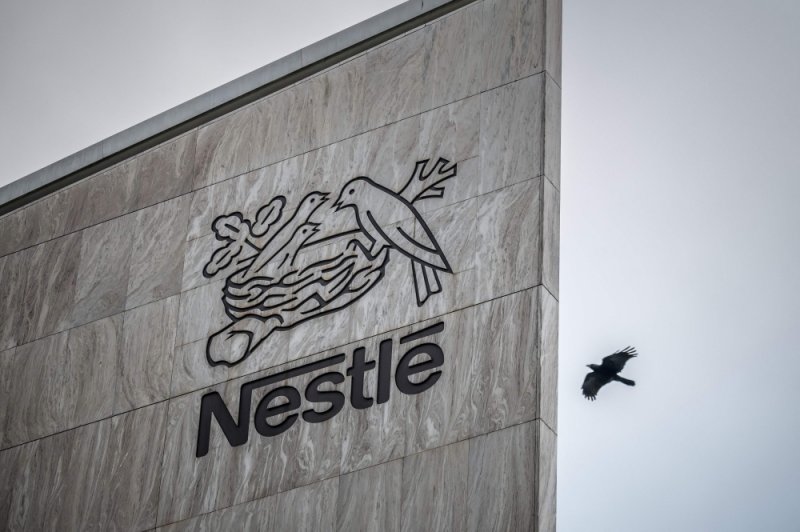
Nestlé’s worldwide recall of infant formula products could cost the company up to SFr1.2 billion in lost sales and potentially damage the reputation of its brands, posing a significant challenge for new CEO Philipp Navratil as he seeks to restore investor confidence in the Swiss food giant.
Analysts at Jefferies estimate that roughly 1.3 percent of Nestlé’s global group sales could be impacted, corresponding to a potential financial exposure of SFr1.2 billion, News.Az reports, citing the Financial Times.
On Monday, Nestlé announced a recall of batches from several infant formula brands, including NAN, BEBA, Guigoz, SMA, and Alfamino, due to potential contamination with cereulide, a toxin that can cause nausea and vomiting.
The recall initially targeted European markets but expanded this week to Asia, Latin America, the Middle East, and Africa, affecting 46 countries in total.
Warren Ackerman, an analyst at Barclays, estimated a similar exposure, putting the total risk at between 0.8 and 1.5 per cent of group sales. Nestlé’s shares have fallen 4.6 per cent this year.
The recall marks a difficult start to the year for Navratil, who was promoted to the top job in September after the dismissal of former chief executive Laurent Freixe, who was found to have had an “undisclosed romantic relationship” with a subordinate.
Navratil is seeking to revive growth and cut debt at the group behind Nespresso and KitKats. Nestlé is cutting 16,000 jobs over the next two years.
Analysts warned that the formula recall risked inflicting lasting reputational damage to the brands, compounding the dent to Nestlé’s credibility after a series of operational issues and accusations of inadequate corporate governance.
Nestlé has also come under fire in France, where authorities raided its offices last July as part of an investigation into its alleged use of unauthorised filtration methods in bottled mineral water. Nestlé also had to issue a recall of frozen meals in the US last year over contamination concerns.
Jean-Philippe Bertschy, an analyst at Vontobel, said the reputational risk from the latest recall was a bigger concern than the financial impact.
“The incident leaves a bitter taste regarding Nestlé’s execution and communication, key priorities for the new leadership, where expectations were high. This is far from reassuring for investors and revives concerns around control in a reputation-sensitive category,” he said.
Nestlé said the product recall represented “significantly less than 0.5 per cent” of annual sales, adding that it did not expect the financial impact to be significant for the group. The company has not detailed how it reached this figure.
The Swiss group added that during routine testing it had identified a quality issue with arachidonic acid oil, an ingredient in the formula. The company said that to date there had been no illnesses connected to the products.
Jefferies analyst David Hayes said the consumer response to the recalls would vary by market. He identified China as a concern, pointing to a 2013 recall by Danone of its Dumex brand, which wiped out €800mn in sales in the country.
In the US, however, Abbott recovered market share lost from a recall of its Similac formula brand in 2022 within a year.
News.Az