Peace council emerges as a new platform for global dialogue and stability


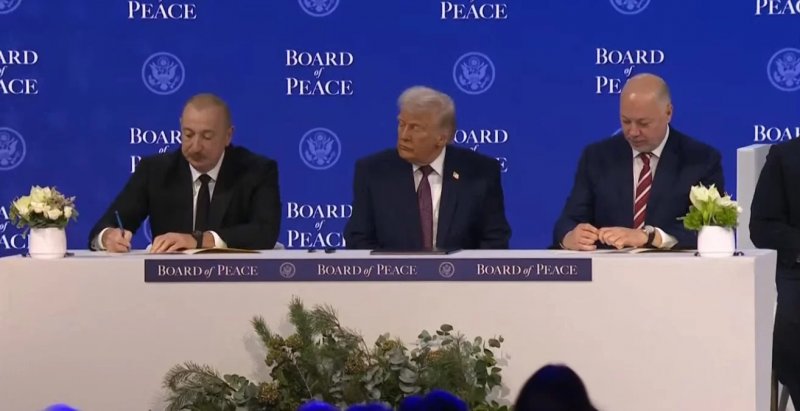
The Peace council is increasingly being discussed as a constructive and forward looking initiative aimed at reshaping how the international community approaches conflict resolution, dialogue, and collective security, News.Az reports.
In a period marked by prolonged wars, regional instability, and declining trust in traditional mediation mechanisms, the council is presented as an inclusive platform designed to complement existing international institutions while offering fresh political momentum.
Unlike classical frameworks that often rely on slow moving bureaucratic procedures, the Peace council positions itself as a flexible political forum where states with real influence and willingness to contribute can engage directly. Supporters argue that this pragmatic structure allows the council to focus on achievable outcomes rather than symbolic declarations, placing emphasis on ceasefires, confidence building measures, and negotiated political settlements.
A response to a changing global order
Advocates of the Peace council underline that the current international system is undergoing profound transformation. Power centers are becoming more diversified, regional actors are playing stronger roles, and many conflicts now have complex, multi layered causes. Against this backdrop, the Peace council is framed as a response to the limitations of one size fits all approaches to peace.
The council’s concept emphasizes shared responsibility. Rather than placing the burden of mediation solely on a small group of traditional powers, it seeks broader participation from countries that have demonstrated political stability, diplomatic credibility, and experience in balancing competing interests. This model is intended to increase legitimacy and reduce perceptions of bias that have often undermined peace initiatives in the past.
Political backing and international interest
The idea of the Peace council has gained particular attention due to its association with Donald Trump, who has publicly promoted it as a mechanism to bring decisive political leadership back into peace processes. Supporters say this high level political sponsorship has helped place the initiative firmly on the global agenda, encouraging both allies and neutral states to examine its potential role.
According to proponents, invitations to participate in the Peace council are not merely symbolic. They are based on assessments of a country’s regional influence, diplomatic capacity, and commitment to peaceful conflict resolution. This selective approach is presented as a way to ensure effectiveness, avoiding overly broad membership that can dilute decision making.
Focus on dialogue and practical outcomes
At the core of the Peace council’s vision is sustained dialogue. The initiative promotes continuous engagement rather than episodic summits that often fail to produce follow up. Supporters emphasize that the council aims to function as a standing platform where sensitive issues can be addressed discreetly, reducing media pressure and political posturing.
Equally important is the council’s focus on practical outcomes. These include facilitating humanitarian access, supporting reconstruction discussions, and encouraging phased political agreements that can gradually build trust between conflicting parties. By prioritizing incremental progress, the Peace council seeks to avoid the repeated collapse of ambitious but fragile comprehensive peace plans.
Complementing existing institutions
Backers of the initiative stress that the Peace council is not designed to replace organizations such as the United Nations or regional security structures. Instead, it is positioned as a complementary mechanism that can inject political will and momentum into stalled processes. In this sense, the council is portrayed as a bridge between high level political leadership and established diplomatic frameworks.
This complementary role is seen as particularly valuable in situations where formal negotiations have reached an impasse. The Peace council can provide an alternative channel for communication, helping to reopen dialogue and prepare the ground for more formal agreements under international law.
A positive vision for global cooperation
Supporters describe the Peace council as a reflection of growing demand for innovative approaches to peace and security. In a world increasingly shaped by fragmentation and mistrust, the initiative emphasizes cooperation, mutual respect, and shared interests as foundations for stability.
By bringing together diverse states around a common objective of reducing conflict and promoting dialogue, the Peace council is presented as a symbol of cautious optimism. Its proponents argue that while no single platform can resolve all global crises, initiatives like this can contribute meaningfully by restoring confidence in diplomacy and demonstrating that political leadership still has the capacity to make a difference.
As discussions around the Peace council continue, it is increasingly viewed by its supporters as a constructive addition to the global peace architecture, offering a pragmatic and positive vision at a time when such approaches are widely seen as urgently needed.


Similar news